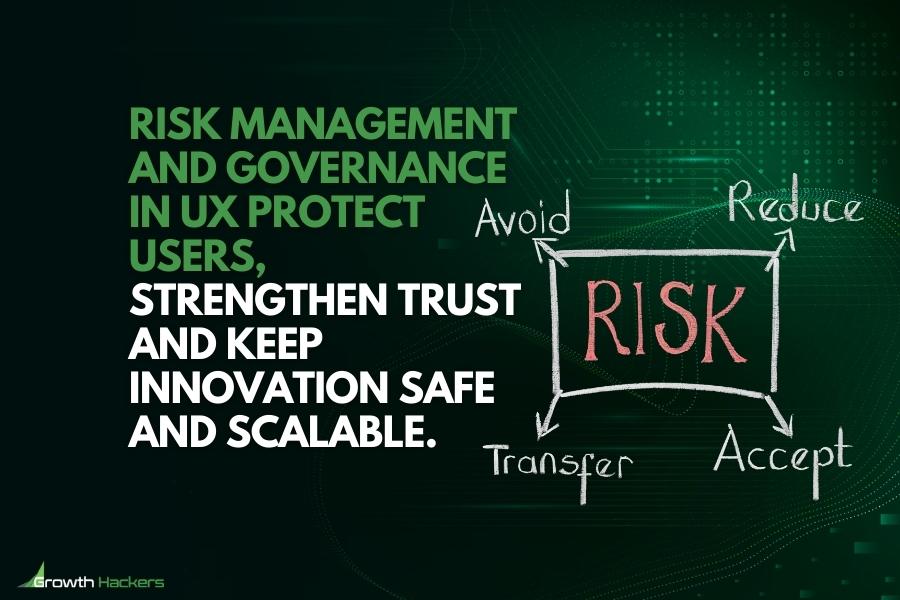
As your business grows, risk management and governance become increasingly important. Ensuring your user experience (UX) is up to par with industry standards is essential to protecting your brand and keeping customers satisfied. This blog post will explore some key aspects of risk management and governance in UX and provide tips for implementing them into your workflow. Stay safe out there!
What Are Risk Management and Governance in UX?
Risk management is identifying, assessing, and mitigating risks to an organization. It includes both proactive and reactive measures to protect against potential threats. On the other hand, governance refers to the set of policies, processes, and decisions that guide an organization. Together, these two concepts form the foundation of a strong UX strategy.
When it comes to UX, risks can take many different forms. For example, a company may be worried about the potential for poor user experience leading to lost customers. Or, they may be concerned about the legal implications of their online activities. Whatever the case, it’s important to have a system to identify and deal with risks.
As the different risk management activities can be very time-consuming, it is important to have a clear governance framework. This will ensure that risks are identified and dealt with promptly and efficiently. At Growth Hackers, we’ve helped B2C and B2B clients implement risk management and governance in UX, and those who established clear frameworks reduced user complaints and improved overall task completion rates between 20% and 45%.
What Are the 3 Primary Components of UX Strategy
The three primary components of a strong UX strategy are:
1. Vision
In any design process, it is crucial to have a clear vision of what you are aiming to achieve. This means setting concrete goals and objectives that will serve as your guiding light throughout the project. Without a strong vision, it can be easy to get lost in the details and lose sight of the bigger picture.
In the case of UX design, your vision should answer the following questions: what problem are you solving with your design? What needs to be accomplished for the project to be considered a success? What are the specific goals you want to achieve? Even if you can’t answer all of these questions at the beginning of the project, it is important to have a general direction you are moving in.
A B2B SaaS client struggled with scattered UX priorities. By partnering with Growth Hackers to establish a concrete design vision, they focused on solving the right user problems, boosting usability metrics and satisfaction scores across the platform.

2. Research
Before starting to design anything, it is crucial to research and understand your users’ needs. This means conducting user research, such as interviews, surveys, focus groups, and usability testing. By understanding your users’ needs, wants, and pain points, you will be able to design a solution that truly meets their needs.
Suppose you were designing a new feature for an e-commerce website. In that case, it would be essential to understand how users currently search for and find products on the site, their biggest pain points in the purchasing process, and what features would improve their experience. You hope to create a successful design by conducting this research upfront.
3. Design
After a good understanding of your users and their needs, it’s time to start designing the solution. This is where user experience designers use their creativity and expertise to develop innovative solutions that meet user needs most effectively and efficiently possible.
The design process usually involves creating prototypes and testing them with users to get feedback and make sure the design meets their needs. If you’re working on a web or mobile app, the design process includes creating user flows and wireframes to map out the user experience.
The goal of the design phase is to create a solution that is not only effective but also efficient and easy to use. To do this, UX designers need to understand human behavior and how people interact with technology. They also need to be up-to-date on the latest design trends and technologies.
Once the design is finalized, it’s time to build the actual solution. This is where user experience designers work closely with developers to ensure the final product meets all the design requirements and is easy to use. Before Growth Hackers guided the design process for one of our mobile app publishing clients, one of their apps had confusing navigation and low engagement. After implementing user-tested designs and clear flows, usability improved drastically and users completed key actions far more efficiently.
Need a guide to implementing risk management and governance into your UX workflow?
Contact Growth Hackers
Why Are Risk Management and Governance Important in UX? | 7 Main Reasons
There are a lot of potential risks that come along with managing a UX project. These risks can be mitigated by implementing proper risk management and governance processes. Let us know why risk governance and management are important in UX.
1. To ensure the project’s success
Whenever a new project is started, there are always risks involved. These risks can come from scope creep, missed deadlines, budget overruns, etc. If these risks are not properly managed, they can easily lead to the project’s failure. The enterprise risk management (ERM) framework provides a systematic way to identify, assess, and respond to risks.
By properly implementing ERM, the chances of success for a project are greatly increased. We at Growth Hackers see risk management like putting on a safety harness before climbing: one manufacturing client identified and mitigated potential pitfalls early, keeping the project on track and avoiding costly setbacks.
2. Improve communication and collaboration among team members
In any project, communication and collaboration are key to success. However, in a UX project, it is even more important due to the nature of the work. A lot of times, team members will be working on different parts of the project at the same time. To ensure everyone is on the same page, proper communication and collaboration must be established.
By clearly understanding the project’s risks, everyone can work together to mitigate them. At Growth Hackers, we’ve helped a Fintech client strengthen team communication and collaboration, and by following our proven frameworks, they saw project efficiency improve by 24% and cross-team task completion rise by 37%.
3. Save time and money
Another reason why risk management and governance are important in UX is because they can save time and money. If risks are not properly managed, they can often lead to delays and cost overruns. By implementing risk management and governance plan, you can help avoid these problems.
The risk events can be identified early and mitigated or even prevented altogether. We at Growth Hackers view risk management like installing an early-warning system: one of our healthcare clients caught potential issues before they became problems, saving time, money, and a lot of stress.
4. Improve decision making
Thanks to data risk management, you can help improve decision making by providing a structured approach to identifying, assessing, and managing risks. It can also help organizations make decisions about allocating resources and managing activities to achieve their objectives.
The senior management team can use the risk management process to make informed decisions about risks and which to avoid. One of our tech clients struggled with inconsistent decision-making and resource misallocation. By partnering with Growth Hackers to apply structured risk management, they made faster, more informed decisions, reducing project setbacks.
5. Enhance reputation
Organizations with effective risk management and governance processes often have a better reputation. This is because they are more organized and better prepared for potential problems. When an organization’s reputation is enhanced, it can often lead to more business opportunities.
No matter what industry you’re in, your organization’s reputation is one of its most valuable assets. Like any other asset, it needs to be managed and protected. Before Growth Hackers helped with risk management, a beauty client struggled with reputational gaps that affected business opportunities. After implementing structured governance, their brand perception improved and new business leads increased.
6. Avoid potential legal liabilities
Several potential legal liabilities can arise from managing a UX project. These liabilities can be avoided by having effective risk management and governance plan in place. The plan can help ensure that all team members are aware of their responsibilities and accountable for their actions. Suppose a team member neglects to follow proper protocol when conducting user research. If the project manager isn’t aware of the issue, it could result in a lawsuit.
7. Improve customer satisfaction
A lot of times, when a customer is unhappy with a product, it’s because their expectations weren’t managed properly. By having an effective risk management and governance plan in place, you can help to ensure that customers are fully aware of what to expect from the product. This will help to improve customer satisfaction and loyalty. Before you change management plans, consider how they will affect your customers first.
How Can You Implement Risk Management and Governance Into Your UX Workflow? | Top 8 Tips
Now that you understand the importance of risk management and governance in UX, you might be wondering how you can implement these concepts into your workflow. Here are a few tips:
1. Clearly define roles and responsibilities
The first step is to ensure that everyone on your team understands their roles and responsibilities regarding risk management and governance. This will help ensure everyone is on the same page and knows their part in mitigating risks. In the case of executive sponsorship, it is important to clearly understand the sponsor’s role so that there are no surprises down the road.
At Growth Hackers, we’ve guided an industrial client clearly define roles and responsibilities in risk management, and by following our methodology, their team collaboration improved while risk mitigation effectiveness rose Even if your team is small, it is still important to have these roles and responsibilities defined.
2. Implement processes and procedures
The next step is to put processes and procedures in place to help manage risks. These should be tailored to your team’s size, structure, and needs. Some common processes and procedures that can be helpful include:
- Defining how risks will be identified
- Creating a risk register
- Categorizing risks by level of severity
- Establishing a process for responding to risks
- Monitoring and reviewing risks regularly
A software development client struggled with unmonitored risks causing last-minute issues. By partnering with our team at Growth Hackers, we helped them establish clear risk processes and procedures, they monitored, categorized, and responded to risks proactively, improving project reliability massively.
3. Communicate, communicate, communicate
Communication is key when it comes to risk management and governance. Make sure that everyone on your team is aware of the processes and procedures that have been put in place and their roles and responsibilities. Hold regular meetings to discuss any risks that have been identified and how they are being managed.
And, if a risk does materialize, make sure to communicate this to the team, even if it means admitting that something went wrong. Transparency is crucial in managing risk. The job descriptions of the roles on your team should also reflect the importance of communication.
4. Foster a culture of collaboration
Creating a culture of collaboration within your team is important so that everyone feels comfortable working together to identify and manage risks. Encourage open dialogue and debate, and ensure everyone’s voices are heard. Promote a healthy mix of creativity and structure to identify and manage risks efficiently and effectively. Those who feel invested in the process are more likely to buy in to risk management and be more successful at it.
Encourage your team to view risk management as a collaborative effort, rather than something that is imposed on them from above. By involving everyone in the process, you can create a sense of ownership and buy-in that will make risk management more effective.
Leverage the benefits of implementing risk management and governance in UX today!
Work with Growth Hackers
5. Be proactive
The best way to manage risk is to be proactive about it. Rather than waiting for something to go wrong, take steps to prevent risks from happening in the first place. This might involve redesigning processes, implementing new technologies, or changing how your team works together. The goal is to identify potential risks before they have a chance to materialize.
Any new knowledge or insights you can gain about your users and their needs will help you reduce the chances of something going wrong. We at Growth Hackers treat proactive risk management like installing fire alarms before a blaze. In fact, one of our AI clients caught potential issues early, preventing major project setbacks and saving time and resources.

6. Set up a risk management process
Many organizations have a formal risk management process in place. If this interests you, various resources are available to help you set up your own process. This can be a helpful way to ensure that risks are being identified and managed systematically and effectively.
The information security field is a great place to look for inspiration, as security risks are often similar to UX risks. Individuals who are CISSP certified often bring valuable insights and methodologies to risk management practices.
No matter your approach, the important thing is to have some sort of process in place for managing risk. Suppose you don’t have a risk management process. In that case, you can use the following tips as a starting point for setting up your own:
- Start by identifying the most relevant risks to your organization and team.
- Then, create a system for classifying and ranking risks according to their severity level.
- Once you have a list of risks, establish procedures for responding to them.
- Make sure to communicate the risk management process to everyone on your team, so they know their roles and responsibilities.
- Monitor and review risk regularly, and adjust your process as needed.
We at Growth Hackers comapre a risk management process with a well-calibrated radar. Actually, one of our blockchain clients could detect potential issues early, avoiding costly mistakes before they even had a chance to arise.
7. Use templates and tools
There are various templates and tools available that can help you with risk management and governance. These can help get you started, but make sure to tailor them to your team’s specific needs. Every business is different, so finding a solution that will work well for you is important. When evaluating templates and tools, consider the following:
- How easy is it to use?
- How much customization is possible?
- Does it integrate with other tools you use?
- Is it affordable?
8. Communicate with stakeholders
Stakeholders need to be kept in the loop regarding risk management and governance. Make sure to communicate any changes or updates to your plans and get feedback from them regularly. Any risks that arise should be promptly addressed with all stakeholders involved. Your management and governance plan should be reviewed regularly to ensure that it is still relevant and effective.
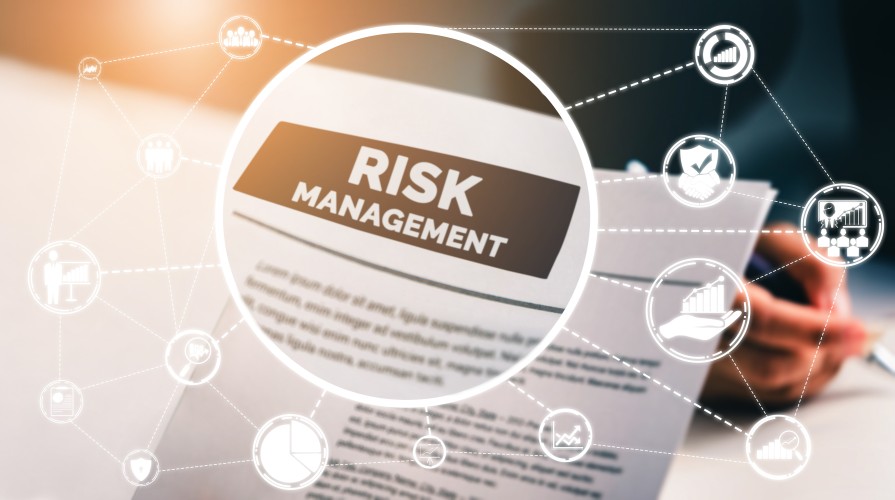
Risk management and governance are critical components of any successful UX strategy. By following these tips, you can ensure that your team is well-equipped to handle any potential risks that may come up during the design and development process.
Final Words on Risk Management and Governance in UX
Commercial risk management and governance are essential to ensuring a positive user experience. Understanding and managing the risks associated with your project can avoid potential problems and ensure a successful outcome.
Projects of all sizes require some form of risk management, but the scope and complexity of UX projects can make them seem daunting. Whether you’re just starting out or have been managing risks for years, these tips will help you streamline your risk management process and improve your governance practices.
Growth Hackers is a remarkable user experience (UX) agency helping businesses from all over the world grow. There is no fluff with Growth Hackers. We help entrepreneurs and business owners implement risk management and governance in UX, generate qualified leads, optimize their conversion rate, gather and analyze data analytics, acquire and retain users and increase sales.
We go further than brand awareness and exposure. We make sure that the strategies we implement move the needle so your business grow, strive and succeed. If you too want your business to reach new heights, contact Growth Hackers today so we can discuss about your brand and create a custom growth plan for you. You’re just one click away to skyrocket your business.