If you regularly put effort into your emails and feel like you are shouting in the dark, you’re not alone. Despite email’s unmatched ROI, reportedly $36 for every $1 spent according to Forbes, average click-through rates often struggle to break 2%. Inboxes are crowded. Attention spans are short. And your email is just one of hundreds your audience receives daily.
Truth is: it’s not enough to write well to boost engagement.
You need to understand your target audience and constantly adapt to shifting trends and behaviors.
This guide dives into how to calculate and improve your engagement rates, so your emails get opened, clicked, and acted on. So, let’s get into it.
How to Calculate Email Engagement
At its core, email engagement refers to how recipients interact with your emails, like opening and clicking through. But how do you measure that?
There’s no one-size-fits-all formula for email engagement rate, because it depends on what you define as engagement. You need to decide which metrics matter most. Marketers often measure email engagement with metrics like open rate, click-through rate, or click-to-open rate.
That said, one common formula marketers use is:
Engagement Rate = (Engaged Actions / Total Emails Sent) × 100
Say, you define engagement as someone clicking a link in your email. You sent 1,000 emails, and 42 people clicked at least once.
Your engagement rate (based on clicks) is:
(42 / 1,000) × 100 = 4.2%

What is a Good Email Engagement?
There’s no universal “good” number because engagement rates vary wildly depending on your industry and the metrics you focus on. But here’s a general estimation of metrics that drive good engagement rate this year, drawn from what platforms like Mailchimp are currently reporting:
Open rate
It shows the percentage of recipients who opened your email. While it’s influenced by things like subject line and send time, it’s also affected by privacy changes (hello, Apple Mail!).
Rule of thumb: 30% or higher is solid. Some industries (like education and nonprofits) might push higher, while e-commerce tends to stay in that range.
Click-through rate (CTR)
CTR measures the number of people who clicked on links in your email out of everyone who received it. It’s one of the clearest indicators of actual engagement.
Rule of thumb: 2% to 5% is fine. If you see more than 5%, you’re likely doing something right with content or offers.
Click-to-open rate (CTOR)
CTOR compares clicks to opens, giving insight into how compelling your content was after someone opened the email. A high CTOR means your message hit the mark.
Rule of thumb: 15–20% means your email content is compelling once someone opens it.
Unsubscribe rate
Nobody likes seeing unsubscribes, but they’re valuable signals. A sudden spike could mean your content isn’t aligned with expectations, or you’re emailing too often.
Rule of thumb: below 0.5%. A steady trickle is normal; a spike means it’s time to review your content or frequency.
Conversion rate
This is the ultimate email engagement metric: how many recipients took the action you wanted: a purchase, signing up, or filling out a form. It shows whether your email campaigns are delivering results.
Rule of thumb: 2–5% is a healthy average, but this can vary based on your goal and industry.
Tip: Don’t obsess over a single metric. You need to look at how they work together. For instance, if you have high open rates with low CTR, it might mean that your subject line is great, but your content needs some changes.
At Growth Hackers, we helped a B2B SaaS client optimize its email marketing strategy through audience segmentation, A/B testing, and automated personalization. Within 5 months, we increased open rates from 14% to 37%, improved click-through rates by 58%, and boosted email-driven conversions by 26%.
Ready to unlock the secrets on how to increase email engagement effectively?
Contact Growth Hackers
Why is Increasing Email Engagement a Challenge?
Boosting email engagement sounds simple in theory — write better emails, get better results. But in reality, it’s pretty challenging, and here’s why:
- Email fatigue: People are overwhelmed with marketing content, so your message can easily get lost or ignored.
- Spam filters: Email platforms are getting better at filtering out anything that looks even slightly spammy. That means even legit emails can end up in the spam folder if you’re not careful.
- Mobile-first behavior: Your message gets scanned, not read, especially on phones. If it’s not clear and engaging right away, people will swipe past it in seconds.
- Lack of personalization: If your emails sound like they’re written for a list, not a person, they get ignored.
But challenges create opportunities, which brings us to the heart of this guide.
8 Tips to Drive Email Engagement
So, how do you cut through the noise and get your emails noticed?
It’s not just luck.
This involves strategy, testing, and small tweaks that make a big difference.
1. Craft your subject line and preheader text
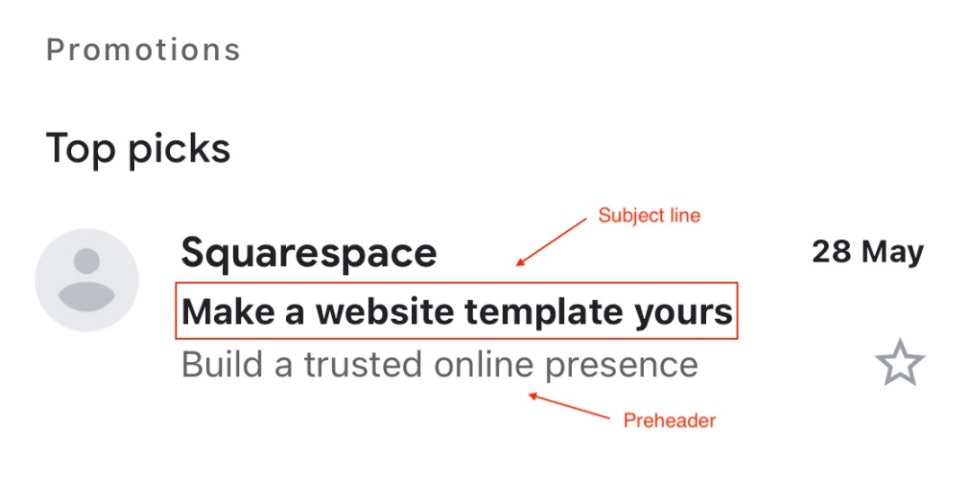
Your email subject and preheader are like a handshake. They are your first (and sometimes only) chance to get noticed. The best subject lines spark curiosity, promise value, or speak directly to the reader’s needs.
The preheader text is your second hook, which should build on your subject line rather than repeat it. Together, these two elements work to earn that important open.
Here are some tips on making a good first impression:
- Use curiosity without being clickbaity.
- Keep it short; subject lines with 61-70 characters receive the most opens.
- Make the preheader text complement the subject.
- Use emojis carefully; they still work, but feel overused if not relevant.
When Growth Hackers partnered with an eCommerce brand, we treated email subject lines like storefront windows. The right message needed to create enough curiosity for people to step inside. By optimizing subject lines and preheaders, we helped increase open rates by 23% and drive 16% more traffic from email campaigns.
Want a personal insight? Some of my best-performing subject lines were questions or unfinished thoughts. Like: “Still thinking about this?” or “What if you tried this instead…”
2. Include interactive quizzes
Quizzes turn passive email readers into active participants who click, engage, and convert. That shift from passive consumption to interaction can significantly boost your click-through rates.
An eye-catching quiz turns your email into a two-way experience. By answering questions, readers learn something about themselves or find the right product, while you get insights about your audience and can segment them for smarter follow-ups.
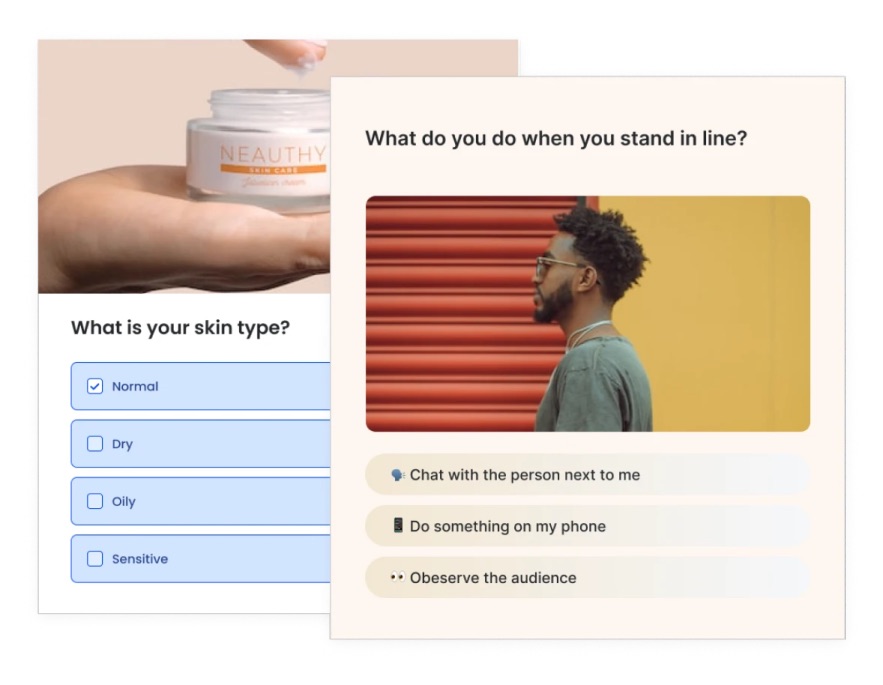
With tools like Opinion Stage, Brevo, Klaviyo and Mailchimp, turning those insights into action is easy.
Opinion Stage is an online quiz maker that helps you build anything from personality tests to product match quizzes. Once you create a quiz, turn on the lead capture form to collect emails, names, or any other info you need.
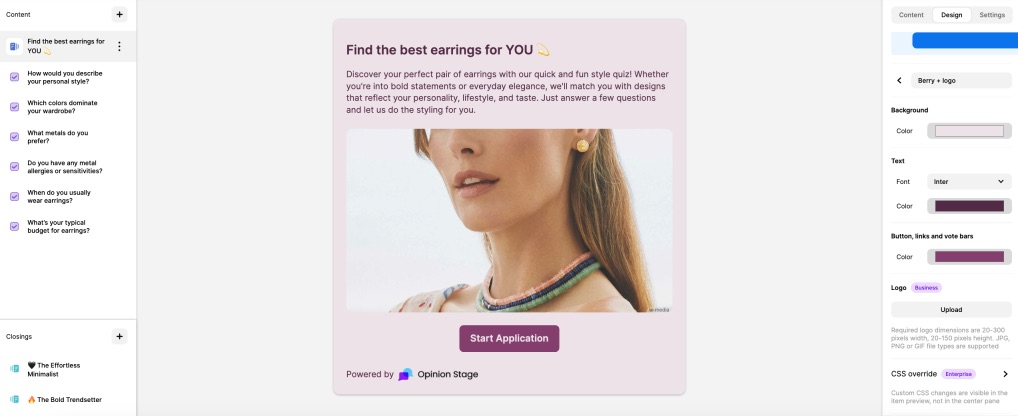
Next, connect your quiz directly to Mailchimp. With just a few clicks, you can authenticate your ESP (e.g. Mailchimp, Brevo…) account from within Opinion Stage and choose the email list.
You can also map each quiz field to the right place in your ESP (Email Service Provider) database and even assign tags based on how people answer.
3. Collect opinions with image polls
If you want to make your emails more interactive without overwhelming your reader, image polls are a nice move. Unlike quizzes, which guide people through multiple questions or lead to outcomes, image polls focus on a single choice. They’re easy to answer, visual, and incredibly effective at encouraging email engagement.
You can use them for quick feedback, such as choosing the next item to restock, picking a new flavor to try, deciding on packaging designs, or even just sparking fun interactions that make your emails more engaging.

And they’re easy to create with tools like Opinion Stage and Mailmodo.
Opinion Stage
Opinion Stage helps you create eye-catching image polls that can be directly embedded into your email as a clickable image or button that links to the poll.
When readers tap it, they’re taken to a mobile-friendly landing page where they can complete the poll. This creates a smooth and focused user experience.
Mailmodo
Mailmodo is an email marketing platform that features a built-in poll creation tool. Using it, you can create attractive polls that live directly inside the email’s layout.
Subscribers can view the poll question, make a choice, and submit their response right then and there. Plus, with built-in real-time analytics, you can see exactly what’s resonating and adjust future email marketing campaigns accordingly.
4. Add personalization across emails
Personalization isn’t just about using first names. People expect messages tailored to their interests, behavior, and stage in the customer journey. And when you deliver that, you become a brand that understands them.
This year, it’s about behavioral personalization. Like:
- Sending product recommendations based on browsing history
- Timing your emails based on when each person usually opens
- Tailoring content to their previous clicks
- Adding a testimonial from a customer with a similar lifestyle or goals
And personalization doesn’t stop at the message. It extends to how your email is presented, down to the signature. Before working with Growth Hackers, a Shopify store relied on broad email campaigns that treated every subscriber the same, leading to lower engagement and missed opportunities. After implementing personalized email strategies through Klaviyo with segmentation, behavioral triggers, and tailored messaging, they increased open rates by over 300%, doubled click-through rates and created stronger customer relationships.
If you’re a freelancer using email to generate leads, your freelancer email signature can serve as a mini-marketing tool. Customize it for different segments (like startups, agencies, or e-commerce brands) by swapping in a relevant job title, a project link that matches their niche, or a tagline that speaks to their pain points.
5. Launch offers and incentives
Everyone loves a good deal. When you align the right incentive with the right timing in your customer’s journey, you’re creating momentum.
Incentives are a growth-hacking technique because they tap into urgency and reward. Say you have a limited-time offer or an exclusive discount on a product—a well-placed offer gives your subscribers a reason to click now, not later.
Look at past behavior, preferences, or purchase history to decide what kind of offer makes sense. Someone who’s browsed but never bought might need a first-time discount. A loyal customer might respond better to early access or a surprise gift.
Don’t forget to wrap your offer in strong copy and clean design. Use urgency in your language (“Only 24 hours left!”) and make the CTA crystal clear and visually pop.
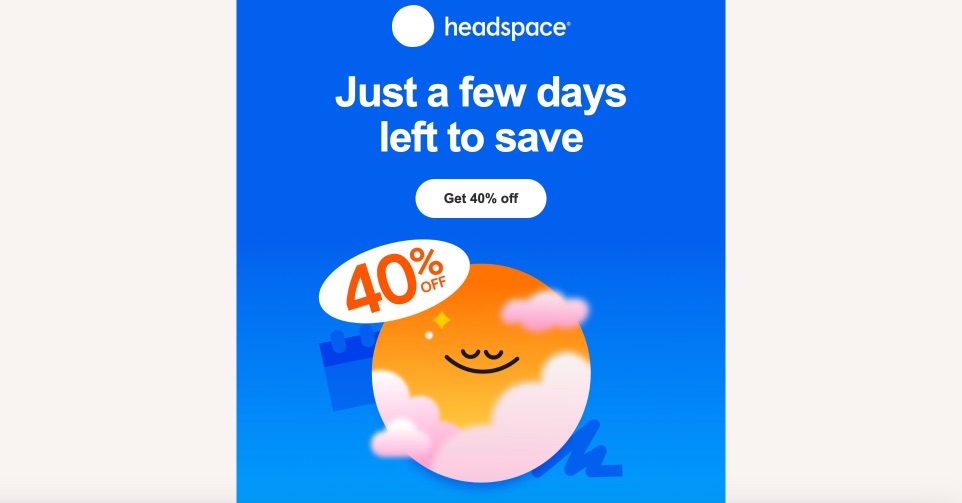
For example, Headspace – a meditation app that helps users reduce stress and improve sleep – used a bold, time-sensitive visual to promote a 40% discount just days before the offer expired. The simple copy and positive design reinforced the urgency of the offer and created a clear moment of action for their audience.
Master how to increase email engagement and boost conversions now!
Work with Growth Hackers
6. Plan enticing calls-to-action
You’ve written a great email, your design is on point, but if your call-to-action (CTA) falls flat, all that effort can go to waste.
The best CTAs don’t just tell readers what to do; they make them want to do it. That means going beyond generic phrases like “Click here” or “Learn more.” Instead, speak to the value behind the action.
What will they get if they click? For instance, “Get My Free Guide” feels more rewarding than “Download Now.” When you match the CTA to the intent of your email, it drives action.
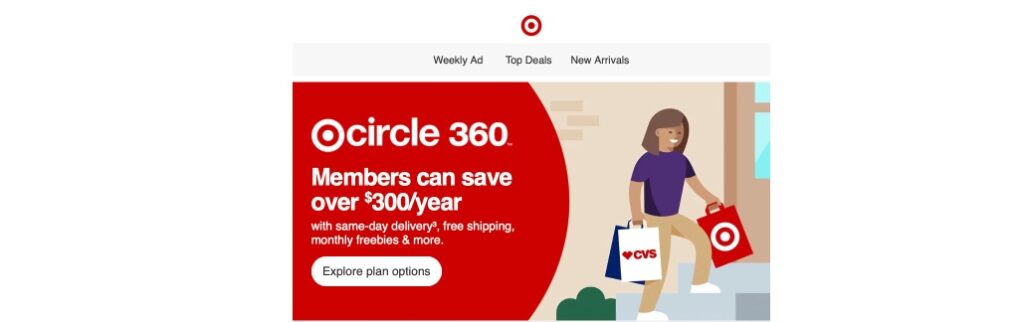
Take this example from Target: the CTA “Explore plan options” doesn’t just prompt a click, it follows a bold value statement (“Members can save over $300/year”) and hints at enticing perks like free shipping and monthly freebies. It’s clear, benefit-driven, and matched to the message, making the next step worthwhile.
7. Plan enticing calls-to-action
You’ve written a great email, your design is on point, but if your call-to-action (CTA) falls flat, all that effort can go to waste.
The best CTAs don’t just tell readers what to do; they make them want to do it. That means going beyond generic phrases like “Click here” or “Learn more.” Instead, speak to the value behind the action.
What will they get if they click? For instance, “Get My Free Guide” feels more rewarding than “Download Now.” When you match the CTA to the intent of your email, it drives action.
Take this example from Target: the CTA “Explore plan options” doesn’t just prompt a click, it follows a bold value statement (“Members can save over $300/year”) and hints at enticing perks like free shipping and monthly freebies. It’s clear, benefit-driven, and matched to the message, making the next step worthwhile.
8. A/B test and adjust
What works for one audience won’t always work for another. That’s why A/B testing is essential. It lets you experiment with different elements of your email: subject lines, CTA buttons, layouts, images, and send times.
You send version A to one segment of your list and version B to another, then measure which performs better. Over time, this helps you make smarter decisions.
Tip: The key to testing is focus. Don’t change five things at once. Test one variable at a time so you know what actually made the difference.
Using the right tools can make testing a lot easier and more insightful. Here are two worth trying:
HubSpot
HubSpot stands out for its robust, data-driven A/B testing features. You can test different email content, CTAs, images, layouts, and even personalization variables to see what resonates most.
What makes HubSpot really shine is its automation. Once it identifies a winning variation based on your chosen metric (opens, clicks, or conversions), it can automatically send the best-performing version to the rest of your list.
Plus, HubSpot’s detailed analytics dashboards make it easy to compare results, uncover patterns, and turn every test into a learning moment.
Mailerlite
Mailerlite makes experimentation feel less intimidating and more accessible. You can quickly test subject lines, sender names, or entire content blocks to figure out what gets the most clicks and opens.
Its clean interface walks you through the setup, while real-time reporting lets you monitor performance and decide when to declare a winner. And if you want to test on autopilot, you can set the platform to automatically send the top performer after a test period.

Wrapping Up on How to Boost Email Engagement Metrics
Email engagement involves sparking action, building trust, and delivering real value with every send. By focusing on the right email marketing metrics and using the hacks from this article, you can turn emails from noise into something your subscribers want to read.
Growth Hackers is a top-tier email marketing agency helping businesses from all over the world grow. There is no fluff with Growth Hackers. We help entrepreneurs and business owners increase their email engagement effectively, boost productivity, generate qualified leads, optimize their conversion rate, gather and analyze data analytics, acquire and retain users and increase sales.
We go further than brand awareness and exposure. We make sure that the strategies we implement move the needle so your business grow, strive and succeed. If you too want your business to reach new heights, contact Growth Hackers today so we can discuss about your brand and create a custom growth plan for you. You’re just one click away to skyrocket your business.