In today’s fast-paced business environment, organizations manage an average of multiple concurrent projects that demand strategic oversight and proactive risk management. According to recent market analysis, nearly 70% of projects encounter significant challenges due to unforeseen risks and inadequate risk management. This alarming statistic underscores why project portfolio management software has evolved from a luxury into a fundamental necessity for organizations seeking sustainable growth.
The project portfolio management market demonstrates remarkable growth, with valuations ranging from $5.39 billion to $8.12 billion last year, projected to reach between $10.35 billion and $20.55 billion by 2033. This expansion reflects the increasing recognition that effective portfolio management (particularly predictive risk identification) directly correlates with organizational success.
The Evolution from Reactive to Predictive Risk Management
Traditional project management relied on quarterly reviews and disconnected spreadsheets: a reactive approach that identified problems only after they materialized. Modern project portfolio management software transforms this paradigm through AI-powered predictive analytics that anticipate risks before they escalate.
According to industry research, organizations using AI-driven predictive analytics report up to 30% improvement in project success rates by acting earlier on emerging risks. This shift from reactive firefighting to proactive risk mitigation represents a fundamental change in how enterprises approach portfolio management.
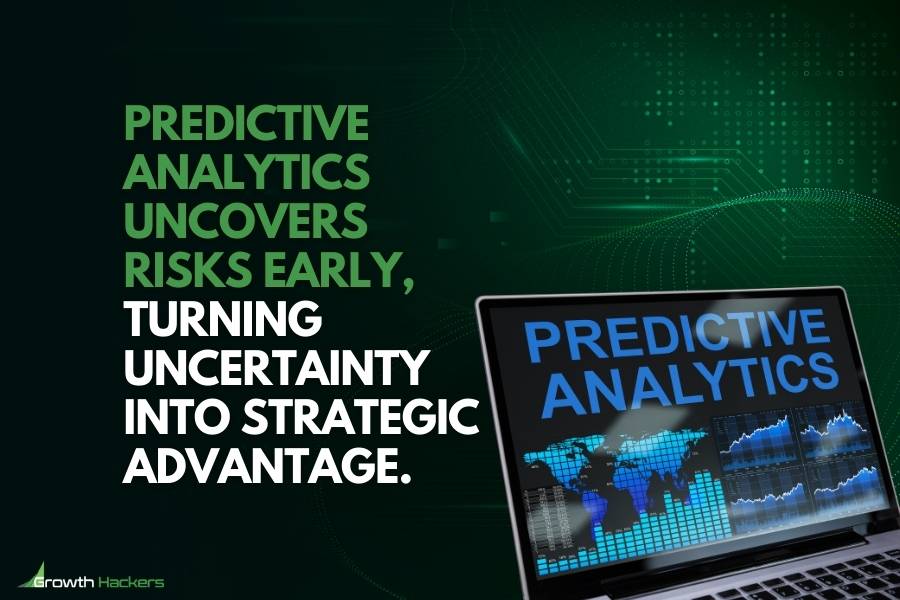
How Predictive Analytics Identifies Risks Early
Modern project portfolio management software leverages sophisticated algorithms to scan historical and real-time data, identifying patterns that signal potential problems. These systems analyze multiple risk vectors simultaneously:
- Resource bottlenecks: Detecting allocation conflicts across projects before teams become overextended
- Financial interdependencies: Monitoring budget constraints and forecasting cost overruns based on spending patterns
- Strategic misalignment: Flagging projects that drift from organizational objectives
- Technology integration failures: Identifying compatibility issues before implementation
- Cross-project dependencies: Mapping how delays in one initiative cascade across the portfolio
As noted by portfolio management experts, these systems provide AI-generated status reports and proactive risk identification, enabling instant notification to project owners with context-specific mitigation guidance. Predictive analytics is your early warning radar and Growth Hackers helps you spot turbulence before it turns into a full-blown storm.This real-time intelligence allows organizations to intervene before minor issues compound into portfolio-wide crises.
Key Features Enabling Predictive Growth
Effective project portfolio management software incorporates several critical capabilities that transform raw data into actionable foresight.
Trend Detection and Pattern Recognition
Advanced platforms use machine learning algorithms to identify when risk creation accelerates, signaling project environment deterioration before deadlines slip. By analyzing historical project data, these systems forecast future trends and detect potential bottlenecks that would otherwise remain invisible until they cause disruptions.
The software examines team efficiency patterns and provides intelligent recommendations for resource allocation to maximize delivery effectiveness. This continuous monitoring ensures organizations maintain operational continuity even when individual projects face challenges.
Portfolio Risk Insights and Correlation Mapping
Leading solutions scan all project boards simultaneously, flagging potential risks by severity. More importantly, they map how risks connect and compound across the portfolio by understanding that risks don’t exist in isolation but as an interconnected system.
This correlation mapping reveals cascade failures before they occur. For instance, when resource constraints in Project A threaten delivery timelines for Project B, which in turn jeopardizes regulatory compliance for Project C, the system alerts leadership to the full chain of consequences, which is enabling strategic trade-offs based on complete visibility.
Scenario Planning and Impact Analysis
Modern project portfolio management software enables intelligent scenario testing across funding, resources, and timelines. Organizations can model ‘what-if’ situations to evaluate contingency budget levels, mitigation strategies, and resource allocation decisions before committing to specific courses of action.
This predictive capability compresses analysis cycles from weeks to hours, enabling faster pivots as priorities change or market conditions shift. According to recent trends, organizations following phased AI adoption models achieve meaningful insights in 3-6 months, compared to 12+ months for unstructured approaches.
Looking to improve performance with advanced project portfolio management software?
Contact Growth Hackers
Implementing Predictive Risk Management at Scale
Scaling predictive risk management across 100+ projects requires systematic frameworks that mature alongside organizational complexity.
Building Enterprise Risk Registers
Comprehensive risk registers serve as the foundation for predictive analytics. These centralized repositories capture risks, mitigating controls, recovery strategies, and consequences across all portfolio initiatives. Advanced platforms combine chart, table, and calendar widgets to visualize risk data in ways meaningful to frontline teams, project managers, and executive boards alike.
Before Growth Hackers, risks were tracked inconsistently and missed; after, a unified risk register enabled proactive, portfolio-wide risk management. The key is standardization without rigidity: defining consistent criteria for risk capture, assessment, and mitigation planning while allowing customization for industry-specific compliance requirements and operational nuances.
Establishing Governance and Oversight
Effective risk governance defines decision rights and visibility hierarchies. Risk committees comprising senior leaders review portfolio risk profiles regularly, transforming risk management from administrative overhead into strategic function with executive support.
Embedding AI insights into weekly business reviews, monthly business reviews, and quarterly business reviews ensures decisions consistently leverage the same data. This integration creates accountability loops where predictive alerts trigger structured escalation and response protocols.
Customizable Dashboards for Stakeholder Alignment
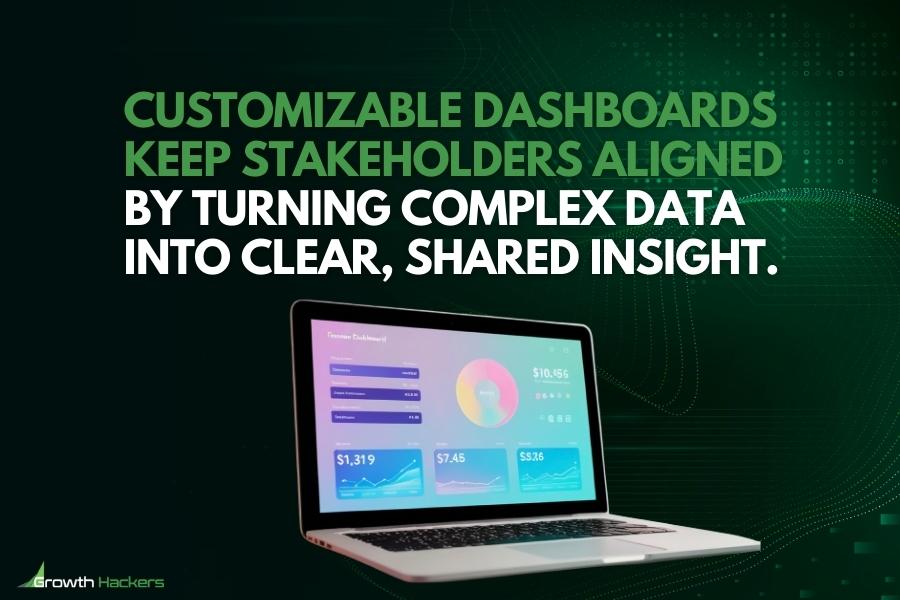
Different stakeholders require different views of portfolio risk. Project portfolio management software provides personalized dashboards offering visual overviews tailored to specific roles: from detailed technical metrics for project managers to strategic summaries for C-suite executives.
These dashboards display key performance indicators including progress tracking, budget utilization, and resource allocation status. Real-time updates ensure stakeholders always access current information, enabling informed decisions that keep projects aligned with business objectives.
Real-World Impact and Measurable Outcomes
The business case for predictive risk management rests on quantifiable improvements across multiple dimensions.
Reduced Project Failure Rates
Organizations implementing advanced project portfolio management software report significant reductions in project failures. By identifying risks early (when mitigation costs remain minimal), these systems prevent the cascade effects that derail initiatives. Growth Hackers has helped organizations implement predictive project management systems that cut failure rates and maximize resource efficiency.
Consider that inefficient project management processes cause approximately 12% wastage of organizational resources. Predictive analytics directly addresses this inefficiency by optimizing resource deployment and preventing the duplicative efforts that emerge when projects require emergency interventions.
Improved Strategic Alignment
Predictive risk identification ensures portfolios remain aligned with evolving business strategies. AI-powered prioritization scores initiatives based on value, risk, and capacity fit; guiding leaders to start, pause, or stop work for maximum strategic impact.
This continuous alignment prevents the common scenario where projects consume resources despite no longer serving organizational objectives. Early warning systems detect strategic drift before significant capital gets committed to initiatives that should be redirected or discontinued.
Enhanced Resource Optimization
Forecasting resource gaps and bottlenecks enables proactive capacity planning. Teams can redistribute workload before individuals become overextended, maintaining productivity and preventing burnout that leads to quality degradation.
The software tracks resource utilization across all projects, identifying underutilized skills and overallocated team members. This visibility supports evidence-based hiring decisions and contractor engagement timing, ensuring the right resources become available precisely when projects need them.
Selecting the Right Solution for Your Organization
Evaluating project portfolio management software options requires careful consideration of organizational needs and technical capabilities.
Critical Selection Criteria
When assessing platforms, organizations should evaluate:
- AI engine maturity: The sophistication of predictive algorithms and their track record in similar organizational contexts
- Configurability: Ability to adapt workflows, risk frameworks, and governance processes without extensive custom development
- Integration capabilities: Seamless connectivity with existing ERP, CRM, and collaboration platforms
- Explainability: Transparency in how AI reaches conclusions, which is critical for building stakeholder trust and meeting regulatory requirements
- Security posture: Data protection measures, access controls, and compliance certifications
- User accessibility: Interface design that serves both technical and non-technical users effectively
Deployment Models and Scalability
Cloud-based solutions dominate the market, accounting for over 54% of deployments, because subscription pricing accelerates time-to-value while embedded analytics provide real-time insights that reduce budget overruns. However, organizations with stringent data residency requirements may still prefer on-premise deployments.
Regardless of deployment model, scalability remains paramount. The platform must handle portfolio expansion from dozens to hundreds of concurrent projects without performance degradation.. ensuring predictive capabilities remain responsive as complexity increases.
Strengthen your strategy with project portfolio management software today!
Work with Growth Hackers
The Future of Predictive Portfolio Management
The trajectory of project portfolio management software points toward increasingly autonomous systems that not only predict risks but proactively recommend and, in some cases, implement mitigation strategies.
Agentic AI and Autonomous Decision-Making
Emerging agentic AI capabilities will take proactive steps to manage portfolios and surface risks without explicit prompts. These systems will move beyond generating alerts to actually adjusting resource allocations, reprioritizing tasks, and even communicating with stakeholders about necessary course corrections.
A client struggled to manage multiple high-stakes projects. Growth Hackers implemented autonomous AI tools, and the system reprioritized tasks and flagged risks before humans could even intervene. This evolution represents the maturation from decision support to decision augmentation: where AI doesn’t replace human judgment but extends its reach across complex, fast-moving portfolio landscapes that exceed individual cognitive capacity.
Integration with Broader Business Intelligence
Future platforms will seamlessly integrate portfolio data with enterprise-wide business intelligence, connecting project performance to customer satisfaction metrics, market trends, competitive positioning, and financial outcomes. This holistic view will enable strategic pivots informed by complete organizational context rather than isolated project data.
The convergence of project portfolio management with ESG-aligned capital deployment, sustainability metrics, and stakeholder value frameworks will transform how organizations evaluate project success, moving beyond schedule and budget to encompass broader impact considerations.
Final Words on the Importance of Project Portfolio Software (PPM)
In an era where 70% of projects face significant challenges from unforeseen risks, project portfolio management software equipped with predictive analytics represents the difference between reactive crisis management and proactive growth enablement. Organizations that embrace these capabilities position themselves to:
- Identify risks before they scale into portfolio-wide crises
- Optimize resource allocation based on comprehensive visibility
- Maintain strategic alignment as priorities evolve
- Make data-driven decisions with confidence
- Achieve measurable improvements in project success rates
As the market continues its robust growth trajectory (projected to reach between $10 billion and $20 billion by the early 2030s), the competitive advantage will accrue to organizations that move beyond viewing project management as administrative function and embrace it as strategic capability. The question is no longer whether to adopt predictive project portfolio management software, but how quickly organizations can implement these tools to transform potential risks into opportunities for predictable, sustainable growth.
Growth Hackers is an award-winning growth marketing agency helping businesses worldwide achieve predictive growth. There is no fluff with Growth Hackers. We help entrepreneurs and business owners leverage advanced data insights and risk-driven strategies to improve decision-making, increase productivity, generate qualified leads, optimize conversion rates, and strengthen user acquisition and retention. We go beyond brand awareness and exposure by ensuring every strategy is aligned with measurable outcomes, so your business can grow, thrive, and succeed.
If you want your business to reach new heights with smarter, risk-informed growth, contact Growth Hackers today to discuss your goals and create a custom growth plan. You’re just one click away from accelerating your success.