Studies show that consistent brand presentation can boost revenue by an average of 23% (Up to 33%), yet most businesses still struggle with fragmented messaging across their digital touchpoints. You are likely wasting a massive portion of your marketing budget if your social media, ads, and sales emails aren’t singing from the same songbook.
This guide breaks down how to execute a high-performance integrated marketing communication strategy to unify your brand voice and maximize your ROI. We will explore the 4 C’s framework and the tactical steps needed to turn disjointed campaigns into a singular growth engine.
Integrated Marketing Communication Strategy and Why Integration Wins
Integrated Marketing Communication (IMC) synchronizes advertising, PR, and social media to eliminate message drift. The 4 C’s framework (Consistency, Coherence, Complementary, and Continuity) drives brand equity and ROI by unifying every customer touchpoint.
The gap between simply being present and being effective lies in how these channels talk to each other.
Distinction Between IMC and Multi-Channel Models
Multi-channel marketing is just being everywhere. IMC is being everywhere with a single, unified purpose and voice. It transforms isolated tactics into a synchronized strategic engine.
Fragmented accounts confuse customers. Each platform starts telling a different story. This lack of alignment erodes brand trust and wastes your marketing budget. Confusion is the enemy of conversion.
A unified strategy ensures a seamless transition. The user feels the same brand energy everywhere. Whether they see a tweet or an email, the experience remains identical.
Integration isn’t just a tactic. It is a strategic moat against fragmented competitors. Brands that speak with one voice dominate the market share.
Growth Hackers Case Study on Message Fragmentation
We once worked with a client struggling with disjointed messaging. Their lead quality dropped by 20% instantly because the sales team and marketing were out of sync.
Fragmented messaging is a silent killer of conversion rates, turning potential advocates into confused bystanders who walk away.
We synchronized their LinkedIn ads with their email sequences. The brand voice became singular and authoritative across all departments. We removed the friction between the initial click and the final pitch.
Lead quality rebounded and conversion rates climbed. A unified narrative proved more powerful than raw volume. Clarity always beats noise in high-stakes digital environments.
Building Brand Equity Through Unified Messaging
Every interaction adds to the brand equity reservoir. Unified messaging makes this process much faster. You stop leaking value through inconsistent communication and start building a real asset.
Seeing the same message builds psychological safety. Customers recognize the brand instantly without thinking. This familiarity reduces the friction required to make a purchase decision.
One-off trends dilute your identity. Stay true to your core value proposition always. Repetition is not boring; it is foundational for high-growth companies. Avoid the temptation to chase every shiny new platform without a plan.
Trust is the currency of the digital age. Consistency is how you mint it. Without a unified message, you are just spending money without building lasting value.
Four Cs Framework for Brand Cohesion
Moving from the conceptual value of integration, we need a practical lens to evaluate our efforts, which brings us to the 4 C’s framework.
Consistency and Coherence in Visual Design
Visual recognition starts with absolute uniformity. Logos and color palettes are non-negotiable assets. They serve as a visual shorthand that triggers immediate brand recall across every single digital touchpoint.
Coherence ensures every design choice supports a central marketing goal. Logic must dictate the layout. Never allow flashy design elements to distract your audience from the primary conversion objective you set.
| Framework Element | Definition | Practical Application |
|---|---|---|
| Consistency | Uniformity of design elements. | Using exact hex codes for all buttons. |
| Coherence | Logical connection of messages. | Ensuring ads match landing page promises. |
| Complementary | Synergy between different channels. | Social media teasers driving blog traffic. |
| Continuity | Stability of the brand voice. | Maintaining tone across multi-year campaigns. |
When visuals and logic align, the message lands harder. Every interaction feels intentional. This professionalism builds the foundation of trust required for long-term customer acquisition and high-performance growth.
Complementary Channels and the Flywheel Effect
Channels should never merely repeat the same text. They must complement each other like different instruments in a band. Each platform plays a specific role while contributing to the same melody.
Integrated channels create a self-sustaining loop, or a flywheel. Social media drives traffic to blogs. Blogs fuel email signups. Every turn of this wheel makes the next customer acquisition significantly easier and cheaper.
At Growth Hackers, we treat every channel as a synergistic asset. No platform exists in a vacuum. We focus on how LinkedIn interactions can strengthen a lead’s response to a direct email.
This strategic approach maximizes the ROI of every content piece. You stop wasting resources on fragmented efforts. You work smarter by making your assets work together for better results.
Continuity for Long-Term Brand Reputation
Message stability is the key to lasting authority. You must maintain your voice for years. Stability breeds authority in a digital market that is often too noisy and distractingly fast-paced.
Avoid the trap of trend-chasing. Don’t pivot your brand voice for every new TikTok challenge. It makes you look desperate and inconsistent to the core audience that actually pays your bills.
- Lack of clear brand guidelines
- High team turnover rates
- Chasing short-term viral metrics
- Lack of executive buy-in
Reputation is built over time through relentless repetition. Continuity is the glue. It holds your brand legacy together while your competitors fade into the background.
Are you ready to elevate your business with integrated marketing communications?
Contact Growth Hackers
Core Components of a Unified Marketing Mix
With the framework established, we must look at the tactical components that make up a truly unified marketing mix.
Aligning Paid Advertising with Content Strategy
Paid search ads must mirror your organic assets. Your paid copy must match your blog’s value proposition. Discrepancies here lead to high bounce rates and wasted spend.
At Growth Hackers, we prioritize this alignment. We often align ad headlines with landing page narratives. This creates a friction-less path for the user to convert effectively.
Maintain the “Scent of the Information” throughout the journey. The user should feel they are in the right place. Consistency in wording is the key to this feeling.
Strategic alignment yields measurable performance gains. Quality scores improve and acquisition costs drop. It is a win for both finance and marketing teams.
Integrating Social Media and Sales Promotion
Deploying limited-time offers requires surgical precision. Pacing these across LinkedIn, Facebook, Instagram, X (Twitter), Pinterest, TikTok, Threads, SnapChat, Reddit and Bluesky requires delicate timing. They must feel urgent but not contradictory to the brand.
Execute platform adaptation without losing your soul. Keep the brand tone intact while changing the format. TikTok needs energy; LinkedIn needs professional depth. Both need the same core message.
Adapting for a platform isn’t an excuse to change your identity; it’s a challenge to express your identity in a new language.
The transition to sales must be invisible. Social promotions should lead to a unified sales experience. No surprises for the customer during the final handoff.
Strategic Use of the PESO Model
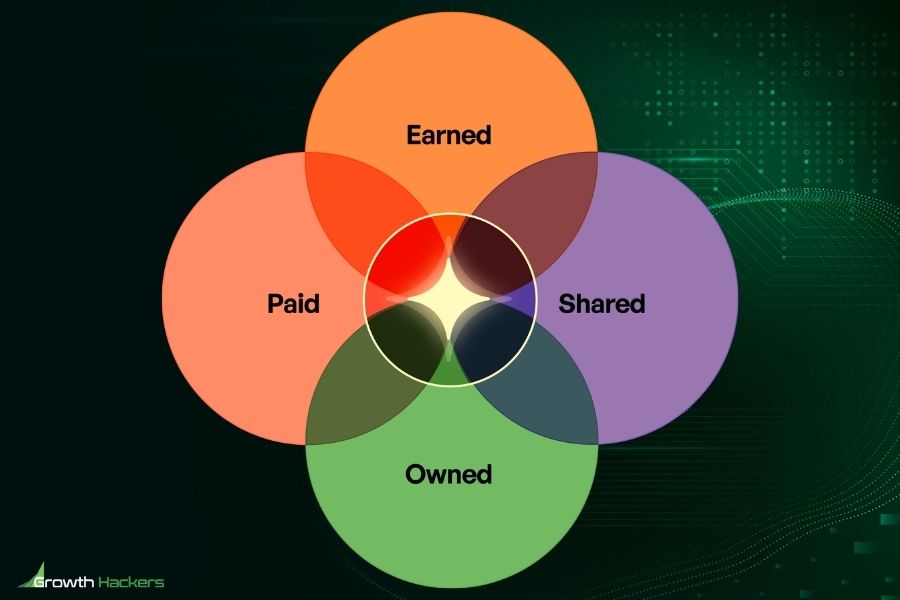
Stop treating media channels as isolated islands. Explain the PESO balance by using Paid, Earned, Shared, and Owned media together. They are not silos; they are gears in one machine.
Leverage PR amplification to build real authority. Use earned media to boost your owned content’s authority. A press mention should link back to a pillar post. This creates a powerful signal for both users and search engines.
Shared media acts as the ultimate validator. Social proof from users validates your Paid claims. It builds a wall of credibility around the brand.
Integration is the only path to market dominance. The PESO model ensures your message is omnipresent and validated. It is the ultimate integration blueprint for growth.
3 Steps to Execute an IMC Campaign
Strategy is useless without flawless execution, so let’s break down the five steps to launching a unified campaign.
1. Audience Research and Internal Team Alignment
Start with touchpoint data. Map where your customers actually engage with the brand. Research beats assumptions every single time in marketing.
Internal alignment. Get sales and marketing in the same room. If sales doesn’t believe the marketing message, the campaign will fail at the finish line.
- Customer interviews
- CRM data audit
- Competitor messaging analysis
- Internal stakeholder workshops
Define the goal. Everyone must agree on the North Star metric. Without this, integration is just a buzzword.
2. Three-Tier Message Architecture Development
Breakdown the hierarchy. Start with the Brand Core. This is your unchanging “Why” that informs every single campaign you run.
Campaign Themes. These are the seasonal or specific angles you take. They must always link back to the core brand identity.
Channel Adaptation. This is where you tweak the format for specific platforms. The “What” changes, but the “Why” remains identical.
Visualizing the stack. Think of it as a pyramid of consistency. The base is your core brand promise.
3. Asset Auditing and Multi-Platform Execution
The audit process. Review every existing asset for brand compliance. Old logos and outdated taglines must be purged before launch.
Track performance. Use a central dashboard to identify message drift early. If one channel is underperforming, check the narrative alignment first. It is often a messaging problem, not a technical one.
- Logo versions
- Font usage
- Tone of voice check
- UTM parameter consistency
Final execution tip: Launch simultaneously across channels to create a surge. Coordination is the secret to impact.
Scaling Consistency with MarTech and Attribution
As campaigns grow, manual oversight becomes impossible, requiring intelligent automation to maintain our integrated standards.
AI and Automation for Message Scale
AI’s role is undeniable for modern growth. Use specific tools to maintain your brand voice at scale. Automation can handle thousands of emails without losing the core narrative.
The risk of over-automation is real. Don’t let the machine become robotic and cold. Keep a human touch in your IMC strategy to stay relatable to your audience.
Growth Hackers’ approach is strictly balanced. We use AI for initial drafts and checks. A human always does the final “vibe check” for brand alignment before any deployment.
Scalability is the ultimate goal here. With the right tech, one person can manage a global narrative. Efficiency meets brand integrity in a way that manual processes simply cannot.
Advanced Attribution Modeling for ROI
Measure cross-channel synergy to understand performance. Don’t just look at the last click. A sale is usually the result of multiple integrated touchpoints across the funnel.
Markov chains provide deep insights. Use advanced modeling to see which touchpoints drive conversion. This reveals the hidden value of “assistant” channels like social media, justifying the entire budget.
Stop guessing which channel works. Use unified data to prove your strategy’s worth. Data-driven decisions are the only way to secure executive buy-in for long-term integrated marketing communication strategy.
Unified Data Infrastructure and Taxonomy
Consistent UTM parameters are non-negotiable. A unified taxonomy is the backbone of clean data. Without it, your reports will be a fragmented mess that leads to poor decisions.
Break down silos immediately. A single source of truth prevents departmental infighting. Everyone looks at the same numbers and the same goals, ensuring total team alignment.
Data silos are the graveyards of integrated marketing; without a unified infrastructure, your strategy is just a collection of guesses.
Clean data allows for predictive modeling. You can anticipate the next successful integrated move. Clean infrastructure is the foundation for sustainable, high-performance growth marketing.
Take the leap and start implementing an IMC strategy this month!
Work with Growth Hackers
Sales Alignment and Managing External Agencies
Finally, we must extend our integration beyond the marketing department to sales teams and external partners.
Aligning Sales Teams with Marketing Messaging
Seamless handoff is mandatory. The sales call must echo the marketing content’s promise. If the tone shifts abruptly, the prospect loses confidence immediately.
Growth Hackers success story. We aligned a client’s sales scripts with their top-performing ads. Close rates improved by 17% within 2 months.
Empower the sales team. Give them the same narrative tools marketing uses. They should be brand ambassadors, not just order takers.
The result of unity. The customer feels a consistent professional journey. This is how you win high-ticket deals.
IMC for Resource-Constrained Startups
Integration on a budget. You don’t need to be everywhere. Pick 2 high-impact channels and integrate them perfectly.
Quality over quantity. A small, unified presence beats a large, fragmented one. Focus on your core message and repeat it relentlessly. Startups win by being more memorable, not by being louder.
Use internal tools. Slack and shared docs can keep a small team aligned. Communication is free.
Scaling up. Once the core is integrated, add channels slowly. Never sacrifice consistency for reach.
Managing Multiple External Agencies
The brand book is law. Every agency must follow the same core guidelines. No exceptions for “creative freedom” that breaks the narrative.
Centralized communication. Use a single tool to coordinate all partners. Prevent conflicting goals by making every agency see the full picture.
Regular alignment meetings. Bring all agencies together monthly. Ensure their campaigns support each other rather than competing for the same keywords.
Final verdict. You are the conductor. The agencies are the orchestra of your brand.
FAQ
What exactly is the difference between Integrated Marketing Communication and a multi-channel approach?
Multi-channel marketing is simply about being present on various platforms, often with disconnected messages. Integrated Marketing Communication (IMC) is the strategic synchronization of those channels to ensure one unified purpose and voice across every single touchpoint.
While multi-channel models risk message drift and brand erosion, IMC creates a seamless experience. It turns your marketing efforts into a strategic moat, ensuring the customer feels the same brand energy whether they are on LinkedIn, reading an email, or seeing a print ad.
How does the 4 C’s framework improve brand cohesion?
The 4 C’s, Consistency, Coherence, Complementary, and Continuity, act as a rigorous filter for your strategy. Consistency ensures your visual identity is non-negotiable, while Coherence mandates that every tactic supports one central marketing goal without distraction.
Complementary efforts ensure channels work together like a synergistic flywheel rather than just repeating the same text. Finally, Continuity provides the stability needed to build long-term authority, preventing you from chasing desperate trends that dilute your core value proposition.
Why is message consistency so critical for brand equity and ROI?
Consistency is how you mint trust in the digital age. When your messaging is unified, it builds psychological safety, allowing customers to recognize and trust your brand instantly. Research by Marq shows that consistent brands can see revenue increases of 23% to 33%.
Fragmented messaging is a silent killer of conversion rates. By maintaining a unified narrative, you avoid wasting budget on conflicting campaigns and can achieve a 30% higher ROI through better attribution and improved customer retention.
What are the essential steps to launch a successful IMC campaign?
Execution starts with deep audience research and internal alignment; if your sales and marketing teams aren’t singing from the same songbook, the campaign will fail. You must map every customer touchpoint and agree on a single North Star metric before creating any assets.
Next, develop a three-tier message architecture: the Brand Core (your “Why”), Campaign Themes, and Channel Adaptation. This pyramid structure ensures that while your format changes for specific platforms, your fundamental promise remains identical and impactful.
How can a business maintain integration while scaling with MarTech?
Scaling requires intelligent automation and a unified data infrastructure to prevent “data silos,” which are the graveyards of integrated marketing. Use AI to maintain your brand voice at scale for drafts and checks, but always keep a human “vibe check” to ensure the message stays relatable.
To prove the value of your integrated ecosystem, move beyond last-click attribution to advanced modeling. This reveals the hidden ROI of assistant channels and ensures every gear in your marketing machine is optimized for maximum performance.
How do I manage multiple agencies or small teams without losing message control?
The brand book is law. Whether you are a resource-constrained startup or a global firm, every external partner and internal team member must follow the same core guidelines with zero exceptions for “creative freedom” that breaks the narrative.
Centralize communication and hold regular alignment meetings to ensure all campaigns support each other. You are the conductor, and your agencies are the orchestra of your brand; coordination is the only way to create a surge that truly moves the needle.
Closing Words on Integrated Marketing Communication
Mastering an integrated marketing communication strategy unifies your brand voice, leveraging the 4 C’s to eliminate message drift and skyrocket ROI. Synchronize every touchpoint now to build unstoppable brand equity and outpace fragmented competitors. Dominate your market with one cohesive narrative that turns confusion into conversion.
Growth Hackers is a top-rated integrated marketing agency working with businesses of any sizes: from early-stage startups to SMBs and even Fortune 500 companies. We helped them craft and implement omnichannel marketing campaigns by embedding the following channels together:
- SEO and GEO (Search and Generative Engine Optimization)
- Social Media Marketing
- PPC Advertising
- Email Marketing Automation
- Landing Page Design
- Web Development
- Sales Funnels
- CRO (Conversion Rate Optimization)
- AI-Powered Content Distribution
- Digital Transformation
- Growth Hacking
We cover each part of the marketing funnel (From brand awareness to interest, considerations, leads, sales and advocacy) by employing the AARRR framework or also called pirate metrics:
- Acquisition
- Activation
- Retention
- Referral
- Revenue
Do you need assistance in implementing an IMC strategy for your business? I believe you’ve now found the ultimate partner. All you have left to do is to schedule a discovery session with one of my teammates. Then, the process can start.