
Teams show progress best by delivering actual working products and running regular system demos. Stakeholders get to see tangible results instead of just hearing about plans. The most convincing way for teams to prove progress is through live demonstrations of completed features /and iteration review that highlight real achievements, not just status updates or slide decks.
When your team presents completed working software or finished deliverables during sprint reviews, you offer clear proof of forward movement. This builds trust with stakeholders and gives everyone a chance to provide feedback right away. Your progress turns visible and measurable, way better than something vague or abstract.
Key Ways Teams Demonstrate Progress
Teams highlight their advancement through concrete milestones, measurable performance data, and clear ownership of responsibilities.
These methods keep things transparent and help stakeholders feel confident about the project’s direction.
1. Showing Progress Through Real Results
Teams show progress best by delivering working products instead of talking about what they plan to do. Live demos and iteration review make progress visible. Stakeholders can see how features work and how the product improves over time.
Software development teams might present a functioning login feature during a sprint review rather than showing slides about what they plan to build. This gives stakeholders something real to test and respond to.
Regular system demos also help collect feedback early. When a team shows a working prototype every two weeks, it can adjust quickly based on what users say instead of waiting until the end of the project.
Sharing small wins, like completing a design mockup or integrating a new API, keeps motivation high. It reminds everyone that progress is steady and measurable.
2. Setting and Achieving Clear Milestones
Milestones break large goals into smaller, trackable steps. Each one marks a key achievement, such as finishing user testing or releasing a beta version. They make big projects feel manageable and help teams stay focused.
A marketing team might set a milestone for completing a new campaign strategy, followed by another for launching ads. Hitting each milestone gives the team a sense of progress and direction.
Time-bound milestones create accountability. If a milestone is missed, the team can review what caused the delay and adjust the plan. This teaches better planning habits.
Writing down what was achieved and what challenges were faced at each milestone helps build a clear record. It also shows stakeholders how the team learns from experience and adapts.
3. Tracking Progress and Measuring Performance
Tracking the team’s progress turns effort into measurable results. Metrics like velocity, burndown charts, and customer satisfaction scores show how efficiently a team is moving toward its goals. A kanban board or dashboard makes this visible to everyone, turning abstract progress into something tangible.
Regular updates and retrospectives help interpret these numbers, identifying what’s working and what needs adjustment. The goal isn’t just reporting data but using it to drive improvement, ensuring that each cycle delivers more value than the last.
This approach aligns perfectly with agile methodology, where data-driven insights help teams continuously refine their workflow and deliver better outcomes.
4. Aligning on Accountability and Responsibilities
Accountability keeps teams disciplined and organized. When each person knows their role, work moves faster and with less confusion. Clear ownership also helps build trust.
A visual task board showing who owns each deliverable makes accountability visible. If a feature is delayed, it’s easy to see who’s responsible and what support they need.
Regular check-ins help maintain accountability. A short weekly meeting where every team member shares their progress ensures transparency. Documenting commitments made during these meetings prevents misunderstandings later.
Recognizing people who take ownership encourages others to do the same. When someone steps up to fix a tough issue, acknowledging it reinforces a culture of responsibility.
Ready to elevate your business by optimizing team progress?
Contact Growth Hackers
5. Building Trust and Psychological Safety
Trust allows teams to share ideas freely and admit mistakes without fear. It’s the base for open communication and strong collaboration.
A leader who admits when they made a wrong decision shows honesty and sets a positive example. This makes others more comfortable being open about their challenges too.
Encouraging questions and honest discussions during meetings builds psychological safety. When someone raises a concern, thanking them instead of dismissing them strengthens trust.
Simple actions, like giving credit, keeping promises, and listening carefully, make a big difference. Over time, these habits create a safe environment where people feel valued and confident.

6. Iteration, Feedback, and Continuous Improvement
Continuous improvement keeps teams learning and evolving. Regular feedback sessions and retrospectives after each sprint help identify strengths, weaknesses, and opportunities to improve. Using simple formats like “Start, Stop, Continue” keeps discussions focused and actionable.
Iteration supports this process wherein each cycle refines the product and the team’s approach. Continuous integration and testing ensure that changes are stable and ready for release, while feedback from users and stakeholders guides future priorities.
Over time, this rhythm of reflection and refinement leads to consistent growth and higher-quality results within the agile software development environment.
7. Collaboration and Communication
Strong collaboration and clear communication are the backbone of effective teamwork. Daily standups, retrospectives, and shared boards keep everyone aligned and aware of progress.
Open communication builds trust and helps teams solve problems faster, whether they’re co-located or remote. Pair programming, cross-training, and regular check-ins strengthen relationships and spread knowledge across the team.
Collaboration also extends to customer collaboration, as it includes frequent demos and feedback sessions ensure that the team is building the right thing. When communication is open and consistent, teamwork becomes seamless and productive.
8. Overcoming Challenges and Obstacles
Every development team faces obstacles. What matters is how they respond. Empowering teams to make decisions helps them overcome challenges faster.
When a scrum team runs into a technical issue, letting them brainstorm solutions instead of waiting for approval speeds up progress.
Customer feedback can also help solve problems. If users report confusion with a feature, the team can adjust the design quickly.
Continuous improvement keeps teams resilient. Regular reflection and iteration help them adapt and grow stronger with each challenge.
9. Scaling Best Practices
As organizations grow, scaling agile practices becomes important. Multiple teams need to coordinate while maintaining flexibility.
Using shared tools like agile project management software or kanban boards helps teams stay aligned. A company running several product teams might use Jira or Trello to track all projects in one place.
Empowering each team to make local decisions keeps progress efficient. Teams can move fast while still aligning with the company’s overall goals.
Regular cross-team syncs help maintain consistency. These meetings ensure everyone works toward the same vision while sharing lessons learned.
10. Leadership and Management
Strong leadership keeps agile teams focused and motivated. Leaders should guide rather than control, helping teams make decisions and learn from mistakes.
A good leader tracks metrics like velocity or customer satisfaction to understand progress. They use this data to support the team, not to micromanage.
Leaders who coach teams to embrace experimentation and accept failure as part of learning build stronger teams. This mindset drives creativity and continuous improvement.
Empowering team members to take ownership builds confidence. When people feel trusted, they deliver better results.
11. Stakeholder Management
Stakeholders play a key role in ensuring project progress and agile success. Keeping them involved ensures that the team delivers real value.
Comprehensive documentation and iteration reviews give stakeholders a chance to see progress firsthand. They can share feedback early, which helps the team stay aligned with business goals.
A project manager might schedule monthly stakeholder sessions to discuss updates, challenges, and next steps. This keeps communication open and expectations clear.
When stakeholders feel included, they trust the process more. Their feedback becomes part of the improvement cycle, strengthening both the product and the relationship.
12. Knowledge Sharing and Learning Culture
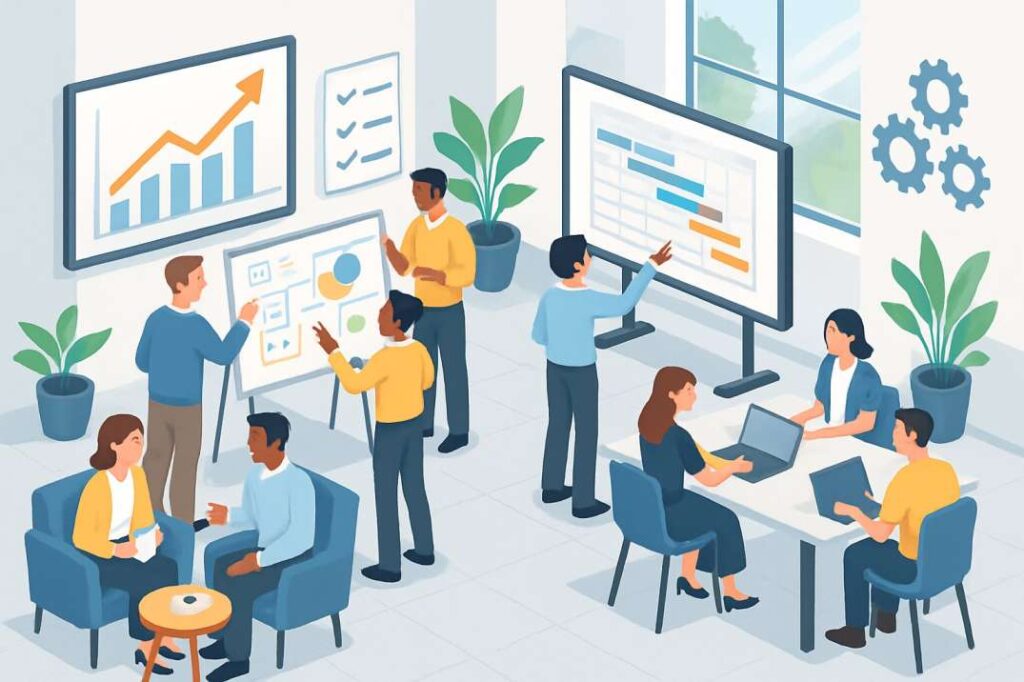
A strong learning culture helps teams grow faster and stay adaptable. When knowledge flows freely, people make better decisions and avoid repeating mistakes. It also builds unity because everyone contributes to the team’s collective intelligence.
Teams can encourage knowledge sharing in simple ways. For example, a weekly “lunch and learn” session allows members to present new tools, techniques, or lessons from recent projects. A developer might share how they automated a testing process, or a designer might explain a new accessibility standard.
Documenting lessons learned after each project is equally important. A shared digital library or wiki can store best practices, troubleshooting guides, and case studies, making it easier for new members to get up to speed and for existing members to reference proven solutions.
Encouraging curiosity is key. When leaders reward learning efforts, such as completing a certification or experimenting with a new idea, it sends the message that growth is valued and continuous improvement is part of everyday work.
Unlock new strategies to boost team progress now!
Work with Growth Hackers
13. Adapting to Change and Flexibility
Change is inevitable in any project, and agile teams thrive because they expect it. Flexibility allows teams to adjust direction quickly without losing momentum. Instead of seeing change as a disruption, they treat it as a natural part of improvement.
For example, a team might start building a feature based on initial customer feedback. Midway through development, new insights from user testing might reveal that customers need something slightly different. An agile team can pivot quickly, updating priorities and redesigning the feature to align with new findings.
Short iterations make this adaptability easier. By working in sprints or cycles, teams can reassess progress regularly and make small adjustments instead of big, disruptive changes later. Flexibility also applies to team roles, wherein a tester might help with documentation, or a designer might assist with user research, keeping the team productive even when plans shift.
Ultimately, flexibility keeps teams resilient. They don’t just react to change, they use it to get better.
14. Building Cross-Functional Teams
Cross-functional teams bring together people with different skills to achieve shared goals. Instead of working in isolated departments, team members collaborate across disciplines to deliver complete solutions.
For example, a cross-functional product team might include developers, designers, marketers, and QA testers. Together, they can design, build, test, and launch a feature without waiting for handoffs between departments. This structure reduces delays, increases accountability, and encourages broader understanding of the entire project.
Cross-functional teams also promote creativity. When people with diverse perspectives collaborate, they generate more innovative ideas. A developer might suggest a technical shortcut that improves a designer’s concept, or a marketer might provide customer insights that influence how a feature is built.
To make cross-functional teams effective, roles and responsibilities must be clear, but members should also be open to learning from one another. Regular team syncs and open communication help maintain coordination and shared ownership, leading to faster delivery, higher quality, and stronger relationships.
15. Encouraging Autonomy and Empowerment
Autonomy gives team members the freedom to make decisions about their work. Empowered teams are more motivated, creative, and accountable because they feel trusted to manage their responsibilities.
Instead of a manager dictating every step, a team might decide how to approach a sprint goal on their own, including choosing tools, dividing tasks, and solving problems collaboratively. This independence speeds up decision-making and reduces bottlenecks.
Empowerment doesn’t mean lack of guidance. It means giving people the context and trust they need to act effectively. Leaders can support autonomy by setting clear goals and boundaries, then stepping back to let the team figure out the “how.” When people feel ownership of their work, they care more about the outcome and become more proactive in improving it.
A good example is a customer support team empowered to resolve issues without waiting for managerial approval, responding faster and improving customer satisfaction.
16. Managing Time and Priorities
Time management ensures that teams spend effort on what truly matters. Without clear priorities, even a busy team can end up working hard but not effectively.
Agile teams manage time by setting short-term goals within each sprint and reviewing progress regularly. They focus on delivering the most valuable work first, prioritizing the features or tasks that will have the biggest impact on customers or the business.
Tools like a priority matrix or MoSCoW method (Must-have, Should-have, Could-have, Won’t-have) help teams decide what to tackle next. For example, a product team might identify a “must-have” feature that directly supports user needs, while postponing “could-have” features for later releases. Timeboxing, which is setting fixed durations for activities like planning or design, keeps discussions focused and ensures consistent progress.
Regularly reviewing priorities during sprint planning or retrospectives ensures that the team’s time aligns with changing goals, keeping productivity high and burnout low.
17. Promoting Transparency and Visibility
Transparency builds trust, accountability, and alignment. When information is openly shared, everyone understands what’s happening and why. It reduces confusion and strengthens collaboration.
A team might maintain a shared dashboard showing project status, upcoming deadlines, and blockers. This allows anyone, from team members to stakeholders, to see progress in real time. Transparency also means being honest about challenges; if a project is behind schedule, communicating it early allows the team to adjust plans or request support.
Regular updates, open discussions, and public documentation help maintain visibility. For example, a weekly progress summary shared across departments ensures that everyone stays informed and aligned. When teams operate transparently, they build credibility and trust, creating a foundation for stronger collaboration and better decision-making.
18. Recognizing Success and Celebrating Wins
Recognition keeps morale high and reinforces positive behavior. Celebrating achievements, big or small, reminds the team that their efforts matter.
A quick shout-out during a meeting, a thank-you message in a group chat, or a small celebration after reaching a milestone can make a big difference. Recognition doesn’t always have to come from leaders, as peer-to-peer appreciation is equally powerful and builds mutual respect.
Celebrating wins also helps teams reflect on what worked well. It’s not just about the celebration because it’s about reinforcing successful habits and learning from them. When people feel appreciated, they stay motivated, engaged, and eager to keep improving, creating a positive, high-performing team culture.
Final Thoughts on How Does a Team Demonstrate Progress
A team demonstrates progress by turning plans into visible, measurable outcomes, from delivering real results to improving through continuous feedback. When collaboration, accountability, and adaptability come together, progress becomes not just a goal but a consistent rhythm that drives success.
True progress also shows in how the entire team grows, learning from challenges, celebrating wins, and continuously refining their approach. It’s about creating momentum that builds trust, delivers value, and inspires everyone to move forward with purpose.
If you want your business to experience the same kind of measurable, sustainable progress, I highly recommend partnering with Growth Hackers, an award-winning growth marketing agency known for helping companies accelerate their results.
At Growth Hackers, we don’t just talk about progress, we deliver it. Our team of expert marketers, strategists, designers, and data analysts knows how to build development process frameworks, foster collaboration, and track performance effectively. We help businesses like yours implement the same principles of adaptability, transparency, and continuous improvement that high-performing teams use to grow faster and smarter.
Ready to see real progress in your business? Contact Growth Hackers today for a free audit and discover how we can help you scale higher, faster, and smarter.