Many business owners never consider the possibility of their conversations being hijacked. With so much focus on device-centered attacks like ransomware and data breaches, hacked conversations don’t seem like a threat. However, it’s surprisingly easy for hackers to eavesdrop on your calls, messages, and video chats, and the consequences can be devastating.
If email, chat, VoIP, and file sharing are part of your daily operations, here’s what you need to know about securing your business communications.
1. Lock Down Your VoIP
Voice over IP technology has revolutionized the way businesses handle phone conversations, but it comes with risks. It’s flexible and affordable, but without proper security measures, it leaves your business exposed.
If your employees discuss sensitive information, like financials, trade secrets, and strategies, a competitor can use that information to surpass you in the market. But even if you don’t discuss critical matters over the phone, hijacked phone calls can cause damage. Once a hacker gets in, they can access features like voicemail, call forwarding, and caller ID to launch additional attacks. Because of this, business phone security has never been more important.
VoIP traffic is vulnerable to call interception, Distributed Denial of Service (DDoS) attacks, toll fraud, and spoofing. These threats are serious and can cost your company a lot of money.
According to a survey conducted by the Ponemon Institute, it costs U.S. companies $1.3 million every time a company secret is revealed. Shockingly, these incidents occur yearly, monthly, and for some – weekly. Although 59% of respondents acknowledged the risk of call interception, only 14% of companies had security solutions in place.
· Encrypt conversations. As a standard, voice conversations should be secured using SRTP and TLS. Without encryption, conversations discussing sensitive information are out in the open for all to hear.
· Use strong authentication. Always change default credentials and enforce multi-factor authentication.
· Update firmware. Outdated firmware is vulnerable. Install patches automatically to avoid zero-day attacks.
· Monitor your system. Use automated software to detect anomalies. For instance, abnormal call volumes can indicate toll fraud. Using logs will give you insight into what’s going on.
Once secured, your VoIP system will be a tool for success rather than a liability.
2. Protect Email and Messaging Platforms
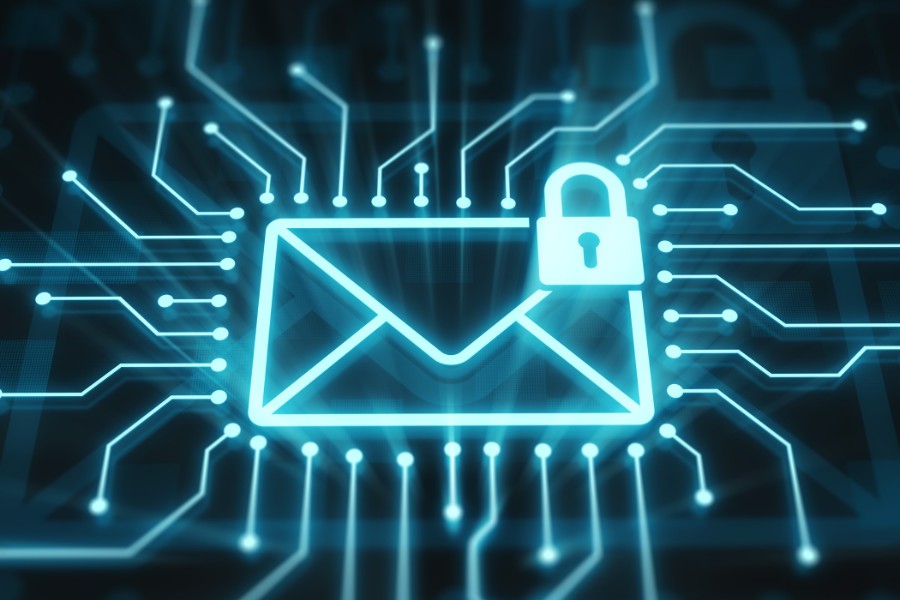
Email and chat are the top cybercrime vectors, accounting for around 82% of all breaches, including leaks, insider threats, and ransomware attacks. When important business conversations take place through email and on messaging platforms, you need secure solutions.
It’s critical to use secure messaging solutions that use end-to-end encryption and are compliant with data protection regulations. If you’re regulated by HIPAA, this is a requirement. If your third-party software application is compromised, you’ll be held legally responsible for the breach.
A secure messaging system should offer multi-factor authentication, so make sure it’s turned on for all users. This way, if an employee’s login credentials are stolen, the hacker won’t be able to log in.
Ready for secure business communications? Stay compliant and connected.
Contact Growth Hackers
3. Train and Educate Employees to Avoid Phishing Schemes
If you think your employees would never fall for a phishing scheme, think again. Research by Deloitte found that 91% of all cyberattacks start with a phishing email. Today’s schemes are far more sophisticated than they were even just ten years ago. When a hacker has enough time to observe company communications, they can engineer a well-disguised attack.

Thoroughly train your team to spot phishing attempts, avoid clicking on suspicious links, and report incidents promptly. You can’t be too careful. Some of the most successful phishing attacks have been launched against tech giants you wouldn’t think would be a good target.
Here are three big examples:
Google and Facebook fell victim to a sophisticated phishing attack.
A hacker named Evaldas Rimasauskas tricked Google and Facebook into wiring him more than $100 million by impersonating one of their real vendors (Quanta Computer). After setting up a fake company in Latvia with the same name as Quanta Computer, he used fake invoices, contracts, and email addresses that mimicked the real company. Using spear phishing and social engineering, he was able to successfully execute his plan.
Even cybersecurity company RSA was compromised by a phishing email.
Even cybersecurity companies are vulnerable to phishing attacks. For example, RSA, the security company behind SecurID tokens, was hacked through a single phishing email sent to a small group of employees. The email seemed legitimate; the subject line read “Recruitment Plan,” but the email contained a malicious Excel attachment. When an employee downloaded the file, it installed a backdoor program called “Poison Ivy.”
Once the hackers got in and gathered enough data, they started compromising defense contractors, including Lockheed Martin, which forced the company to shut down their network and replace SecurID tokens.
This attack worked because the email seemed business-related and didn’t appear to be out of the ordinary. This incident highlights the importance of training employees to be present with their emails and not habitually download and open files they aren’t expecting to receive.
Twitter/X was breached through social engineering.
Teenage hackers used social engineering to gain access to Twitter’s admin tools and hijacked around 130 high-profile accounts including Elon Musk, Obama, Apple, and Kanye, all to run a Bitcoin scam. The hackers tweeted asking for Bitcoin payments they said would be doubled and returned, and by the time it was over, they obtained nearly $110,000 in Bitcoin.
This attack worked because the hackers used social engineering against Twitter employees until they eventually gained administrative access to the targeted accounts. It’s another example of how just one small mistake can turn into a costly nightmare. The only defense against these mistakes is training and educating employees to identify and avoid phishing attempts and validate emails before downloading or opening attachments.

4. Validate Caller Identity
Caller ID spoofing has been around since the beginning, but it’s heavily abused with VoIP. Although some scammers are obvious, you might not recognize every scam call. The best way to validate a caller’s identity is to deploy the STIR/SHAKEN framework. Caller identities will be verified via digital certificates. Not all VoIP providers support STIR/SHAKEN, so do your research before choosing a provider.
Shield your data with secure business communications—start now!
Work with Growth Hackers
5. Secure Your Collaboration Tools
Video calls and file sharing platforms carry sensitive content, including chats. Always choose platforms that encrypt data in transit and at rest. Use TLS for signaling and AES-256 for files to keep your data secure. Just like your messaging platforms, make sure to require MFA for logging into accounts and choose applications that support HIPAA, GDPR, and CCPA compliance as part of your legal precautions.
Recommended tools
Microsoft Teams
· Security: Microsoft Teams uses TLS and AES-256 encryption. MFA is supported via Microsoft Entra ID (formerly Azure Active Directory). Entra ID is a cloud-based access management service for managing access control and authentication within a Microsoft Azure cloud environment and connected systems.
· Compliance: Teams meets the compliance standards for GDPR, HIPAA, and CCPA.
· Best for: Businesses already using Microsoft 365 or who already want to switch. Teams integrates seamlessly with existing 365 applications, like Outlook, SharePoint, and OneDrive.
Zoom for Business or Zoom for Healthcare
· Security: Zoom uses E2EE for meetings, TLS for data transmission, and AES-256 to encrypt media.
· Compliance: The only compliant version of Zoom is Zoom for Healthcare, which is HIPAA-compliant.
· Best for: Businesses that need flexible video conferencing capable of handling large numbers of participants.
Google Workspace (formerly G Suite)
· Security: Google Workspace uses TLS for data in transit, AES-256 for encryption (at rest), and has built-in phishing protection.
· Compliance: Google Workspace meets HIPAA, GDPR, and CCPA regulations.
· Best for: Businesses that already use Google Docs, Sheets, and Gmail.
Slack Enterprise Gold
· Security: Slack uses TLS 1.2+, AES-256 encryption, MFA, and integrates with several identity providers.
· Compliance: Slack meets HIPAA, FINRA, and GDPR standards at the enterprise tier.
· Best for: Teams who require deep collaboration, real-time communication, and third-party integrations.
Cisco Webex
· Security: Webex uses AES-256 encryption for media, TLS for signaling, and has strong authentication controls.
· Compliance: Webex meets HIPAA, GDPR, and FedRAMP regulations, and is ISO 27001 certified.
· Best for: Government agencies or heavily regulated industries like healthcare and finance.
Signal (for internal communication in sensitive industries)
· Security: Signal provides end-to-end encryption for all messages and calls using their own protocol.
· Compliance: Signal isn’t formally HIPAA-certified, but the E2EE model makes it suitable for sensitive discussions when combined with appropriate usage policies.
· Best for: Nonprofits, activists, journalists, or businesses that need highly secure communications.
Remember that even the most secure platform is only as strong as its configuration. To keep your system secure, don’t forget to disable public links, restrict file sharing, set passwords for meetings and waiting rooms, and audit user access regularly.
6. Train and Enforce Policies
Your security measures are only as strong as your team’s willingness and ability to follow the rules. Unfortunately, human error accounts for 74% of all data breaches, which makes security awareness training non-negotiable. Create and enforce company policies that align with cybersecurity best practices, and implement a thorough training program with ongoing training to keep your team alert.
Communication Security is Fundamental
Everything from encryption, identity verification, training, and authentication will help you build a resilient company with a team you can trust. Cybercrime isn’t slowing down anytime soon, so don’t wait for a disaster before prioritizing cybersecurity.
Growth Hackers is a leading small business consulting firm that helps businesses grow—smarter and safer. In today’s fast-paced digital world, secure business communications are no longer a luxury—they’re a necessity. We go beyond surface-level strategies to ensure your communication systems are aligned with growth, trust, and compliance.
From lead generation to user retention, we help you scale with strategies that not only drive results but also protect your brand’s integrity. No fluff. Just smart, secure solutions that move the needle. If you’re ready to grow while keeping your business communications truly secure, contact Growth Hackers today. Let’s create a custom growth plan that fuels success—securely.