Introduction | Frame the Customer Journey as a Growth Problem
Growing an eCommerce store is not simply about attracting more website traffic. An eCommerce sales funnel is a structured, measurable framework that guides visitors from initial awareness to purchase and retention, helping you spot where revenue leaks and fix the friction points that block growth. Too many eCommerce businesses invest heavily in advertising without understanding where potential revenue disappears. They focus on bringing in more visitors while overlooking the friction points that prevent conversions.
That is why every successful e-commerce sales funnel begins with understanding the customer journey.
Think of your funnel as a measurable framework rather than a marketing concept. Every interaction, from initial awareness to the final purchase and beyond, provides data that reveals how your potential customers think, compare, hesitate, and ultimately decide. When businesses measure these touchpoints correctly, they uncover opportunities to increase revenue, improve conversion rates, and strengthen customer retention.
At Growth Hackers, we have worked with brands across different industries to build scalable growth systems, and one lesson remains consistent. Businesses rarely struggle because they lack traffic. They struggle because their sales funnel fails to move visitors smoothly between the various stages of the buying process.
Whether you manage a growing online business or an established e-commerce store, this guide is built for store owners, marketers, founders, and eCommerce managers responsible for acquisition, conversion, and long-term customer value. It breaks down the key funnel stages, how to build and optimize awareness, consideration, conversion, and retention, which metrics to track, how campaign-based reporting fits in, the common mistakes to avoid, and the step-by-step process for improving performance over time.
An optimized eCommerce sales funnel helps businesses:
- Attract qualified potential customers
- Improve acquisition efficiency
- Increase eCommerce sales
- Build stronger customer lifetime value
- Create predictable growth through measurable optimization
Instead of relying on guesswork, every decision becomes backed by analytics, experimentation, and continuous improvement. The businesses that consistently outperform competitors understand that growth is not created by one viral campaign. It comes from optimizing the entire sales funnel, one step at a time.
The eCommerce Funnel | Why Your Ecommerce Business Needs It
An eCommerce funnel is the structured path that guides potential customers from discovering your brand to becoming repeat customers who continue purchasing over time.
Unlike traditional marketing that focuses only on generating traffic, an e-commerce sales funnel exposes exactly where prospects lose interest. Every drop-off reveals an opportunity for improvement.
A healthy funnel typically includes these stages:
- Awareness Stage
- Consideration Stage
- Conversion Stage
- Customer Retention
Together, these various stages provide a complete visual representation of how shoppers interact with your business before and after making a purchase.
Without an optimized eCommerce funnel, many e-commerce businesses unknowingly leak revenue.
For example:
- Strong advertising but weak product pages
- High add to cart rate but poor checkout completion
- Excellent acquisition but low repeat purchases
- Growing traffic but declining customer lifetime value
Each issue represents a different funnel stage, and solving the wrong problem often leads to wasted marketing spend.
This is why leading brands measure every stage individually instead of evaluating only overall revenue. Improvements made early in the funnel often compound throughout the buying process, creating significantly higher returns over time.
At Growth Hackers, we approach every sales funnel with one question:
“Where is growth leaking?”
Finding that answer allows businesses to prioritize the changes that produce the greatest impact instead of trying to optimize everything at once.
Awareness Stage | Campaign Based Acquisition & Content Marketing
The awareness stage is where strangers first become aware of your business. At this point, your goal is not immediate sales. Your objective is reaching the right people and creating enough interest for them to continue exploring your brand.
Many brands make the mistake of targeting everyone. Successful marketing efforts begin with understanding your target audience through proper customer segmentation.
Different audiences have different motivations.
Some are actively searching for solutions through search engines.
Others discover products while browsing social media platforms.
Some respond best to educational resources, while others engage through influencer recommendations or user generated content.
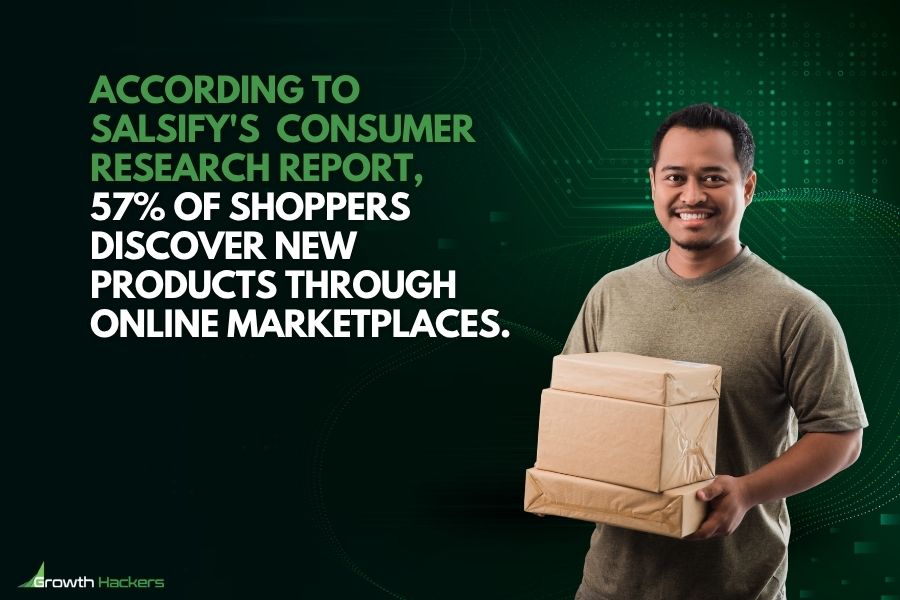
Consumer discovery habits reinforce the need for a multi-channel approach. According to Salsify’s Consumer Research report, 57% of shoppers discover new products through online marketplaces. Reaching potential customers across multiple touchpoints increases the likelihood of capturing attention during the awareness stage rather than relying on a single acquisition channel.
This is why every campaign based acquisition strategy should begin by identifying your highest-intent audience segments before launching campaigns.
Effective acquisition channels often include:
- Organic SEO and GEO (Generative Engine Optimization) through content marketing
- Google Shopping campaigns
- Paid search advertising
- Social media advertising
- Influencer collaborations
- Email lead magnets
- Video marketing
- Retargeting campaigns
Each channel contributes differently depending on where shoppers are in their purchase journey.
Educational blog articles help answer early questions during initial awareness.
Buying guides attract visitors by comparing solutions.
Video demonstrations build confidence.
Meanwhile, customer testimonials and authentic positive reviews begin introducing trust before visitors even reach a product page.
The strongest campaign based strategies also align messaging with customer behavior.
Someone discovering your brand for the first time should receive different messaging than someone who previously abandoned their cart. Understanding these behavioral differences allows marketers to personalize experiences without overwhelming visitors.
One approach we’ve seen work repeatedly at Growth Hackers is creating content around customer intent rather than products.
Instead of simply promoting features, answer the questions your prospective customers are already asking.
Examples include:
- How-to guides
- Product comparison articles
- Industry trends
- Problem-solving videos
- Interactive buying tools
- Educational webinars
This approach attracts higher-quality website visitors while establishing authority before competitors enter the conversation.
As your website traffic grows, the focus shifts from attracting more visitors to moving qualified prospects toward evaluation. That transition leads directly into the next stage of the eCommerce sales funnel, where trust becomes the deciding factor.
Want a higher-converting eCommerce sales funnel?
Contact Growth Hackers
Consideration Stage | Build Trust Before Asking for the Sale
The consideration stage is where prospective customers compare your offer against competitors. They already know your brand, but they still need confidence before making a decision. Every product page should answer one question: “Why should I buy from you instead of someone else?”
Start by strengthening each product page with detailed descriptions, clear specifications, FAQs, shipping information, and high-quality visuals. Adding comparison charts and use-case content helps buyers evaluate options without leaving your eCommerce site, reducing friction during the purchase journey.
Just as important is to display social proof throughout the experience. Showcase authentic customer testimonials, positive reviews, ratings, and user generated content near the call-to-action instead of hiding them at the bottom of the page. These trust signals reassure potential customers that others have had positive experiences.
We have found that brands often underestimate how much trust influences conversion rates. In many projects, simply reorganizing a product page to highlight reviews, guarantees, and FAQs resulted in measurable improvements before any advertising budget was increased.
Conversion Stage | Optimize the Conversion Funnel for eCommerce Sales
The conversion stage begins when a customer clicks “Add to Cart” and continues until the final purchase is completed. Every unnecessary step creates an opportunity for abandonment, making this the most critical part of the eCommerce sales funnel.
Map your conversion funnel carefully, from add to cart rate to the checkout page, payment confirmation, and account creation. Measure conversion rates at every step to identify bottlenecks. If visitors abandon their carts after selecting a payment option, the issue is very different from users leaving immediately after viewing the cart.
Reduce checkout friction by minimizing required fields, offering guest checkout, displaying trusted payment methods, and optimizing for mobile devices. These small changes often produce significant gains in eCommerce sales.
Recovery is equally important. Automated email and SMS reminders can re-engage visitors who abandoned their carts. Personalized incentives, product reminders, and limited-time offers encourage paying customers to complete the final purchase.
Every optimization should be validated through A/B tests. Test one hypothesis at a time, whether it is button placement, checkout layout, shipping messaging, or pricing presentation. Data, not assumptions, should guide your decisions.
Customer Retention | Post-Purchase Systems That Scale Lifetime Value
The best e-commerce sales funnel does not end after the sale. Long-term growth depends on turning new customers into repeat customers, increasing both customer lifetime and customer lifetime value.
According to Shopify, the average e-commerce retention rate is 30%, meaning brands that fall below this benchmark have clear opportunities for improvement, while those approaching top-performing retention rates of around 62% demonstrate the long-term value of investing in customer retention.
Retention strategies can increase customer lifetime value by 30% to 95%, making post-purchase optimization one of the highest-return investments for growing eCommerce brands. Rather than focusing solely on acquiring new buyers, successful businesses continually nurture existing relationships to maximize long-term profitability.
Create automated post-purchase email sequences that educate buyers, recommend complementary products, and request reviews after delivery. These workflows keep your brand top of mind while encouraging repeat purchases.
A measurable loyalty program can also strengthen customer retention by rewarding purchases, referrals, and engagement. Combined with referral incentives and personalized recommendations based on purchase history, these strategies help retain customers, build a stronger customer base, and create a lasting relationship with existing customers.
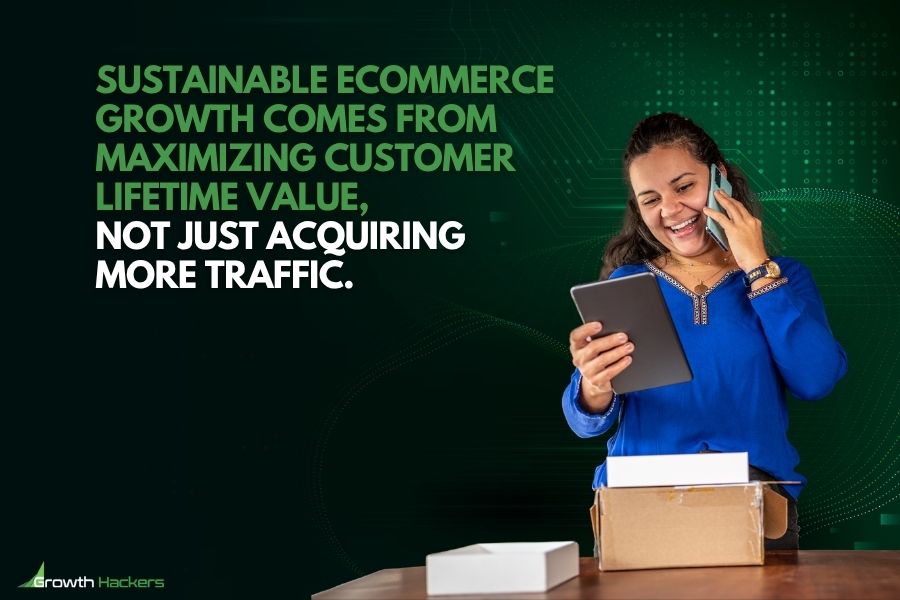
Ultimately, sustainable growth comes from maximizing customer lifetime value, not simply acquiring more traffic. Businesses that consistently invest in their existing customers generate more predictable repeat business, stronger profitability, and higher long-term returns.
Measurement & Analytics | Campaign Based Reporting for eCommerce Funnels
A high-performing eCommerce sales funnel is built on data, not assumptions. Every optimization should be backed by measurable outcomes so you know what is driving growth and what needs attention. Without proper reporting, it becomes difficult to understand how users move through the funnel or why they leave before converting.
Start by defining stage specific metrics for each phase of the e-commerce funnel. During the awareness stage, monitor website traffic, impressions, click-through rates, and cost per visitor. In the consideration stage, track engagement on each product page, time on site, and return visits. For the conversion stage, focus on add to cart rate, checkout completion, average conversion rate, and overall conversion rates. After purchase, measure repeat purchase rate, average order value, and customer lifetime value.
Looking beyond final sales is equally important. Track micro-conversions such as email sign-ups, wishlist additions, product video views, and account creation. These smaller actions provide valuable insights into visitor behavior and often reveal problems before they impact revenue.
Campaign attribution should also be campaign based. Whether traffic comes from SEO, GEO, paid search, Google Shopping, email marketing, or social media platforms, each channel should be evaluated independently. This gives marketers valuable insights into which marketing efforts deliver the highest return and where budgets should be adjusted.
Finally, build dashboards that bring together your most important key metrics and stage specific metrics in one place. Monitoring performance regularly helps teams react quickly to changes in customer behavior instead of waiting until sales decline.
3 Examples | High-Performing Ecommerce Funnels and Use Cases
A successful sales funnel can look different depending on the business model, but the principles remain the same.
Example 1 | Direct-to-Consumer Apparel Brand
A fashion retailer increased its add to cart rate by redesigning every product page with better imagery, sizing guides, and displaying social proof through customer photos. Combined with checkout improvements, the business achieved stronger conversion rates and higher average order value.
Example 2 | Health & Wellness Subscription Store
A supplement company focused on increasing customer lifetime value instead of only acquiring new customers. Through personalized replenishment reminders, a loyalty program, and post-purchase education, they increased repeat purchase rate while growing a base of loyal customers.
Example 3 | B2B Wholesale Ecommerce Store
A wholesale supplier streamlined its eCommerce sales funnel by allowing business buyers to browse products, compare specifications, request bulk pricing, and place orders directly through its online portal without speaking to a sales representative. Educational buying guides, detailed product pages, transparent pricing, and automated follow-up emails helped prospects move through the purchase journey independently. By reducing manual touchpoints and simplifying the buying process, the company increased qualified orders while creating a scalable, rep-free ecommerce funnel.
The takeaway for any small online store is simple. You do not need an enterprise budget to build an effective ecommerce sales funnel. By identifying the weakest stage, measuring the right key metrics, and continuously testing improvements, even small changes can produce significant growth over time.
Step-by-Step Build | Practical Playbook in 5 Steps
Step 1 | Map the Customer Journey
Start by creating one of your eCommerce sales funnel maps to visualize every interaction from discovery to repurchase. Include each touchpoint, from initial awareness and product research to checkout and post-purchase engagement. Label the micro-conversions that occur along the way, including newsletter sign-ups, customer clicks, add to cart rate, and completed orders. This visual representation makes it easier to identify where prospects drop off before becoming customers.
Step 2 | Design Awareness Stage Campaigns
Once you’ve mapped the journey, the next step is attracting the right audience into your sales funnel. The goal is not to maximize traffic, but to attract potential customers who are most likely to convert.
Begin with customer segmentation. Divide your audience based on demographics, interests, search intent, purchasing behavior, or previous interactions with your brand. This allows you to tailor messaging for each target audience instead of relying on one-size-fits-all campaigns.
Next, develop campaign based acquisition strategies for each segment. Customers in the research phase may respond well to educational blog articles, buying guides, or videos optimized for search engines. Others may discover your products through Google Shopping, influencer partnerships, or paid campaigns on social media platforms.
The key is to create content marketing assets that match user intent. Someone experiencing initial awareness should receive educational content, while a returning visitor may be better served with product comparisons, limited-time offers, or case studies.
At Growth Hackers, we’ve consistently seen that businesses generate stronger long-term results when every campaign is aligned with a clearly defined audience and objective. Better targeting improves traffic quality, which ultimately strengthens every stage of the eCommerce sales funnel.
Step 3 | Construct Consideration Assets
As visitors move into the consideration stage, your objective shifts from attracting attention to building confidence.
Start by creating dedicated comparison pages that clearly explain how your products differ from competing solutions. Include use-case guides, buying resources, and detailed FAQs that address common objections before they become barriers to purchase.
Every product page should communicate value quickly. Use compelling product imagery, benefit-focused copy, shipping details, guarantees, and clear calls to action. Most importantly, display social proof where purchase decisions happen. Highlight ratings, verified reviews, positive reviews, and authentic user generated content alongside the buying button instead of placing them lower on the page.
Trust indicators such as security badges, return policies, and customer success stories further reduce hesitation. These elements reassure buyers that they are making a safe purchase while reinforcing credibility throughout the evaluation process.
When brands invest in better consideration assets, they often see improvements beyond immediate sales. Visitors spend more time exploring the site, compare fewer competitors, and enter the next stage with greater purchase intent.
Build a high-converting eCommerce sales funnel today.
Work with Growth Hackers
Step 4 | Harden the Conversion Funnel
An optimized conversion funnel removes unnecessary obstacles between product selection and payment.
Review your checkout experience from the perspective of a first-time customer. Simplify forms by asking only for essential customer information, reduce the number of required fields, and streamline account creation. Whenever possible, allow guest checkout for customers who prefer a faster experience.
Offer payment methods that your target market expects, along with transparent shipping costs and estimated delivery dates. A confusing checkout page or unexpected fees remain some of the biggest reasons shoppers abandon their carts.
Automated recovery flows are equally important. If a visitor leaves before completing a purchase, trigger personalized email or SMS reminders that feature the abandoned products, reinforce value, and encourage them to return. Depending on the audience, personalized outreach such as limited-time incentives or free shipping offers can recover a significant portion of abandoned carts.
Remember that optimization is never a one-time project. Continue testing layouts, calls to action, checkout flows, and messaging to improve conversion rates over time. Small, data-backed changes often outperform major redesigns because they isolate what truly influences buying decisions.
Step 5 | Build Customer Retention Systems
Many brands treat the first sale as the finish line. In reality, it is the beginning of a long-term relationship.
To maximize customer lifetime value, build automated post-purchase experiences that educate, engage, and encourage customers to buy again. Welcome sequences, onboarding emails, product care guides, replenishment reminders, and personalized recommendations all help strengthen the relationship after the customer makes a purchase.
This investment pays off. Studies show that post-purchase follow-ups can increase repeat purchase rates by 27%, demonstrating how consistent communication after the sale can turn one-time buyers into long-term customers. Rather than ending the conversation after checkout, use every follow-up as an opportunity to provide value, answer questions, and strengthen customer relationships.
A well-designed loyalty program rewards repeat buying behavior while making customers feel valued. Referral incentives can turn satisfied buyers into advocates who introduce your brand to new audiences at a lower acquisition cost.
Leverage purchase history to create relevant offers instead of sending generic promotions. Customers who previously bought a specific product category are far more likely to respond to complementary recommendations than unrelated discounts. This level of personalized engagement improves the customer experience while increasing the likelihood of future purchases.
Ultimately, the businesses that consistently grow are those that recognize the importance of customer lifetime value. Acquiring new customers is essential, but nurturing existing relationships is what creates sustainable, profitable growth.
Optimization Checklist: Fast Wins and Tests
Continuous optimization is what separates a good eCommerce sales funnel from a great one. Rather than changing everything at once, identify the leakiest stage and improve it systematically.
Use this checklist as a starting point:
- Prioritize the weakest stage before optimizing areas that are already performing well.
- Run one A/B test for every hypothesis so you can clearly measure its impact.
- Monitor conversion rates, average order value, and customer lifetime value after each change.
- Collect qualitative feedback through short on-site surveys to understand why visitors hesitate.
- Review your e-commerce sales funnel maps regularly to identify new friction points as your business evolves.
- Revisit your marketing strategy each quarter to ensure campaigns align with changing customer expectations and business goals.
Optimization is an ongoing process. Every insight gathered from customer feedback, analytics, and testing contributes to a stronger funnel and more predictable growth.
Common Mistakes to Avoid
Even experienced marketers can overlook issues that quietly reduce performance across the entire sales funnel.
One common mistake is buying untargeted traffic simply to increase visitor numbers. If the audience is poorly matched to your offer, higher traffic rarely translates into higher revenue.
Another is making checkout changes without testing. Even small modifications to forms, payment options, or navigation can negatively impact conversions if they are not validated with real users.
Finally, many businesses invest heavily in acquisition while treating retention as an afterthought. This limits long-term growth because it overlooks the compounding impact of repeat buyers and a growing customer lifetime value.
Conclusion | Build an Ecommerce Sales Funnel That Grows With Your Business
An effective eCommerce sales funnel is not built overnight, nor is it something you set and forget. It is a living system that evolves alongside your customers, your products, and your business goals. By understanding the customer journey, measuring performance at every stage, and continuously optimizing based on real data, you create a growth engine that consistently attracts qualified visitors, converts them into buyers, and turns them into loyal advocates.
As a top-rated e-commerce marketing agency, Growth Hackers, we’ve helped businesses transform underperforming funnels into scalable revenue systems by combining strategy, AI, automation, analytics, SEO, conversion rate optimization, and demand generation. Our approach goes beyond increasing traffic. We focus on building measurable systems that improve customer lifetime value, strengthen every stage of the funnel, and deliver sustainable growth.
If you’re ready to identify the biggest opportunities in your eCommerce sales funnel, start with a free Growth Audit from our team. We’ll analyze your current funnel, uncover hidden revenue leaks, and provide actionable recommendations tailored to your business.
Then, book a 30-minute strategy call with Growth Hackers to discuss your goals and discover how a data-driven growth strategy can help you generate more conversions, increase customer lifetime value, and scale your e-commerce business with confidence