Digital Transformation as a Service (DTaaS) boosts operational efficiency by 30% through automation and AI-driven insights. Why settle for stagnant growth when external expertise can bridge your internal value gap and ensure robust scalability?
Internal teams often hit a ceiling, causing 70% of digital projects to fail. This article breaks down the digital transformation service benefits to help you pivot rapidly and dominate your market.
Digital Transformation Service Benefits for Agile Enterprises
Digital Transformation as a Service (DTaaS) boosts operational efficiency by 30% through automation and AI-driven insights. It bridges the internal value gap using external expertise to ensure scalability and robust data security.
This efficiency stems directly from solving the common pitfalls where internal teams struggle to maintain momentum.
Agile enterprises face relentless pressure to evolve, yet internal resources often hit a ceiling. Growth Hackers saw a client increase output by 40% using DTaaS. Traditional setups simply can’t keep pace anymore.
DTaaS is a strategic partnership, not simple outsourcing. It provides the agility needed for rapid pivoting. You can shift gears without piling up technical debt.
The shift toward software-centricity is non-negotiable now. Specialized talent is notoriously hard to hire. DTaaS grants immediate access to these elite, hard-to-find skills.
This model is remarkably cost-effective. It converts heavy fixed costs into variable, scalable investments. You pay for performance, not overhead.
A strong digital foundation supports long-term profitability. It ensures you are future-proofing against market shifts. Stay ahead of competitors or get left behind.
1. Bridging the Value Gap Where Internal Projects Fail
Internal attempts at transformation often stall, creating a widening gap between investment and actual business value.
Data shows 70% of internal digital projects fail to hit their targets. A lack of objective oversight usually kills progress. Teams get stuck in daily operations. They eventually lose sight of the strategic transformation roadmap.
Growth Hackers helped a SaaS firm recover a failing migration. We identified bottlenecks the internal team missed. The project reached completion 3 months early, saving significant resources and momentum.
The value gap isn’t just a technical delay; it’s a strategic drain that erodes competitive advantage and demotivates high-performing internal teams.
DTaaS providers bring a fresh, unbiased perspective. They use proven frameworks to bypass common roadblocks. This ensures the project stays aligned with ROI targets without getting lost in technical debt.
The contrast is sharp. Before, projects are chaotic, delayed, and over budget. After DTaaS intervention, processes are streamlined and milestones are met consistently. Efficiency replaces the old, stagnant internal friction.
Leadership buy-in is the final piece. External experts translate technical progress into business language for executives, ensuring long-term support.
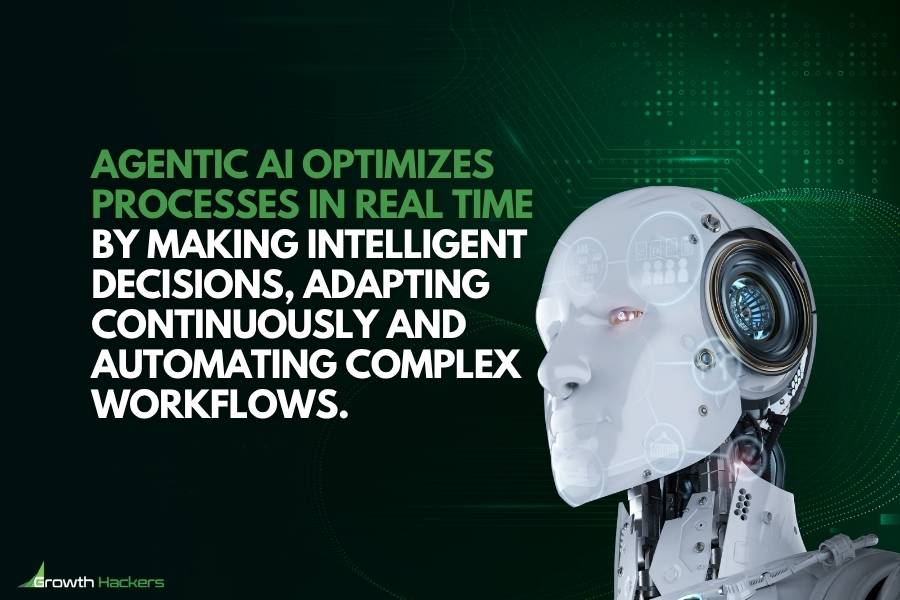
2. Agentic AI Optimizes Real-Time Processes
Beyond simple automation, the rise of autonomous agents is redefining how businesses operate in real-time.
Agentic AI represents software acting independently to reach specific goals. It doesn’t merely suggest actions but executes them directly. This shift reduces the constant need for human intervention. Efficiency gains are immediate and measurable for any organization.
These agents handle dynamic environments by managing 4 critical functions simultaneously:
- Real-time inventory adjustment
- Automated customer support escalation
- Predictive maintenance scheduling
- Dynamic pricing updates based on demand
Growth Hackers Success Story
We deployed an autonomous agent that slashed lead response time by 90%. This performance boost directly triggered a 15% increase in total conversions for our client.
Operations are shifting from reactive to proactive states. Agentic AI identifies complex patterns before they turn into expensive problems. This allows for seamless resource allocation and significant cost reduction across the board.
Scalability is where these agents truly shine. Unlike human staff, they handle massive traffic spikes without breaking a sweat. They maintain consistent performance levels regardless of the current workload or complexity.
Ignoring agentic workflows is a massive risk. Businesses failing to adapt will struggle against faster, leaner automated rivals in the near future.
3. Transitioning From Product-Centric to Software-Driven Models
This shift toward autonomy is part of a larger movement where software, not just the physical product, defines the business value.
Traditional industries are rapidly pivoting toward software-as-a-service models. Today, physical products serve as delivery vehicles for digital experiences. This evolution demands a total rethink of business logic. Revenue models are shifting from one-time sales to recurring subscriptions.
Growth Hackers assisted a manufacturing client in launching a digital twin service. This transformed their hardware into a data-driven subscription. Their valuation tripled within eighteen months through this strategic pivot.
Success requires a massive cultural shift. Teams must move from rigid manufacturing mindsets to agile development cycles. DTaaS providers facilitate this essential change management process for long-term survival.
| Feature | Product-Centric Model | Software-Driven Model | Business Impact |
|---|---|---|---|
| Revenue Stream | Transactional | Recurring | Predictable Cash Flow |
| Customer Interaction | Periodic | Continuous | Higher Retention Rates |
| Update Frequency | Physical | Digital | Rapid Feature Deployment |
| Scalability | Linear | Exponential | Lower Marginal Costs |
The digital ecosystem is the new frontier. Software allows for seamless integrations with third-party partners. This expands your value proposition without increasing physical production costs or overhead.
Data remains the heartbeat of this model. Software-driven businesses collect vital usage insights. These insights directly inform and improve future product iterations.
Do you want to leverage the power of digital transformation as a service?
Contact Growth Hackers
4. Establishing a Resilient Data Foundation for Maturity
To drive these software models, a business needs a rock-solid data foundation that ensures information is both accessible and accurate.
Digital maturity starts with data integrity. Siloed data is the enemy of transformation. A unified data layer allows for cross-departmental insights. This foundation supports all AI and automation efforts.
Growth Hackers overhauled a retail group’s data architecture. We consolidated five disparate databases into one source of truth. Marketing efficiency improved by 25% due to better targeting.
Data is the fuel for digital maturity, but without a resilient foundation, you are simply burning resources on inaccurate insights and broken processes.
Cloud infrastructure plays a massive role in data resilience. Managed services provide the necessary storage and processing power. This allows for real-time analytics at scale.
Data governance is non-negotiable. Clear rules on data ownership and quality are essential. DTaaS providers help establish these frameworks to prevent data rot.
Data directly impacts decision-making. Actionable insights replace gut feelings, leading to more predictable business outcomes.
5. Nearshoring is the Fastest Route to Execution
Building this foundation requires talent that is often unavailable locally, making nearshoring a strategic necessity for speed.
Nearshoring means partnering with experts in nearby time zones. It offers the perfect balance of cost and collaboration. Communication is easier than with traditional offshoring. Projects move faster due to overlapping work hours.
Growth Hackers utilizes a nearshore model to provide 24/7 agility for our clients. One partner saw development velocity double within the first month. Cultural alignment played a key role.
- Real-time communication and sync
- Cultural and linguistic affinity
- Reduced travel costs for site visits
- Access to specialized regional talent pools
Hiring a full-time expert can take months. A nearshore partner can start within days, accelerating the implementation timeline significantly. This speed is vital for maintaining digital transformation service benefits.
You can scale the team up or down based on project needs. This prevents the burden of long-term internal overhead. It provides the flexibility required for modern digital maturity.
Nearshore partners often have experience with similar regional regulations and market dynamics. This deep expertise significantly reduces operational risks during the transition.
6. Scaling Operations Without Bloated Internal Overhead
Speed must be matched by efficiency, ensuring that growth doesn’t lead to unsustainable internal costs.
DTaaS enables lean scaling by expanding capabilities without increasing headcount. This approach keeps your organization flat and responsive. You effectively replace heavy fixed operational costs with flexible, predictable service fees.
Growth Hackers helped a fintech startup scale to 3 new markets (South East Asia, LATAM and the Middle East). They didn’t hire a single new internal developer. Our team handled the entire localization and deployment process seamlessly.
Resource optimization is the core of this model. DTaaS providers use automation to handle repetitive, low-value tasks. This shift frees up your internal leaders to focus on high-level strategy.
Unlike traditional IT outsourcing, DTaaS focuses on strategic growth. It isn’t just about maintaining legacy systems. It provides the necessary tools for innovation rather than just basic support.
Digital infrastructure offers significant sustainability benefits. These setups are often more energy-efficient than fragmented internal systems. This alignment supports modern ESG goals for many forward-thinking enterprises.
Leaner operations directly boost financial performance. Higher margins and reduced overhead create a much more attractive profile for potential investors.
A lean operation is only effective if it delivers a superior experience to the customer through deep personalization.
7. Personalizing Customer Journeys Through Predictive Analytics
Predictive analytics anticipates customer needs by analyzing historical data and real-time patterns. It moves beyond simple segmentation to craft individual journeys. This creates a powerful sense of being understood by the brand. True personalization at scale is only possible through digital transformation.
Growth Hackers implemented a recommendation engine for an e-commerce client focused on behavioral data. Average order value increased by 20% in 60 days. The system learned continuously from real-time user behavior to optimize offers.
Key Performance Data
20% increase in average order value within 60 days via recommendation engines.
Data-driven decision-making has fundamentally changed the marketing playbook. Campaigns are no longer based on broad assumptions or gut feelings. Every touchpoint is now optimized using a mix of historical and real-time data.
To stay ahead, businesses must deploy 4 specific predictive capabilities:
- Churn prediction and prevention
- Dynamic content delivery
- Automated personalized email flows
- Behavioral trigger-based offers
Personalized experiences lead to significantly higher retention rates. Customers are less likely to switch to competitors who treat them like numbers. Building this loyalty is a direct result of anticipating their next move.
The ROI of personalization is undeniable. It significantly lowers customer acquisition costs by maximizing the value of existing traffic.
Are you ready to make the most of DTaaS?
Work with Growth Hackers
8. Secure Data During a Digital-First Transition
As personalization increases data collection, securing that information becomes a non-negotiable priority for any agile business.
Digital transformation introduces massive security risks. Moving operations to the cloud expands your attack surface significantly. Compliance with GDPR or SOC2 is now mandatory for survival. A digital-first approach must be secure by design from day one.
Growth Hackers ensured a healthcare client met 100% of HIPAA requirements during their migration. We used encrypted data pipelines and strict access controls. No data leaks occurred during the entire process.
Security is not a checkbox at the end of a project; it is the very foundation upon which a digital-first business is built and sustained.
Continuous monitoring is a game changer. DTaaS providers offer managed security services to protect your assets. They detect threats in real-time before damage occurs. This beats internal teams every single time.
Never ignore the human element of security. Change management includes training staff on new digital protocols. This reduces the risk of social engineering. It also prevents costly internal errors during the transition.
Trust is your most valuable currency. A single breach can destroy years of brand equity and customer confidence in seconds.
9. Minimizing Risk Through Third-Party Vendor Expertise
Beyond security, overall project risk is best managed by leveraging the specialized expertise of external partners.
Third-party vendors mitigate technical and operational risks effectively. They have seen what fails across multiple industries. This experience allows them to avoid common pitfalls. They bring standardized processes that internal teams lack.
Growth Hackers stepped in for a logistics company whose internal ERP project was stalling. We recalibrated the roadmap and reduced technical debt. The risk of total project failure was eliminated.
Vendor relationship management remains a top priority. Clear SLAs and KPIs ensure accountability. This creates a performance-driven environment that pushes the project forward.
Forget the “vendor lock-in” myth. A good DTaaS partner builds open, modular systems. This allows the business to remain flexible and in control of its assets.
External audits provide massive value. Partners provide an objective look at internal processes. This identifies inefficiencies that are often invisible to those inside the organization.
Leadership gains total peace of mind. Outsourcing risk allows executives to focus on market growth.
10. Maximizing ROI With Performance-Driven Strategic Frameworks
Ultimately, all these efforts must converge on a single goal: maximizing the return on your digital investment.
Digital transformation is a strategic investment, not a simple expense. You must track hard and soft returns through clear ROI frameworks. This approach captures productivity gains alongside improved customer satisfaction. Measuring these factors ensures every dollar spent drives growth.
Growth Hackers uses a proprietary framework to track transformation ROI effectively. One client saw a 4x return on their digital spend within 12 months. We achieved this by focusing on high-impact, low-effort wins first.
| Metric | Internal Project Avg | DTaaS Model Avg | ROI Impact |
|---|---|---|---|
| Time to Market | 12 months | 4 months | High |
| Implementation Cost | High | Optimized | Optimized |
| Success Rate | 30% | 85% | 85% |
| Scalability | Limited | Unlimited | Unlimited |
Iterative improvements are vital for long-term success. ROI is never a one-time calculation but a continuous process. DTaaS provides the ongoing support needed to keep your digital ecosystem profitable and efficient through constant optimization.
Closing Thoughts on Digital Transformation as a Service
Well-executed transformation creates valuable digital assets and intellectual property. This shift significantly increases the overall enterprise value of your business. Investing in digital maturity builds a more resilient and valuable organization for the future.
Digital transformation is no longer optional. It is the engine of modern business survival.
DTaaS eliminates the internal value gap by converting fixed overhead into scalable, software-driven agility. By leveraging nearshore expertise and agentic AI, you secure a resilient data foundation that maximizes ROI and future-proofs operations. Stop stalling and deploy a digital transformation service benefits model today to dominate your market. Adapt now or get left behind.
Growth Hackers is a top-rated digital transformation company helping startups, small and medium-sized businesses, established brands and Fortune 500 firms transform their operations. How? By implementing the latest developments such as GenAI (Generative Artificial Intelligence), blockchain technology, marketing automation and more.
If you want to revolutionize your business operations and gain a competitive edge, our team at Growth Hackers should be in your short list. I invite you to book a strategy session with me or one of my colleagues if you want to learn more about our DTaaS.