The solar industry’s booming, with U.S. solar power generation expected to jump by 75% next year. If you want to sell solar panels well, you’ll need a solid sales strategy, strong product knowledge, and the ability to handle customer objections while showing off the financial perks.
Success comes down to knowing your audience and pitching selling solar as a smart financial move—not just an eco-friendly one.
The secret to selling solar panels is learning the right solar sales process and offering customers real value with financing and incentives. You’ve got to build trust, know your local market, and develop pitches that focus on long-term savings.
If you’re selling to potential customers like homeowners who want to cut energy bills or businesses looking to trim expenses, tailor your approach to highlight the clear return on investment.
4 Essential Steps to Sell Solar Panels Successfully
To build a successful solar business, you’ve got to master the basics and use targeted strategies. Dig deep into industry knowledge, understand your customers, choose the right products, and set up a sales process that works.
1. Becoming an Industry Expert
Customers trust you more when you know your stuff about selling solar panels . Learn how solar panels work, what benefits they offer, and what’s happening in the market.
Get familiar with monocrystalline, polycrystalline, and thin-film panels. Each type has its own efficiency and price.
Keep up with solar energy policies. Federal tax credits, state rebates, and local incentives change often. These programs can save clients thousands.
Understand the basics of solar installation. Know how panels hook up to homes and electrical systems. Permits, inspections, and safety rules matter, too.
Check out your competition. What do other solar companies in your area charge? What do their customers say?
Consider getting certified through groups like the Solar Energy Industries Association and a reputable solar installation company . Training shows customers you’re serious about the business.
2. Identifying Your Target Market
You can’t sell solar panels to everyone, especially in the context of door to door sales . Different groups care about different things.
Homeowners usually want to save money and help the environment by utilizing solar technology . They look for lower bills and higher home values. Financing and installation quality are big concerns.
Small business owners think about return on investment and tax breaks. Commercial solar can boost their public image.
Hunt for homes with good sun exposure. South-facing roofs with little shade are best. Large, unobstructed roofs make installations easier.
Focus on people with high electricity bills, over $100 a month is a good sign. Areas with expensive power rates make solar more appealing.
Don’t forget about income levels. Even with financing, solar panels need some upfront cash. Target neighborhoods where people can handle the payments.
We helped one solar client from Texas stop searching for customers randomly and start navigating with a precision map. At Growth Hackers, we analyzed factors like roof conditions, energy costs, property types, and demographics to identify the best prospects. This approach increased qualified leads by 37% and improved conversion rates by 23%.
3. Choosing the Right Solar Products
Product quality can make or break your reputation. Partner with reliable installation companies and manufacturers.
Check those warranties. Good panels come with 20-25 year production warranties, and equipment should have at least 10 years of coverage.
Look at efficiency ratings. Higher efficiency panels generate more power in less space. They’re pricier but perfect for small roofs.
Compare inverter options. String inverters are cheaper, but power optimizers and microinverters can handle tricky roof layouts better.
Stick with established installer networks. They’ll back you up with tech support, training, and customer service.
4. Developing an Effective Sales Strategy
Your approach determines who chooses your company. Build trust through education and honesty.
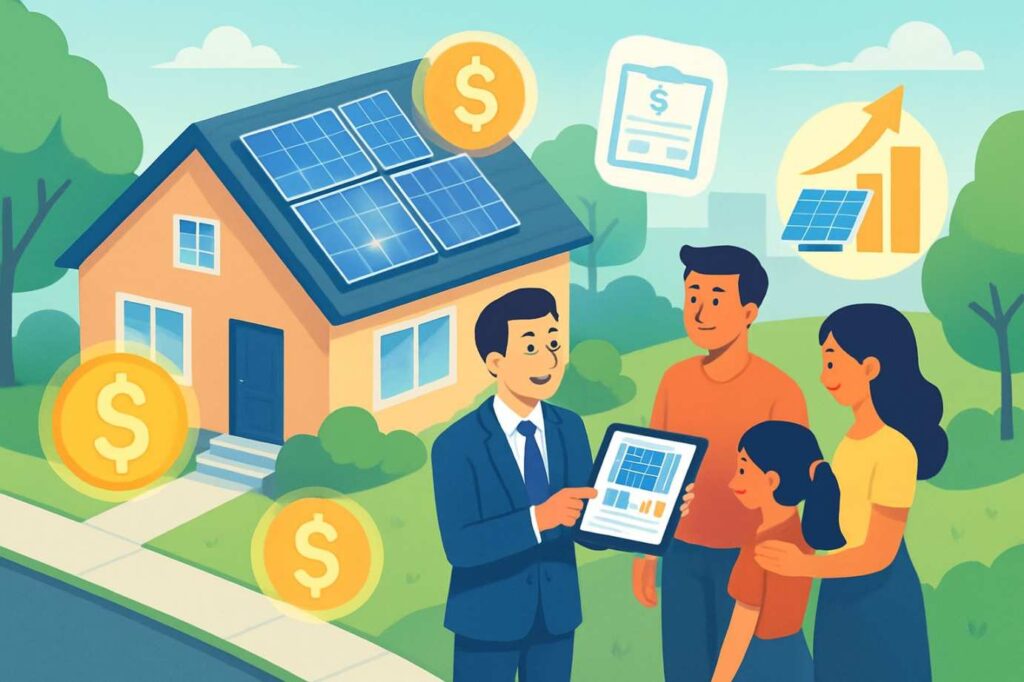
Kick things off by analyzing energy bills. Show clients what they spend now and what they could save. Use their real numbers.
Offer several financing choices. Solar loans, leases, and power purchase agreements all fit different folks. Break down each option clearly.
Use transparent pricing. No one likes hidden fees. Show every cost—permits, installation, equipment—up front.
Tackle concerns head-on. People worry about roof damage, maintenance, and weather. Have solid answers ready.
Follow up, but don’t push. Buying solar takes time, and people need space to decide.
Put together proposals that really show value. Include savings, environmental benefits, and clear system specs. Make the technical stuff easy to digest.
We helped a solar company from California improve its sales process by creating a trust-focused strategy built around personalized savings analysis, transparent proposals, and objection handling. At Growth Hackers, our approach helped the client increase proposal acceptance rates and improve sales conversions by 26% by making the buying journey clearer for homeowners.
Need help scaling your solar panel sales with expert marketing?
Contact Growth Hackers
Maximizing Value and Navigating Incentives
If you want to close deals, you’ve got to help customers see the full financial picture and the benefits of more solar panels. Smart home integration and good agreement management can really boost project value.
Understanding Tax Credits and Incentives
The federal solar Investment Tax Credit (ITC) is still the big one for homeowners. It lets you claim 30% of your solar costs as a direct tax credit through 2032.
This covers equipment, installation, and permits. It knocks down your tax bill dollar-for-dollar.
State and local incentives can add even more:
- Utility company cash rebates
- Property tax exemptions for solar
- Sales tax breaks on equipment
- Net metering programs that pay for extra energy
Some states offer renewable energy certificates (RECs). You can sell the environmental benefits your panels create for extra cash.
Always look up your area’s programs before meeting with clients. Having real numbers on hand builds trust.
Leveraging Performance-Based Incentives
Performance-based incentives pay you for the energy you actually produce. These programs reward efficient systems.
Net metering is the most common in the solar panel industry . Your utility credits you for extra power you send to the grid. These credits help cover your bills when your panels aren’t producing as much.
Some utilities offer feed-in tariffs: they’ll pay premium rates for your solar energy. These contracts lock in payments for every kilowatt-hour.
Solar Renewable Energy Certificates (SRECs) can bring in ongoing income. You earn one SREC for every 1,000 kilowatt-hours, and utilities buy them to meet renewable requirements.
Keep an eye on your system’s performance with monitoring apps. That way, you can make the most of incentives and spot maintenance issues early.
Incorporating Smart Home Integration
Smart home features make solar systems more valuable and appealing. New inverters connect to home WiFi for real-time monitoring and control.
Smart inverters adjust to weather and shade changes on the fly. They can boost energy production by 10-15%.
Battery storage pairs with smart devices to help you use more of your own solar power. They store extra energy during sunny hours.
Linking up with smart thermostats and appliances can cut energy costs further. Your system can run big devices when solar output is highest.
Show off mobile apps that let customers track production, savings, and their environmental impact. Seeing the data in real time makes the benefits feel real.
Managing Solar Project Agreements
Clear documentation protects you and your customers during every stage of a solar project. Each agreement should spell out equipment warranties and performance guarantees.
Be sure to outline maintenance responsibilities as well. It’s easy to overlook the details, but they matter.
Power Purchase Agreements (PPAs) can get confusing. Customers pay for the energy produced, not the system itself.
This setup lowers upfront costs, though it might also limit long-term savings. Make sure everyone understands the trade-off.
Solar leases give you steady monthly payments and usually include maintenance. But they can make selling your home trickier.
Transfers aren’t always smooth, and buyers can get spooked by complicated terms. It’s worth discussing these issues early.
Cash purchases and solar loans put ownership in the customer’s hands. They also make you eligible for tax credits and incentives.
Always document system specs, expected performance, and warranty details. Put everything in writing, even if it feels repetitive.
Don’t forget to provide contact info for support and maintenance regarding installing solar panels . Customers appreciate knowing who to call if something goes sideways.
Explain how solar agreements could impact a future home sale. Transferable agreements help keep property values steady, but unclear terms might scare off buyers.
Solar Sales Playbook | 7 Steps to Follow
Selling solar panels is a process that works best when you follow a clear path. Each step builds trust, answers questions, and moves the customer closer to a decision.
Step 1 | Prospecting and Lead Generation
- Identify High‑Value Prospects
Focus on homes or businesses with high electric bills and good sun exposure. South‑facing roofs without shade and bills over $100 a month are strong indicators. - Use Local Outreach
Attend community events, partner with real estate agents, and connect with neighborhood associations. Referrals from satisfied customers are especially powerful. - Qualify Leads Early
Ask about roof type, energy bills, and ownership status. Eliminate renters or shaded properties early to save time.
A solar company from Florida partnered with Growth Hackers after its sales team was spending hours pursuing homeowners who were unlikely to buy. We helped them build a smarter prospecting system by prioritizing properties with strong solar potential, creating local referral partnerships, and qualifying leads before outreach. Within 5 months, the company achieved a 41% increase in qualified leads and a 33% improvement in appointment conversion rates.
Step 2 | Building Initial Trust
- Make First Contact Personal
Avoid a hard sell. Introduce yourself as someone who helps people lower bills and understand solar options. - Share Knowledge, Not Pressure
Use simple explanations and visuals to show how solar works. Position yourself as a guide, not a pushy salesperson. - Listen Before You Talk
Ask about their goals, whether cost savings, energy independence, or home value. Listening shapes the right conversation.
Step 3 | The Consultation
- Review Energy Bills
Request the last 12 months of bills. Use real numbers to show how solar affects their costs. - Evaluate the Property
Check roof size, angle, and shading through software or a site visit. Share accurate data tied to their property. - Present Options Clearly
Offer two or three system choices. Show price, warranty, and savings in a simple, easy‑to‑compare format.
Step 4 | Explaining Financing and Incentives
- Break Down Payment Choices
Explain cash purchase, loan, lease, and PPA. Keep pros and cons clear and free of jargon. - Highlight Tax Credits and Rebates
Show how federal and local incentives reduce the total cost. Write down the net cost so it feels concrete. - Show Long‑Term Value
Compare utility costs over 20 years with solar savings. The long‑term difference often convinces customers.
Step 5 | Handling Objections
- Address Common Concerns
Be ready to talk about roof damage, maintenance, and storm safety. Use warranties and guarantees to reassure. - Be Transparent About Risks
If the roof needs repair or net metering rules may shift, explain it clearly. Honesty builds trust. - Stay Patient
Solar decisions take time. Follow up politely and consistently without pressure.
Step 6 | Closing the Sale
- Review the Proposal Together
Go over system design, financing, and savings. Make sure every detail is clear. - Provide Written Documentation
Give copies of the proposal, warranties, and terms. Written details increase confidence. - Ask for the Commitment
Once they are comfortable, ask directly if they are ready to move forward.
One solar company from Rhode Island went from losing opportunities during the final conversation to closing more deals with a structured sales process. Growth Hackers helped them improve proposal presentations, strengthen documentation, and create a clearer path to commitment, resulting in more signed contracts and 33% higher close rates compared to the previous approach.
Step 7 | After‑Sale Support
- Stay Involved During Installation
Check in during installation. Updates reassure customers. - Teach Them How to Use It
Show how to use the monitoring app and track performance. Real‑time savings build satisfaction. - Keep the Relationship Alive
Follow up after a few months. Happy customers often send referrals.
Customer Psychology and Motivation
Why People Hesitate
The first barrier is cost. Even with financing, a solar system can feel like a big commitment. Many homeowners worry they will not see the savings soon enough to justify the price. Others are concerned about hidden fees or unexpected maintenance costs.
Another hesitation comes from uncertainty about the technology. Some people think panels will not last or may damage their roof. Others have heard stories of poor installations and are nervous about choosing the wrong company.
Trust is another major issue. The solar industry has grown quickly, and not every company has built a good reputation. If customers sense pressure or feel information is missing, they may walk away before you even get to the numbers.
How to Connect Emotionally
Solar is about more than math. People want to feel secure, proud, and in control. When you show how solar reduces reliance on utility companies, you tap into a desire for independence. Many homeowners like the idea of producing their own energy instead of being at the mercy of rising rates.
There is also pride in ownership. A home with solar panels signals responsibility and forward thinking. Families often like the idea of showing their children they are making choices that help both their budget and the planet.
When you connect with these feelings, the conversation shifts. You are not just selling panels. You are helping them gain freedom, stability, and pride in their home.
Decision Triggers
Every buyer has a tipping point. For some, it is seeing how much money they will save each year. For others, it is realizing they can protect themselves from unpredictable utility bills.
Life events often spark decisions too. A family moving into a forever home may see solar as a smart investment. A retiree may want to lock in lower costs before living on a fixed income. A small business may want to cut expenses before expanding.
The key is to listen carefully. Once you know what matters most, you can highlight the exact benefit that will push them from interest to action.
Drive more qualified leads for your solar business now!
Work with Growth Hackers
3 Industry Trends to Watch
1. Battery Adoption
Batteries are becoming a bigger part of solar conversations. Homeowners want backup power during storms or outages. Businesses want to keep operations running without relying fully on the grid.
The technology is improving quickly. Prices are coming down, and warranties are getting longer. Customers are hearing about neighbors who keep the lights on during blackouts, and they want the same security. By discussing storage as part of the system, you show that solar is not just about saving money but also about resilience.
2. Electric Vehicle Growth
Electric vehicles are changing how people think about energy. A household with an EV often spends more on electricity than before, which makes solar even more attractive. Charging a car with solar power means lower costs compared to gasoline and a cleaner lifestyle overall.
Some customers see solar and EVs as a package deal. They want one solution that powers both their home and their car. Offering bundled proposals that include EV chargers alongside panels can set you apart from competitors who only focus on the roof.
3. Policy and Incentive Changes
Government policies remain one of the strongest forces shaping solar adoption. The federal tax credit is locked in for now, but state and utility programs shift often. Some areas are reducing net metering benefits, while others are adding new rebates for batteries.
Customers rarely keep track of these changes themselves. They rely on you to explain what is available today and what might change tomorrow. If you stay current, you can give them accurate numbers and prevent surprises later. This makes you a trusted advisor, not just a salesperson.
Final Thoughts on How to Sell Solar Panels
Selling solar panels successfully means blending product knowledge, customer understanding, and a clear sales process. When you focus on trust, transparency, and long‑term value, you make solar a financial decision that feels both smart and secure.
The future of solar sales belongs to those who stay informed, adapt to customer needs, and highlight the real benefits of energy independence. By mastering the sales steps and keeping an eye on industry trends, you can win more deals and build lasting customer relationships.
If you’re ready to take your solar sales to the next level, work with Growth Hackers. Growth Hackers is an award‑winning solar marketing services agency that helps companies like yours attract qualified leads, boost conversions, and scale their sales efforts.
We know how to implement, execute, and deliver the exact strategies outlined above. From targeting the right market to building trust with customers and optimizing the sales process, our team has the expertise to grow your solar business faster and smarter. Contact Growth Hackers today to get your free audit and see how we can help you generate more leads and close more solar deals.