The future of your business, in many ways, depends on its reputation. If people believe your business to be a trustworthy, credible thought leader in your industry, and if they have confidence you’re going to provide high-quality products and services, you’ll have very high customer retention, and you’ll constantly attract new people to your brand.
Conversely, if people are dubious of your brand’s expertise or trustworthiness, they’re going to be much less likely to stick with you.
Online reputation marketing allows you to take the reins on this matter, carefully curating and guiding your reputation so it remains as positive as possible.
But how exactly does it work and why is it so important?
What is Online Reputation Marketing?
Online reputation marketing is a growth strategy that allows you to take control of your brand’s public image. Instead of sitting back and allowing your reputation to manifest as a natural force, you’ll be exerting influence, promoting your brand, and responding to individuals online so you can carefully attune and guide your reputation in a positive direction.
Online reputation marketing can occur across many different channels and in many different mediums, and because your reputation is a byproduct of all your company’s interactions, you can think of online reputation marketing as unfolding in all your marketing, advertising, sales, and even customer service strategies.
Still, the best tactics in online reputation marketing include cultivating and responding to reviews, practicing active social media monitoring, engaging with users on social media, building brand communities, and publishing favorable content.
It is the sum total of all these strategies that influences the direction of your reputation. When one of our B2B SaaS clients faced declining customer trust, Growth Hackers implemented a full online reputation marketing plan. By responding to reviews, engaging on social media, and promoting positive content, their brand sentiment improved dramatically within 6 months.
The 7 Benefits of Online Reputation Marketing
Why is online reputation marketing so important?
1. Direct impact on sales
The bottom line for most businesses is higher sales. When your company has a better digital reputation, your existing customers are going to keep buying from you, they’ll make referrals to other people, your marketing and advertising efforts will be more effective, and your leads will be much more likely to convert into full customers.
It’s hard to quantify your brand reputation, and it’s hard to objectively tie the influence of your brand’s reputation to a single customer’s purchasing decision, but broadly speaking, it’s clear that a positive company reputation will result in more sales and more revenue.
At Growth Hackers, we’ve helped clients boost sales by strengthening their digital reputation. In fact, one e-commerce client saw a 38% increase in repeat purchases and a 25% lift in referral-driven sales after we optimized their online presence.
2. Hiring and recruiting
Countless industries are facing severe labor shortages, and for a variety of reasons. But if your company has a better reputation, hiring and recruiting are going to be much easier and more favorable. People want to work for companies that have excellent reputations, not only because they typically have a more positive and promising work environment, but because they’re more likely to succeed over the long term. If you’re having trouble hiring people, consider spending more time and money on your online reputation marketing.

Do you need help building an online reputation marketing strategy?
Contact Growth Hackers
3. Brand visibility
Reputation and visibility go hand in hand. As you work actively to promote your brand’s reputation, you’ll naturally increase the visibility of your brand. More people are going to see the products and services you offer, more people are going to get to know you in the context of your industry, and you’ll naturally attract more leads and prospects.
Before Growth Hackers worked with them, one manufacturing client’s brand went largely unnoticed outside their immediate network. After enhancing reputation and visibility for 9 months, they reported 52% more inquiries and stronger recognition in their industry.
4. Marketing consistency and familiarity
When you have a solid reputation, all your marketing and advertising efforts will become more consistent, more streamlined, and more effective. If enough people know and trust your brand, you can make your advertising simpler and more minimalistic, allowing you to do more with less money.
On top of that, once you have a positive reputation, it’s easy to preserve that momentum and keep your positive reputation going. At Growth Hackers, we’ve assisted B2C and B2B clients turn strong reputations into consistent and effective marketing. We helped a Fintech client streamline their campaigns and increased ROI by 22% by leveraging trust built through reputation management.
5. Trust and credibility
Improving your reputation online means garnering more trust and credibility, which can help your business in a number of ways. Your customers and clients may be more likely to trust your recommendations, they may buy from you more willingly, and they may be more likely to recommend you to their friends and family members. This can even lead to higher employee and customer retention, reducing the costs of turnover and attrition.
6. Potential insights through data analytics
Practicing online reputation management requires you to pay close attention to social media mentions, online reviews, competitor interactions, and hundreds of other variables. Because of this, you can gather better potential insights through data analytics.
At Growth Hackers, we treat data analytics like a telescope for business growth. By examining social mentions, reviews, and competitor activity, one of our healthcare clients gained a clearer view of market opportunities and competitive advantages. You can better understand your competition, your industry, your customers, and growth strategies that can help your business in the future.
7. A competitive defense
If you’re not yet convinced, keep in mind that your competitors are probably already practicing online reputation marketing. If you want to keep up with them, you’ll need to follow suit – and preferably exceed their efforts. In some ways, this is a defensive strategy.
9 Keys to Mastering Online Reputation Marketing
So what steps can you take to master the art of online reputation marketing?
1. Establish guidelines for a consistent brand image
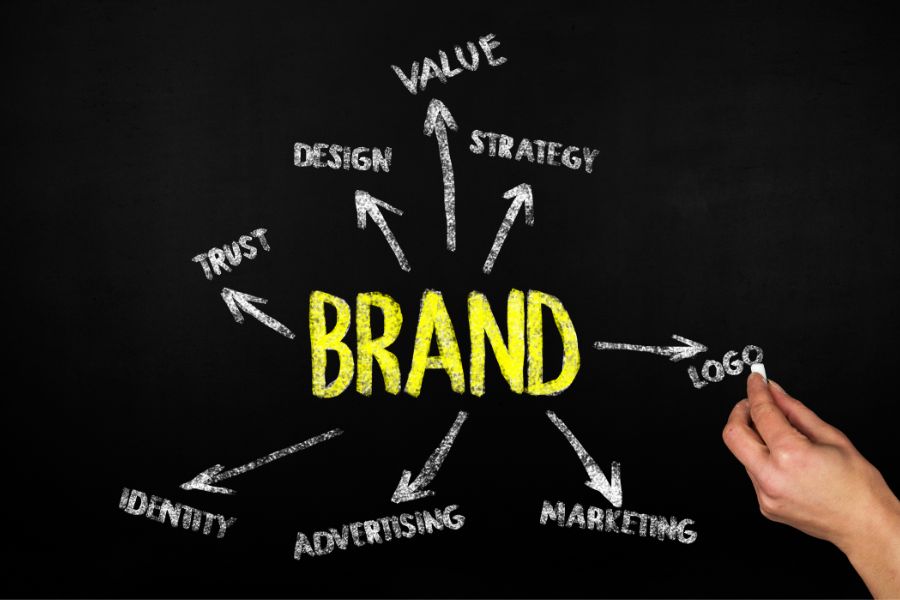
Before you get too involved in your online reputation marketing strategy, be sure to create thorough brand image guidelines that your entire team can follow. What is your brand? What does it represent? What are the core values that you want to be affiliated with your reputation? Yes, you want your company to be received positively, but what exactly does that mean; do you want to be seen as an esteemed, professional thought leader, or more of a down-to-earth, relatable organization?
When a skincare client’s brand image was inconsistent across platforms (Instagram, Pinterest and TikTok), Growth Hackers helped them create comprehensive guidelines. With these rules in place, their team communicated a unified message that strengthened reputation and audience perception.
2. Document your strategy
Too many brands adopt an online reputation marketing strategy in name only, allowing individual executors to make improvised decisions about how to handle a reputational crisis. It’s much better if you have a documented strategy in place. What do you want your brand reputation to be? Where is your brand reputation currently? And how are you going to close those gaps?
Document which channels and mediums you hope to use, document your publication schedule, and document the standards to which your workers will need to adhere when addressing comments and interactions online. This way, your approach will be consistent across the board, your employees won’t need as much direct coaching or guidance, and you’ll end up seeing better results.
When a FMCG client previously handled online interactions ad hoc, their brand messaging was inconsistent. Growth Hackers helped them document their strategy, and within 7 months, their team executed campaigns seamlessly, boosting trust and engagement.
3. Provide excellent products and services
While there’s a lot you can do to shift public opinion online, your company reputation isn’t going to improve unless you provide excellent products and services from the very beginning. Accordingly, this should be your top priority. If the customers buying from you are truly happy with the products and services they receive, some of your reputation will develop organically, requiring no oversight or influence from you. This doesn’t mean you can afford to ignore the rest of your online reputation management strategy, but it’s a strong foundation on which you can build the rest of your tactics.
4. Use the right tools
There are dozens of online reputation marketing tools available today, allowing you to quickly and conveniently scan the web for mentions of your website and measure customer sentiment. These tools can also help you plan and automate portions of your reputation marketing strategy, reducing costs and allowing you to get more done in less time. Make sure to evaluate these tools thoroughly and only add the most effective platforms to your portfolio.
At Growth Hackers, we guide our clients on a monthly basis select the right reputation marketing tools to maximize efficiency and impact. For instance, one of our software development clients automated monitoring and engagement, reducing response times by 60% while increasing positive brand mentions by 25%.
5. Be prepared for negative reputational blow
There are going to be rough patches as you support and proliferate a positive reputation. Customers are going to leave you bad reviews. Customers are going to talk trash about your brand on social media. Your company is going to make mistakes that make people unhappy.
You need to have a plan for these negative incidents. Typically, brands benefit by getting ahead of the news, making apologies when necessary, and remaining direct and accountable at all times. Don’t try to bury or ignore bad press; it’s only going to work against you.

Gain a competitive edge by creating a strong and positive online reputation marketing plan!
Work with Growth Hackers
6. Remain proactive
Don’t wait for the bad news to blow up before you respond to it, and don’t wait for happy customers to start extolling the virtues of your brand on their own. You must make your strategy proactive, rather than reactive. It’s better to gradually and iteratively influence your audience, one message at a time, than to try and scramble to catch up once you realize you’re behind.
When a biotech client used to react only after problems arose, their reputation suffered. Growth Hackers helped them implement a proactive strategy, and within half a year, their audience perception improved and engagement became more positive and consistent.
7. Tap into active social media channels
Social media is arguably the best place to manage your reputation, since you can talk to the general public, specific target audiences, and direct individuals in equal measure. It’s tough to stay on top of every social platform at all times, so leverage the platforms that are most relevant to your brand and your target audience.
Monitor them frequently and try to engage with people many times per day. At Growth Hackers, we treat social media like a bustling town square. One blockchain client learned to be present where their audience gathers (Discord, Telegram and X/Twitter), sparking conversations and building trust that translated into measurable growth.
8. Leverage brand evangelists
Brand evangelists (customers who are so thrilled with your brand they actively promote it on their own) are some of your greatest assets in improving your brand reputation. Leverage them by regularly interacting with them, sending out freebies, and promoting their user-generated content.
When a beauty client underestimated the influence of their loyal customers, Growth Hackers helped them create programs to engage and reward evangelists. Within 5 months, these advocates were driving conversations, content, and conversions, enhancing the client’s reputation organically.
9. Create your own brand communities
By extension, it’s valuable to try and create your own brand communities, such as forums where your customers can meet and interact with each other. This is most effective when done on a large scale, but everyone has to start somewhere; even small forums and communities can make a positive impact.

Final Words About Why Your Business Needs Online Reputation Marketing
Online reputation marketing looks a bit different for every business, since you’ll need to carefully consider your industry, your competitors, and your customers before designing and implementing the right approach.
Still, any proactive online reputation management strategy is better than none, and the sooner you start building your reputation in a positive direction, the better.
Growth Hackers is an experienced ORM agency helping businesses from all over the world grow. There is no fluff with Growth Hackers. We help entrepreneurs and business owners build a strong online reputation marketing strategy, find the right reputation management expert, generate qualified leads, optimize their conversion rate, gather and analyze data analytics, acquire and retain users and increase sales. We go further than brand awareness and exposure.
We make sure that the strategies we implement move the needle so your business grow, strive and succeed. If you too want your business to reach new heights, contact Growth Hackers today so we can discuss about your brand and create a custom growth plan for you. You’re just one click away to skyrocket your business.