
The American Welding Society reports a steady demand for certified professionals, yet many skilled welders fail to turn their craft into a profitable venture. Success in this industry requires more than a steady hand; it demands a calculated strategy to navigate high overhead and strict regulatory standards.
Most entrepreneurs struggle to balance equipment costs with sustainable pricing models. This guide breaks down the 6 essential steps to start welding business operations that are both legally protected and engineered for high-margin growth.
1. Defining Your Niche and Legal Structure
Starting a welding business requires choosing between mobile repair or shop-based fabrication, securing LLC protection, and obtaining specific zoning permits. Success hinges on precise hourly rates covering 30% overhead and niche specialization in high-margin sectors like agriculture or construction.
In fact, the choice between mobile and shop models dictates your entire financial trajectory.
Choosing Between Mobile vs. Shop-Based Models
Fixed workshops demand heavy rent and utility payments. Conversely, mobile units trade those costs for fuel and truck maintenance. Mobile setups often see faster demand because you go where the breakdown happens.
On-site repairs solve immediate crises while shops focus on custom fabrication. Choosing depends on your current cash. Growth Hackers suggests starting mobile to minimize initial risk and avoid massive upfront equipment debt.
Analyze local competitors. If they lack mobility, fill that gap. Match your model to your scaling goals.
Drafting a Realistic Business Plan for Metal Shops
Target specific industries like construction or automotive. Research local competitors to find service gaps. Focus on solving regional manufacturing problems to ensure your services remain indispensable to local clients.
Outline a 3-year growth projection using local labor rates. Growth Hackers saw a 32% revenue jump by targeting agricultural repair niches. Real numbers prevent you from underpricing your specialized labor.
List high-demand services like tractor repair or structural framing. Ensure these align with your technical expertise and current gear.

Registering the Legal Entity and Tax IDs
Evaluate LLC benefits for personal asset protection. This step is vital for welding due to inherent fire risks. Separate your personal life from business liabilities to protect your house and savings.
Obtain federal and state tax identifications immediately. Register your trade name to build professional authority. Proper registration allows for wholesale material purchasing and significant tax deductions on your welding consumables.
Finalize all legal paperwork. Consult a local professional to ensure compliance with state-specific welding business regulations and zoning laws.
2. Must-Have Tools to Launch Without Burning Your Savings
While legal structures provide the framework, the actual work requires a strategic selection of metalworking tools that balance cost and capability.
The Bootstrap Equipment List for Zero Capital
Focus on high-quality used grinders and hand tools. Check local auctions or online marketplaces. These basics allow you to start small without massive debt.
Rent specialized machinery for specific projects. This preserves your cash flow for daily operations. Growth Hackers often sees welding businesses scale faster by avoiding heavy upfront debt.
- Used angle grinders
- Basic clamps and squares
- Rental plasma cutters
- Second-hand workbenches
Prioritize multi-process machines. These units handle diverse jobs while saving valuable shop space.
Investing in MIG, TIG and Stick Machines
Select a versatile MIG welder for production work. It offers speed and ease of use for most fabrication. This is the workhorse of any modern shop.
Purchase a TIG unit for precision jobs. Use it for aluminum or stainless steel projects. High-margin aesthetic work usually requires TIG capabilities for clean finishes.
Keep a portable Stick welder for outdoor repairs. It handles rusty or thick materials better than other processes.
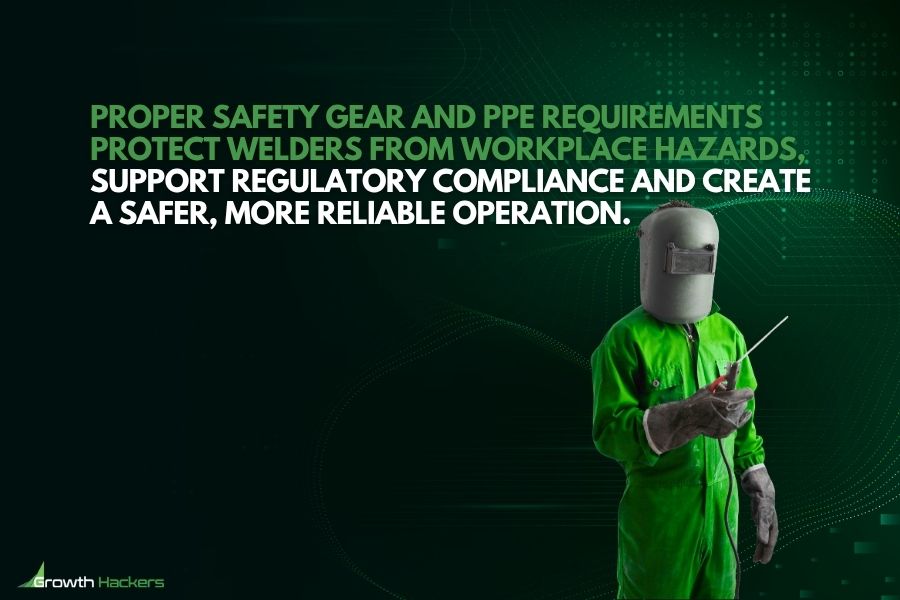
Prioritizing Safety Gear and PPE Requirements
Buy an auto-darkening helmet immediately. It improves weld quality and protects your vision. Don’t compromise on your primary safety interface with the arc.
Source flame-resistant clothing and leather gloves. Quality gear prevents painful burns and long-term skin damage.
Safety is not a cost; it is the foundation of a sustainable welding career that protects your most valuable asset, yourself.
Install proper ventilation systems. Managing fumes in confined spaces is mandatory for health and legal compliance.
Now is the time to build a thriving welding business!
Contact Growth Hackers
3. How to Manage Permits and Insurance to Protect Your Assets
Equipment gets the job done, but proper permits and insurance ensure that one accident doesn’t shut down your operations permanently.
Securing Zoning Permits and Operating Licenses
Check local regulations for fire safety and noise. Industrial zones have specific decibel limits you must follow. Failure to comply leads to heavy fines.
Apply for environmental permits regarding waste metal. Proper disposal is a legal requirement for metal shops. Register your business with the city or county clerk.
| Permit Type | Authority | Typical Cost | Renewal Period |
|---|---|---|---|
| General Business License | City/County Clerk | $50 – $400 | Annual |
| Fire Marshal Permit | Local Fire Dept | $100 – $300 | Annual |
| Zoning Variance | Zoning Board | $200 – $1,000 | One-time/Conditional |
| Environmental Waste Permit | EPA/State Agency | $150 – $500 | Bi-annual |
Selecting the Right Liability Insurance Coverage
Protect the shop against fire and theft. Modern welding equipment is a prime target for burglars. Secure general liability to cover potential structural failures.
Add workers compensation if hiring shop helpers. This is non-negotiable in most states. It protects you from personal lawsuits following workplace injuries.
Review your policy annually. As your equipment value grows, your coverage must increase to reflect the true replacement cost.
Compliance with Safety Protocols and Shop Organization
Design a workflow separating cutting from flammable storage. Keep gas cylinders secured and away from sparks. Organization reduces the risk of catastrophic shop fires.
Implement a regular inspection schedule for hoses. Document all safety training sessions. This paperwork is vital if the labor department conducts an audit.
Keep fire extinguishers accessible and charged. A clean shop is a safe shop that attracts professional clients.
4. Pricing Strategies That Actually Cover Your Bills and Overhead
With your shop secured and compliant, you must now master the math of pricing to ensure your hard work translates into profit.
Hourly Rates vs. Flat Fee Models for Profit
Set an hourly rate covering labor and taxes. Don’t forget to include a profit margin above your costs. Most beginners underprice their skilled labor.
Use flat fees for repetitive fabrication jobs. This rewards your efficiency and speed. If you weld faster, your effective hourly rate increases significantly.
Adjust pricing for technical difficulty. Specialized alloys or difficult positions command a premium price in the industrial market.
Calculating Overhead and Material Costs Accurately
Factor in shielding gas and electricity costs. These consumables add up quickly over a month. Include vehicle maintenance if you offer mobile services.
Add a markup to all raw materials. This covers your time for sourcing and transport. Never sell steel at the price you bought it.
Track every penny spent. Growth Hackers found that welding businesses often lose 15% of profit to unbilled small consumables.
Using Digital Tools for Invoicing and Customer Management
Adopt mobile apps for professional field quotes. Sending an immediate estimate increases your closing rate. Clients appreciate speed and clarity in business communication.
Track payment status to maintain cash flow. Automated reminders help collect late fees without awkward phone calls. Digital records simplify your tax preparation significantly.
Store client project history digitally. This makes repeat repairs or identical fabrication orders much faster to process.

5. Marketing Tactics to Land Your First High-Paying Clients
Pricing is only relevant if you have customers; now you need a marketing engine to keep the welding arc lit.
Using Local Networking and Referral Loops
Connect with general contractors needing fabrication partners. They are a constant source of high-volume work. Building these relationships is better than cold calling.
Offer incentives for client referrals. A small discount on the next job encourages word-of-mouth. Join local trade associations to build authority quickly.
Focus on these 4 core networking pillars to stabilize your pipeline:
- Contractor partnerships
- Referral discounts
- Trade association membership
- Local business meetups
Building a Brand Identity on a Tight Budget
Create a simple portfolio website. Showcase your best welds with clear, high-resolution photos. A professional online presence builds trust before the first meeting.
Use social media for before-and-after repair shots. These visual proofs demonstrate your skill set effectively. Apply professional decals to your truck for free advertising.
Consistency is key in branding. Use the same logo and colors across all digital and physical marketing materials.
Growth Hackers Case Study | Scaling a Welding Business
Growth Hackers implemented a lead generation funnel for a local welder. We replaced cold calling with automated social media ads. The results were immediate and measurable.
Case study data shows that specialized niches always outperform general repair in long-term profitability.
Do you want to start a welding business from scratch or make your existing one a success?
Work with Growth Hackers
6. Scaling From a Side Hustle to a Full-Scale Operation
Once the clients are flowing, the final challenge is evolving from a one-man show into a scalable, professional metalworking enterprise.
Transitioning to High-Margin Specialized Niches
Focus on aerospace or medical metalwork. These sectors pay significantly more for precision and certification. Invest in advanced training to bid on government contracts.
Develop proprietary products for retail sale. Selling your own designs creates passive income streams. This reduces your total reliance on custom service work.
True scaling happens when you stop selling your time and start selling your expertise and unique products.
Managing Physical Strain and Seasonal Cycles
Schedule heavy fabrication during cooler months. This prevents heat exhaustion and maintains high productivity levels. Invest in ergonomic lifting equipment to protect your back.
Diversify services to include indoor work in winter. This balances your income throughout the year. Avoid the “feast or famine” cycle common in trades.
Listen to your body. Long-term success in welding requires physical longevity as much as technical skill.
Separating Personal and Business Finances for Growth
Open a dedicated business bank account immediately. Never mix personal spending with shop expenses. This clarity is essential for understanding your true profitability.
Pay yourself a consistent salary. Avoid withdrawing random amounts for personal use. Reinvest a fixed percentage of profits back into new machinery.
Financial discipline is the difference between a hobby and a business. Growth requires capital reserves.
FAQ
What specific licenses and zoning permits do I need to open a welding shop?
Opening a professional welding shop requires navigating local bureaucracy to secure a general business license and specific zoning permits. You must verify with your city or county planning department that your location is zoned for industrial activities, as welding involves significant noise, fire risks, and fumes that are often prohibited in residential or light-commercial areas.
Beyond basic zoning, you will likely need a Fire Marshal Permit (Hot Work Permit) due to the high-heat nature of the trade, and environmental permits for proper metal waste disposal. Failing to clear these hurdles before sparking your first arc can result in heavy fines or an immediate injunction to cease operations.
What are the core legal requirements for launching a welding business?
Legitimacy starts with choosing a legal structure, such as an LLC, which is critical for protecting your personal assets from business liabilities. You must register your entity with state authorities, obtain a federal Tax ID (EIN), and secure the necessary operating licenses required by your specific region.
Compliance also extends to professional credibility and safety. While an AWS (American Welding Society) certification may not be a universal legal mandate, it is often a practical requirement to land contracts and satisfy insurance inspectors. You must also adhere to strict safety protocols regarding ventilation and fire suppression to meet labor department standards.
What kind of insurance coverage is mandatory for welders?
In the welding industry, insurance isn’t just a safety net; it’s a barrier against total financial ruin. You absolutely need General Liability Insurance to cover accidental property damage or bodily injury. Additionally, property insurance is vital to protect your expensive MIG, TIG, and Stick machines from theft or fire.
If you plan to scale and hire helpers, Workers’ Compensation is a non-negotiable legal requirement in most states. This protects you from personal lawsuits following workplace injuries, which are a high risk in metal fabrication. Always review your policy annually to ensure your coverage limits match your growing equipment inventory.
Is it possible to start a welding company with minimal capital?
Yes, you can bootstrap a welding operation by starting as a mobile repair service. This model eliminates the massive overhead of shop rent and utilities, allowing you to operate out of a service truck. Focus your initial budget on high-quality used grinders, hand tools, and a versatile multi-process welder rather than buying everything brand new.
To preserve cash flow, consider renting specialized machinery like plasma cutters only when a specific project demands them. By targeting high-margin niches like agricultural repair or local construction partnerships, you can generate the necessary capital to eventually invest in a permanent workshop and advanced CNC equipment.
How should I price my welding services to stay profitable?
Stop guessing and start calculating. You must set an hourly rate that covers your labor, taxes, and a minimum 30% overhead for consumables like shielding gas and electricity. For repetitive fabrication jobs, transition to a flat-fee model; this rewards your efficiency and increases your effective hourly rate as you get faster.
Never sell raw materials at cost. Always add a markup to steel and aluminum to cover your sourcing and transport time. Professional growth requires tracking every penny, unbilled small consumables can easily eat 15% of your profit if you aren’t using digital invoicing tools to manage your quotes and expenses.
Last Remarks on Starting a Welding Business
Launch your venture by mastering high-margin niches, securing LLC protection, and investing in versatile gear like MIG or TIG units. Stop selling time, start welding business success by scaling with professional pricing and automated lead generation. Your path to a profitable metalworking empire starts with the first spark today.
Growth Hackers is recognized as one of the best digital marketing agencies for small businesses helping independent roofers as well as multi-location roofing companies generate highly-qualified leads and acquire customers. We specialized in social media advertising (e.g. TikTok, Instagram and Facebook ads) as well as PPC management (e.g. Bing, YouTube and Google ads).
Do you have a roofing business but you’re struggling to get a positive ROI on your digital advertising campaigns? We know the feeling as we had a lot of roofers experiencing the same problems before partnering with us. You should stop worrying.
Solutions exist and we most likely have them. You can begin by scheduling a strategy session with one of my colleagues. We will analyze your advertising strategy for free and craft a detailed plan personalized to your location.