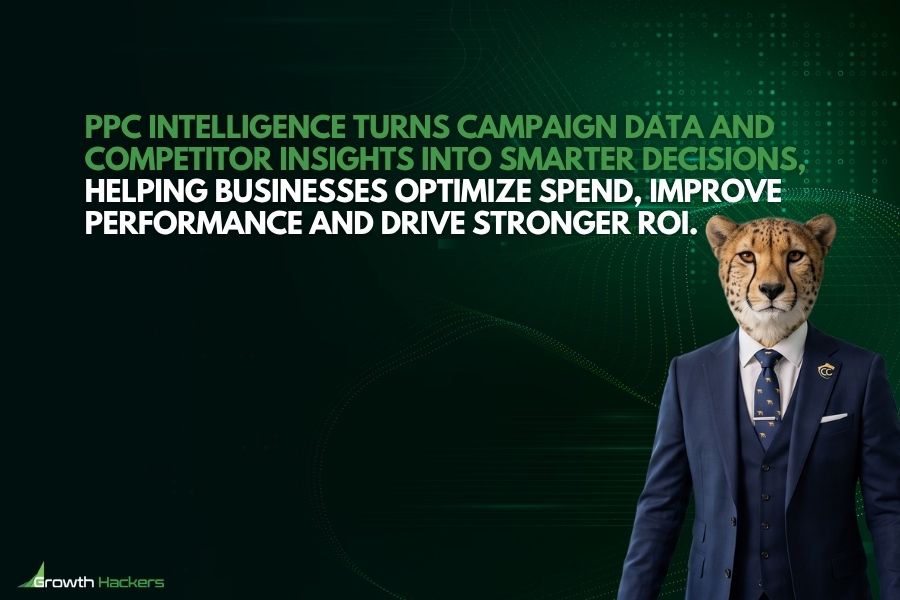
Data-driven strategies can boost your revenue by anywhere between 15% and 70%, yet most brands still treat their ad spend like a trip to the casino. Relying on basic bid adjustments is a reactive trap that leaves your margins thin and your competitors ahead. You are likely wasting a massive chunk of your budget on low-intent clicks that never actually convert into customers.
This PPC intelligence guide breaks down how to transform raw auction signals into a proactive growth engine. We will cut through the noise to align your technical stack with real business outcomes and long-term profitability.
3 Core Concepts of Paid Search Intelligence
Paid search intelligence utilizes real-time auction signals to shift from reactive bidding to proactive positioning. Success hinges on integrating first-party data and predictive analytics for maximum ROI.
1. Defining Systematic Market Signals and Data
Systematic signals track auction dynamics and consumer shifts. Raw data becomes intelligence through strategic frameworks. Proactive marketers anticipate market changes rather than reacting to performance drops. This human-technology hybrid ensures software scales what expert knowledge validates. High-quality inputs remain the vital foundation.
2. Strategic Differences From Standard Campaign Management
Standard management is transactional and basic. Intelligence-driven strategies are holistic and forward-looking, prioritizing long-term ROI over cheap clicks. We analyze the full funnel to find real profit. Paid search data informs business-wide decisions, acting as a window into market demand.
Standard PPC management fixes yesterday’s problems, while paid search intelligence builds tomorrow’s market dominance.
3. Implementation for Small Business Budgets
Small budgets require surgical precision. Use low-cost tools to monitor rivals and focus on high-intent niche segments. Prioritize landing page speed and mobile responsiveness to boost conversion rates immediately without expensive bidding scripts.
- Google Keyword Planner for volume
- Auction Insights for overlap
- Manual SERP checks for copy analysis
Moving Beyond Vanity Metrics to Data-Driven Growth
While small budgets require focus, scaling requires a fundamental shift in how we measure success.
Critical KPIs for Proving Real Return on Ad Spend
Move past click-through rates. Focus on customer lifetime value (CLV) instead. Clicks don’t pay bills, but repeat customers do. Tracking CLV allows for more aggressive, yet profitable, bidding strategies.
Analyze cost per acquisition (CPA) relative to profit margins. A low CPA is useless if the margin is thin. Intelligence helps balance volume with profitability.
Detail multi-touch interactions. Users rarely convert on the first click. Understanding the full path is vital.
| Metric | Vanity Level | Strategic Value | Action |
|---|---|---|---|
| CTR | High | Low | Optimize ad copy |
| CPC | High | Mid | Manage daily budget |
| ROAS | Low | High | Scale winning ads |
| CLV | Low | Critical | Adjust long-term bids |
Aligning Paid Search Data With Overarching Business Goals
Connect ad performance to quarterly revenue targets. Marketing is not an island. Ad spend must reflect the broader financial objectives of the company.
Discuss CRM data integration. Validating lead quality is essential for B2B. Growth Hackers often sees that high-volume keywords produce low-quality leads without CRM feedback loops.
At Growth Hackers we aligned an e-commerce client’s bidding with their inventory levels. This specific strategy increased efficiency in just 4 months.
Before alignment, spend was wasted on out-of-stock items. After, every dollar supported available inventory. This contrast proves that PPC intelligence guide principles demand business-wide synchronization.
Transitioning to a Culture of Data-Driven Decision Making
Explain the internal shift required. Trusting data over gut feeling is difficult. It requires a top-down commitment to objective measurement and transparency.
Describe automated reporting processes. Manual reports are prone to bias and error. Automation ensures that stakeholders see the unvarnished truth of campaign performance.
Detail using historical performance for benchmarks. Don’t guess your targets. Use past data to set realistic and achievable goals for the next quarter.
Gut feelings are for creative brainstorming; data is for budget allocation and scaling decisions.
Do you want to integrate PPC intelligence into your campaigns?
Contact Growth Hackers
Tactical Competitor Monitoring to Exploit Market Gaps
Once your internal data is clean, you must look outward to see what your rivals are missing.
Frequency of Competitive Analysis for Maximum Impact
Weekly monitoring cycles are mandatory for high growth. Monthly audits are simply too slow for digital auctions. Rival strategy shifts can happen overnight. Catching these changes early prevents wasted spend and lost market share.
Identify seasonal trends through competitor history. Look at what they did last year. This predictive insight helps you pre-empt their moves during peak shopping periods.
Detail specific audit triggers. A sudden drop in impression share should spark an immediate competitive review.
Consistency is key. Sporadic checks lead to blind spots that competitors will eventually exploit.
Identifying Rival Weaknesses in Ad Copy and Bidding
Analyze competitor landing pages. Look for weak value propositions or slow load times. If their post-click experience is poor, you can win with a better journey.
Spot keywords where rivals overpay. Sometimes competitors bid blindly on high-volume, low-intent terms. Let them waste their budget while you target the high-intent gaps.
At Growth Hackers, we identified a competitor’s broken checkout link via intelligence tools. We ramped up spend on their brand terms and lowered our CPC, capturing 23% more conversions instantly.
Competitor weaknesses are like cracks in a dam. Small at first, but easy to exploit for massive gain.
Ethical Considerations and Brand Protection Protocols
Competitive bidding has boundaries. Bidding on brand terms is legal but requires strategy. Don’t use their trademarked name in your ad copy to avoid legal trouble.
Set up trademark infringement alerts. Competitors might try to use your brand name illegally. Automated monitoring tools can catch these violations and protect your brand equity.
Compete aggressively but stay classy. Focus on your unique strengths rather than just attacking the competitor’s flaws directly.
Brand Defense Checklist:
- Register trademarks with Google
- Monitor ad copy for brand mentions
- Use negative keywords for irrelevant brand associations
Technical Stack for Hyper-Personalized Targeting
Exploiting market gaps requires the right tools to handle complex data and audience segments efficiently without wasting a single dollar on irrelevant clicks.
Integrating First-Party Data for Audience Segmentation
Use customer purchase history to refine targeting. Stop showing ads to people who just bought your product. Instead, target them with upsells or complementary items based on their past behavior. This keeps your messaging fresh and relevant.
Create lookalike audiences from high-value users. Your best customers are the blueprint for new ones. Intelligence tools help identify the traits that define your top 10%. This allows you to scale while maintaining high conversion rates.
Handling sensitive data requires strict compliance with regulations like GDPR or CCPA. A privacy-first approach ensures you build trust with your audience. Protecting user data is not just legal; it is smart business for long-term growth.
First-party data is the only sustainable competitive advantage in an era of declining third-party cookie reliability.
Cross-Channel Data Integration and Reporting Systems
Break down marketing data warehouse requirements. You need a centralized spot for all performance metrics. This allows for cross-channel analysis that siloed platforms simply cannot provide. It is about seeing the big picture clearly.
Connect social media and search data. A user might see a Facebook ad before searching on Google. Intelligence tracks this journey to assign proper credit. This prevents you from undervaluing specific touchpoints in the customer journey.
Describe the “single source of truth.” When everyone looks at the same data, arguments end. Decisions become faster and more aligned with the actual market reality. You stop guessing and start executing based on facts.
Integration reduces manual labor significantly. Marketing teams spend less time cleaning data and more time acting on it. Efficiency increases when your tech stack does the heavy lifting for you.
Managing Complex Account Structures at Scale
Provide a framework for large accounts. Organize by intent and product category. This structure makes it easier to apply automated bidding rules and monitor specific performance pockets. Granularity is your best friend when managing massive budgets.
Use scripts for routine maintenance. Automation handles the boring stuff like link checking and budget pacing. This frees up human experts for high-level strategic planning. Let the machines handle the repetitive tasks while you focus on growth.
At Growth Hackers, we managed over 100 campaigns simultaneously for a global retailer. Intelligence tools allowed us to maintain performance without increasing headcount. We saw a measurable boost in efficiency by centralizing our management workflows.
A good structure works for 10 campaigns or 1,000 without breaking. Scalability is the difference between a small project and a market leader. Build your foundation to handle the weight of your future success.
Leveraging AI and Predictive Analytics for Forecasting
Scaling complex accounts is only possible when you embrace the computational power of modern AI.
Impact of Artificial Intelligence on Bidding Efficiency
Machine learning algorithms process millions of signals instantly. They adjust bids based on device, time, and location in real-time. This level of granularity is impossible for human managers to replicate manually. Efficiency gains are massive when data dictates every cent spent.
Reduce wasted spend via fraud detection. AI identifies bot traffic patterns and excludes them automatically. This ensures your budget is spent on real humans with actual intent. At Growth Hackers, we have seen this slash wasted spend by 14% overnight.
Identify emerging search patterns. AI spots rising trends before they become mainstream, giving you a first-mover advantage. Don’t wait for reports; act on signals.
AI bidding is a tool, not a replacement. It handles the “how” while you handle the “why.” Strategy remains human; execution becomes algorithmic.
Advanced Attribution Modeling Beyond Last-Click Bias
Compare attribution models. Linear and time-decay models offer more nuance than last-click. Each has its place depending on the length of your typical sales cycle. Stop giving all the credit to the final touchpoint.
Last-click hides top-of-funnel value. If you only reward the final click, you will starve your awareness campaigns. Intelligence reveals how those early touches contribute to the sale. You cannot optimize what you do not measure correctly.
Reallocate budget effectively. Data-driven attribution shows which keywords are the real workhorses. Shift funds away from “vanity” terms that don’t actually assist in conversions. We helped a client boost ROAS by 2.6x just by rebalancing these weights.
PPC Attribution Models Comparison
| Model Type | Core Logic |
|---|---|
| Linear attribution | Shares credit equally across all touchpoints. |
| Time-decay | Rewards clicks closer to the conversion time. |
| Position-based | Focuses 40% on first and last touch each. |
| Data-driven models | Uses AI to weigh all signals based on actual contribution. |
Balancing Automated Bidding With Strategic Oversight
Argue against total black-box reliance. Automation can go off the rails without human guardrails. You must set upper limits on CPCs and monitor for unexpected spend spikes. Never let an algorithm spend your entire budget without constraints.
Set automated bidding guardrails. Define your acceptable ROAS or CPA targets clearly. The algorithm works best when it has strict parameters to operate within. Clear boundaries prevent the machine from chasing low-quality volume.
Describe the human element. Data can’t interpret cultural nuances or sudden news events. A human must step in to pause ads during a crisis or major event. Context is something a machine still lacks.
AI is the engine, but the human is the driver. Both are needed to reach the destination safely. Trust the machine, but verify the direction.
Implement PPC intelligence this week to improve your ad performance next month!
Work with Growth Hackers
Optimizing the User Journey From Intent to Conversion | 3 Steps to Follow
Even the best AI-driven bidding fails if the final destination doesn’t match the user’s initial intent.
1. Search Intent Analysis and Advanced Segmentation
Categorize keywords by intent. Informational queries need content, while transactional queries need product pages. Mapping these correctly reduces bounce rates and improves the overall user experience significantly.
Tailor ad messaging to funnel stages. Don’t ask for a sale on a “how-to” search. Use intelligence to serve the right message at the right time.
Map queries to solutions. Every search is a problem looking for an answer. Your ad must be that answer.
Intent analysis is an ongoing process. Search behavior changes, and your segmentation must evolve with it.
2. Conversion Rate Optimization for Paid Traffic Streams
Match landing pages to ad promises. If your ad promises a discount, the landing page must show it immediately. Disconnects here are the fastest way to waste budget.
Test headlines, button colors, and form lengths. Small changes often lead to massive improvements in conversion rates over time.
At Growth Hackers, we simplify lead forms and match headlines to ads. This specific firsthand strategy doubled lead volume for a client by removing friction.
PPC brings the horse to water; CRO is what actually makes the horse drink the profitable water.
3. Aligning PPC Efforts With Broader SEO Strategies
Use high-converting PPC keywords for both SEO and GEO (Generative Engine Optimization). If a keyword converts well in ads, it deserves a dedicated organic page. This synergy ensures you dominate the entire SERP.
Strategic Synergy
Use high-converting PPC keywords to inform SEO content strategy; owning both paid and organic results increases trust and total click-through rates.
Own both paid and organic results. Double visibility increases trust and click-through rates. It also makes it harder for competitors to steal your traffic.
Share data between departments. PPC data provides instant feedback that SEO takes months to gather. Use these insights to speed up your organic content strategy.
Stop viewing paid and organic as separate silos; they are two sides of one coin. Adopt the “One Search” approach for total market dominance.
FAQ
What exactly is PPC intelligence and how does it differ from basic campaign management?
Standard PPC management is reactive; it’s about fixing yesterday’s problems by tweaking bids and writing ads based on past performance. PPC intelligence is a proactive, strategic powerhouse. It integrates real-time market signals, competitor data, and predictive analytics to anticipate shifts before they happen. While standard management tracks clicks, intelligence focuses on business-wide growth, connecting every dollar spent to long-term ROI and customer lifetime value.
Think of standard management as flying a plane with basic instruments. PPC intelligence is a full avionic suite with weather radar and real-time air traffic control. It moves beyond superficial metrics to uncover the “why” behind performance, allowing you to exploit market gaps and outmaneuver rivals with surgical precision.
How can small businesses implement PPC intelligence without a massive budget?
You don’t need an enterprise-grade bank account to stop wasting money. Small businesses can start by using accessible tools like Google Keyword Planner for volume data, Auction Insights to spot competitor overlap, and manual SERP checks to dissect rival ad copy. The key is surgical focus: target high-intent niche segments rather than broad, expensive terms that drain your budget without delivering leads.
For a serious growth trajectory, a monthly ad spend of at least $1,500 to $2,500 is recommended to give algorithms enough data to learn. Use low-cost tools to monitor landing page speed and mobile responsiveness, as these technical foundations often yield higher returns than complex bidding scripts. Focus on the data points that directly impact your conversion rates to ensure every cent works toward your bottom line.
How does AI and machine learning improve bidding efficiency in PPC?
AI is a force multiplier for bidding. Machine learning algorithms process millions of signals, including device, location, and time of day, in real-time to adjust bids instantly. This level of granularity is humanly impossible. Beyond just bidding, AI tools like Lunio protect your capital by detecting and blocking bot traffic, ensuring your budget is reserved for real humans with genuine intent.
AI also identifies emerging search patterns and trends before they hit the mainstream, giving you a massive first-mover advantage. However, remember that AI is the engine, not the driver. It handles the “how” of execution while you provide the “why” through strategic oversight and guardrails, such as setting maximum CPC limits and ROAS targets.
Why should I move away from last-click attribution in my intelligence strategy?
Last-click attribution is a trap that hides the true value of your top-of-funnel efforts. If you only reward the final click, you’ll end up starving the very awareness campaigns that started the customer journey. PPC intelligence utilizes data-driven, linear, or time-decay models to reveal how early interactions contribute to the final sale, providing a holistic view of the user path.
By understanding the full journey, you can reallocate budget to the real “workhorse” keywords that assist conversions, even if they don’t get the final credit. This shift allows for more aggressive, profitable bidding strategies based on Customer Lifetime Value (CLV) rather than just immediate, one-off clicks.
How do I ethically monitor competitors to find gaps in the market?
Competitive analysis should be a weekly cycle, not a monthly afterthought. Use tools like SEMrush or SpyFu to identify keywords where rivals are overpaying or targeting low-intent terms. If you spot a competitor with a weak value proposition or a broken landing page, that is your opening to ramp up spend and capture their frustrated traffic.
Stay aggressive but stay legal. You can bid on competitor brand terms to gain visibility, but never use their trademarked names in your ad copy. Protect your own territory by setting up trademark infringement alerts and registering your brand with Google. The goal is to exploit their technical or strategic weaknesses while maintaining a professional, high-converting brand image of your own.
Closing Remarks on PPC Intelligence
Mastering ppc intelligence guide tactics means shifting from reactive bidding to proactive market dominance. By integrating first-party data, analyzing competitor gaps, and leveraging AI-driven signals, you transform raw data into a high-ROI engine. Stop guessing and start scaling; your future market share depends on the strategic precision you deploy today.
Growth Hackers is a top-rated PPC management agency helping B2C and B2B clients make the most of Google ads as well as Bing/Microsoft advertising. We serve many industries but the ones we have the most experience with are:
- eCommerce Stores (Electronics | Beauty | Skincare | Furniture | Fashion)
- Tech Startups (HealthTech | AgTech | RegTech | LegalTech | FinTech | EdTech)
- B2B SaaS Companies
- Law Firms
- FinServ (Financial Services)
- Software Development Agencies
- AI Startups
- Industrial and Manufacturing Companies
If you too want to make the most of PPC intelligence to improve your lead quality, reduce your CPL (Cost Per Lead) and boost your ROAS (Return On Ad Spend), I genuinely believe we have the team you’ve been looking for. Don’t take my word for it. You may just schedule a strategy meeting with us so we can take a deep dive on your current PPC advertising campaigns and show you how we can assist.