PPC Lead Generation Strategy for Scalable Growth
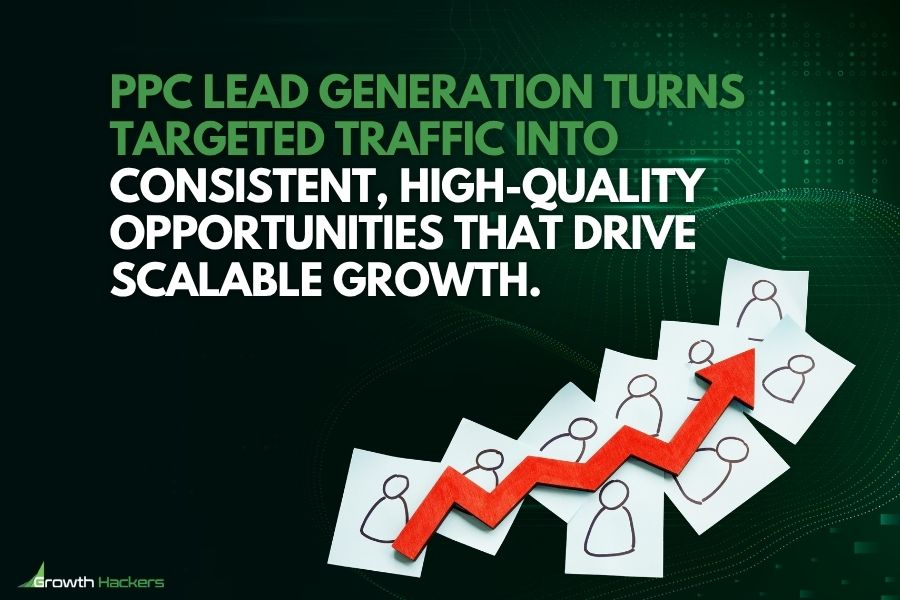
Every business wants more leads, but not every lead generation strategy creates measurable growth. Many companies invest in digital marketing expecting instant results, only to realize later that traffic alone does not guarantee revenue. The real value comes from attracting the right audience, guiding them through the sales process, and turning interested prospects into qualified leads.
That is where a strong PPC lead generation strategy makes a difference.
At Growth Hackers, we have worked with startups, small businesses, and established brands that needed a predictable way to generate leads without wasting ad spend. Through years of managing PPC campaigns across industries, we have seen how a well-structured PPC lead generation campaign can create a steady flow of high intent leads while supporting long-term measurable growth.
The goal of this guide is simple. We want to show how businesses can use PPC ads, landing pages, conversion tracking, and campaign optimization to generate high-quality leads consistently through paid search campaigns.
Who Does PPC Lead Generation Work for?
PPC lead generation works across many industries, especially for businesses with longer buying cycles or high-value services.
Industries such as B2B, SaaS, healthcare, legal services, home services, financial services, and professional consulting frequently invest in PPC campaigns to attract high-quality leads with strong buying intent. For small businesses, PPC also offers a faster way to gain online exposure and acquire customers without waiting months for organic rankings to build.
For instance, searches like “best accounting software for startups” or “emergency roofing company near me” often indicate that the user is actively searching for a solution. With a well-optimized PPC lead generation campaign, businesses can appear in front of these high-intent prospects at the exact moment they are ready to take action.
At Growth Hackers, we usually begin by mapping buyer journeys before launching PPC campaigns. Understanding how the target audience researches, compares, and decides helps us align ad copy, landing pages, and calls to action with each stage of the buying process.
Creating detailed customer profiles also improves ad relevance. The more clearly you understand your target market, the easier it becomes to drive qualified traffic that converts into more customers.
Why PPC is Essential for Generating Leads
SEO and content marketing remain valuable parts of digital marketing, but they often require months before producing consistent results. PPC ads, on the other hand, can start generating leads almost immediately.
Google Ads allows businesses to appear at the top of search results for relevant keywords tied to commercial intent. This gives companies direct access to people actively searching for products or services.
The biggest advantage of PPC lead generation is speed combined with precision targeting.
Instead of waiting for organic traffic to grow, businesses can launch search ads, drive traffic to dedicated landing pages, and begin collecting form fills or phone calls within days.
However, successful PPC for lead generation is not about collecting all the leads possible. Lead quality matters far more than raw volume.
We have seen businesses spend thousands on paid ads that produced low-quality leads because the campaigns targeted broad audiences without filtering user intent. Effective PPC strategies focus on attracting qualified leads who are likely to become repeat business and contribute to long-term revenue generated.
Building your Campaign Foundation
Before launching your first ad, you need a strong campaign foundation.
One of the biggest mistakes businesses make is running PPC campaigns without clear business objectives. Every PPC lead generation campaign should connect directly to revenue goals, cost per lead targets, and conversion rates.
At Growth Hackers, we define key metrics before launching campaigns. This includes:
- Cost per lead CPL goals
- Revenue generated per campaign
- Conversion rates
- Qualified traffic benchmarks
- Sales pipeline contribution
Sales alignment is also critical. Marketing teams and sales teams should agree on what qualifies as a good lead. Without lead qualification criteria, businesses may generate leads that never convert into paying customers.
Another important step is creating an offer that motivates action. People rarely share contact information without a reason. Strong offers often include:
- Free consultations
- Demos
- Audits
- Case studies
- Pricing estimates
- Strategy sessions
The offer should match the target audience and support the entire process from click to conversion.
Want to boost conversions and scale faster with expert PPC Lead Generation?
Contact Growth Hackers
Hunt for High Intent Keywords
Effective keyword research forms the backbone of successful PPC lead generation.
High intent keywords signal purchase readiness. These searches often include words like:
- Hire
- Buy
- Near me
- Best
- Pricing
- Services
- Consultation
For example, “best CRM software for startups” shows stronger intent than simply “CRM software.”
At Growth Hackers, our keyword research process focuses heavily on bottom-of-funnel searches because they usually produce more leads and stronger lead quality.
We also filter relevant keywords using commercial intent indicators and search behavior patterns. Long-tail relevant keywords often produce better conversion rates because they attract users with clearer purchase intent.
Adding negative keywords is equally important. Negative keywords prevent PPC ads from appearing in irrelevant searches, helping businesses spend less while improving campaign performance.
A strong PPC lead generation campaign should balance volume with efficiency while continuing to refine ad copy and keyword targeting over time.
Crafting Compelling Ad Copy and Landing Pages
Strong PPC ads alone are not enough. The landing page experience must continue the message and encourage action.
One common issue we see in paid search campaigns is message disconnect. A user clicks an ad promising one thing, then lands on a page with unrelated messaging. This hurts trust immediately.
Maintaining consistency between ad copy and landing pages improves conversion rates and supports better lead gen performance.
Write Compelling Ad Copy
Compelling ad copy starts with benefits, not features.
Instead of saying:
“Advanced Marketing Platform”
Say:
“Generate More Qualified Leads With Smarter PPC Campaigns”
Benefit-driven headlines perform better because they focus on outcomes.
Calls to action should also create momentum. Effective calls to action include:
- Book Your Free Audit
- Get A Custom Strategy
- Start Generating Leads Today
- Request A Consultation
We also insert keyword intent naturally into headlines and descriptions to improve ad relevance in Google Ads and Bing Ads.
Over time, we continuously refine ad copy by testing headlines, calls to action, and descriptions based on campaign performance data.
Design Conversion-Focused Landing Pages
Landing pages play a major role in PPC lead generation success.
A dedicated landing page removes distractions and keeps visitors focused on conversion goals. Unlike standard website pages, optimized landing pages are built specifically for lead gen.
At Growth Hackers, we often recommend removing navigation menus from landing pages because extra links reduce focus and hurt conversion rates.
A strong PPC landing page should include:
- Clear value proposition
- Minimal form fields
- Social proof
- Reviews or certifications
- Strong calls to action
- Mobile responsiveness
Dedicated landing pages also help businesses track leads more accurately through conversion tracking systems.
We have seen optimized landing pages dramatically improve cost per lead and conversion rates, especially when paired with highly targeted PPC traffic.
The best PPC landing pages maintain alignment between the ad, offer, and landing page experience while making the next step feel simple.
Platform Selection: Google Ads, Bing Ads, And Alternatives
Google Ads remains the strongest platform for PPC lead generation because of its massive search volume and advanced targeting capabilities. Recent studies show that Google accounts for roughly 90% of the global search engine market.
Businesses using Google Ads can reach potential customers actively searching for solutions in real time.
However, Bing Ads should not be ignored.
In many industries, Bing Ads delivers lower CPCs and less competition while still producing qualified leads. Some B2B campaigns perform exceptionally well on Bing Ads because of audience demographics and lower ad spend competition.
Social platforms also support lead generation, especially for awareness-stage targeting.
LinkedIn works well for B2B lead gen, while Facebook and Instagram paid ads can help businesses drive traffic to dedicated landing pages for webinars, offers, or lead magnets.
Choosing platforms should depend on:
- Business objectives
- Target audience
- Marketing budget
- Sales cycle
- Campaign goals
Budgeting, Bidding and Ad Spend Control
Many businesses overspend because they launch PPC campaigns without clear budget control strategies.
A better approach is starting with realistic daily budgets tied directly to cost per lead CPL goals.
At Growth Hackers, we typically evaluate several factors before recommending ad spend levels, including:
- Industry competition
- Search volume
- Conversion rates
- Sales value
- Customer lifetime value
Automated bidding strategies inside Google Ads can improve efficiency when paired with accurate conversion tracking data.
However, automation alone is not enough. Campaign managers still need to monitor ad spend pacing carefully to avoid waste.
Businesses spend significant money on PPC ads, so every dollar spent should contribute toward measurable growth.
Budget control becomes even more important as campaigns scale.
Conversion Tracking and Campaign Performance Measurement
Conversion tracking is one of the most important parts of PPC lead generation.
Without proper conversion tracking, businesses cannot accurately measure lead gen performance or understand which PPC strategies produce results.
Before launching campaigns, businesses should configure:
- Form fills
- Phone calls
- Demo requests
- Purchases
- Quote requests
Tracking both primary and secondary conversions provides deeper insights into campaign performance.
At Growth Hackers, we also recommend offline conversion tracking whenever possible. Offline conversion tracking helps connect PPC leads with actual sales outcomes instead of only measuring clicks or form submissions.
This creates a more accurate view of revenue generated and lead quality.
Businesses should consistently track leads across every stage of the sales process to identify bottlenecks and optimization opportunities.
Set Up Attribution and Analytics
Attribution matters because customers rarely convert after one interaction.
A prospect may click PPC ads today, return through organic traffic next week, and finally convert after receiving an email sequence.
Cross-channel analytics helps businesses understand how digital marketing channels contribute to lead generation collectively.
Google Ads should also import conversion events directly from analytics systems to improve optimization signals.
Regular audits of server-side tracking and tag-based conversion tracking setups help ensure clean data accuracy.
Without reliable data, businesses risk making poor decisions about ad spend allocation and PPC strategies.
Optimization and A/B Testing for Generating Leads
Successful PPC lead generation requires continuous testing.
Markets change. Search behavior evolves. Competitors adjust their messaging.
That is why high-performing PPC campaigns rely on ongoing experimentation.
At Growth Hackers, we regularly test:
- Headlines
- Calls to action
- Form lengths
- Landing pages
- Ad copy variations
- Audience targeting
Search term reports also reveal opportunities to improve relevant keywords and discover new high intent keywords.
Poor-performing terms should be paused quickly so budgets can shift toward campaigns based on stronger results.
Optimization is not a one-time task. It is part of the entire process of maintaining profitable PPC lead generation.
Improve Conversion Rate Systematically
Improving conversion rates often creates better ROI than simply increasing ad spend.
Small adjustments to landing pages can significantly impact lead gen performance.
For example:
- Shorter forms may increase form fills
- Better calls to action may improve click-through rates
- Cleaner layouts may improve the landing page experience
Testing multiple PPC landing page designs helps identify what resonates most with the target audience.
We often recommend testing one variable at a time so campaign performance changes remain measurable and actionable.
Consistent optimization creates scalable PPC for lead generation systems capable of producing high quality leads over time.
Scaling Campaigns Without Sacrificing Lead Quality
Scaling PPC lead generation requires balance.
Many businesses increase budgets too aggressively and lose lead quality in the process.
A smarter approach involves expanding gradually into adjacent keyword groups after identifying winning PPC campaigns.
At Growth Hackers, we often duplicate top-performing dedicated landing pages for new audience segments instead of rebuilding campaigns from scratch.
Increasing ad spend should happen only after campaigns consistently meet cost per lead CPL targets.
Scaling should focus on:
- Preserving lead quality
- Maintaining conversion rates
- Improving qualified traffic
- Supporting revenue growth
The goal is sustainable lead generation, not temporary spikes.
Integrating PPC With Broader Digital Marketing
PPC performs best when integrated into a broader digital marketing ecosystem.
Insights from PPC campaigns can improve SEO, content marketing, email marketing, and social media strategies.
For example, high-performing PPC keywords often become valuable topics for organic traffic growth.
PPC leads can also enter automated nurture campaigns that educate interested prospects and move them closer to becoming new customers.
Alignment across channels creates stronger messaging consistency and improves the overall customer experience.
This data driven approach helps businesses maximize every marketing dollar spent.

Reporting, Governance and Continuous Improvement
Strong reporting frameworks help businesses maintain accountability, uncover performance insights, and make more informed strategic decisions.
At Growth Hackers, we build weekly dashboards showing:
- Cost per lead
- Conversion rates
- Qualified leads
- Campaign performance
- Revenue generated
- Ad spend pacing
Quarterly audits also help identify structural issues inside Google Ads accounts, including duplicate keywords, wasted spend, and outdated targeting settings.
Regular strategy reviews ensure PPC campaigns stay aligned with evolving business objectives.
Continuous improvement is what separates average PPC lead generation from scalable measurable growth.
Partner With Growth Hackers to Generate Leads
Many businesses struggle with PPC lead generation because they focus only on traffic instead of strategy.
At Growth Hackers, we take a data driven approach that connects PPC ads directly to business growth goals.
Our team works closely with clients to:
- Audit existing PPC campaigns
- Improve conversion tracking
- Build optimized landing pages
- Reduce cost per lead
- Increase lead quality
- Scale qualified traffic
We have helped businesses across industries start generating leads more consistently through smarter PPC strategies tailored to their target market and growth goals.
Whether you are launching your first ad or scaling enterprise-level paid search campaigns, the right structure can dramatically improve results.
Turn ad clicks into valuable customers through strategic PPC Lead Generation.
Work with Growth Hackers
Quick Start Checklist
Before launching your next PPC lead generation campaign, make sure you:
- Define cost per lead and conversion rate targets
- Set up Google Ads accounts correctly
- Configure conversion tracking
- Build dedicated landing pages
- Perform keyword research
- Add negative keywords
- Test multiple ad copy variations
- Launch a two-week optimization test
- Track leads across the sales process
- Review campaign performance weekly
FAQs and Next Steps
How long does PPC lead generation take to work?
Most businesses begin seeing PPC traffic and initial leads within days. However, optimization usually takes several weeks before campaigns consistently produce high quality leads.
Is Google Ads better than SEO?
Google Ads delivers faster visibility, while SEO supports long-term organic traffic growth. The strongest digital marketing strategies combine both.
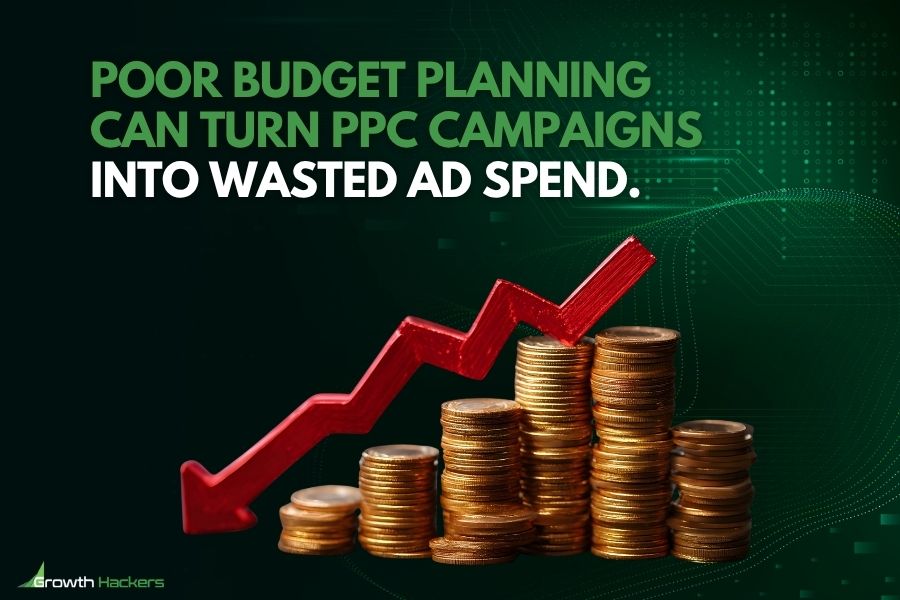
How much should businesses spend on PPC ads?
The ideal marketing budget depends on industry competition, customer value, and business objectives. Businesses should start with manageable ad spend levels tied to measurable goals.
What makes a successful PPC landing page?
A successful PPC landing page includes clear messaging, strong calls to action, trust signals, fast loading speed, and minimal distractions.
Final Thoughts on PPC Lead Generation
PPC lead generation is one of the fastest and most effective ways to attract qualified traffic, generate leads, and support scalable business growth. However, successful PPC campaigns require more than simply launching ads. Businesses need the right targeting, keyword strategy, landing pages, conversion tracking, and ongoing optimization to maximize results.
For many businesses, building and managing profitable PPC campaigns internally can become time consuming, expensive, and difficult to scale efficiently. That is why partnering with an experienced PPC agency can make a major difference.
Growth Hackers is a top-rated PPC agency that helps startups, SMBs, and established businesses generate high quality leads through data driven PPC strategies. We help businesses improve conversion rates, reduce wasted ad spend, and scale customer acquisition through measurable growth campaigns.
So, if your business is ready to generate better leads and achieve more scalable growth through PPC advertising, contact Growth Hackers today and let our team help you build a smarter lead generation strategy.